Love this? Save it for later!
Share the inspiration with your friends
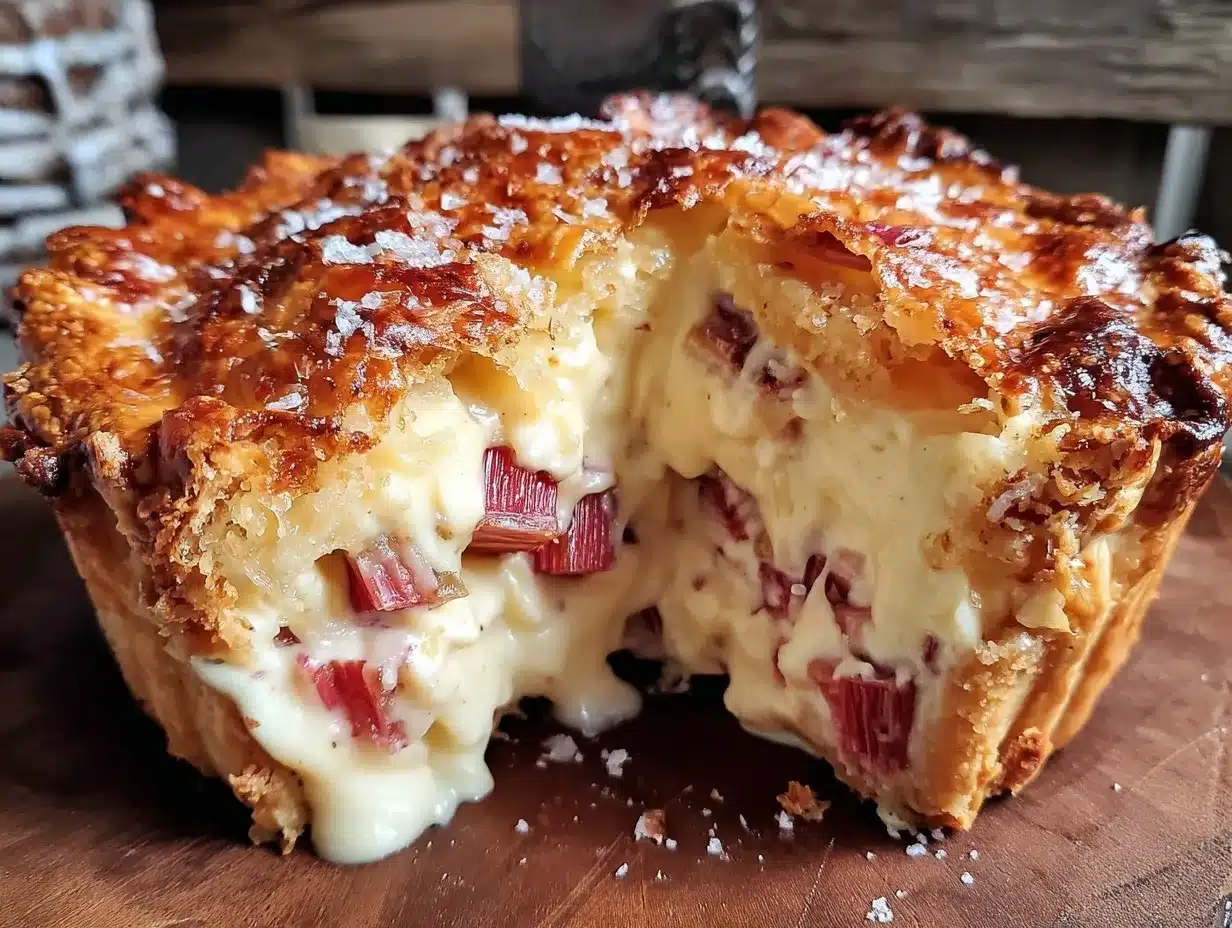
“You’ve got to try this,” said the elderly vendor at the Saturday market, holding out a slice of pie wrapped in wax paper. Honestly, I didn’t expect much from the dusty little stall tucked between the usual flower stands and homemade jam booths. But that first bite of the classic rhubarb custard pie was like a little jolt of spring sunshine—tart rhubarb balanced by silky custard, all nestled in a buttery, flaky crust that practically melted in my mouth.
I wasn’t even shopping for pie. I’d stopped to chat about the odd bunches of rhubarb, and somehow, the conversation turned to his mother’s recipe. He claimed it was the best in town, and I, ever the skeptic, bought a slice just to be polite. Well, that pie ended up sparking a weekend kitchen obsession, complete with flour dust on my counter and a slightly lopsided crust on my first try (I forgot to chill the dough properly—rookie mistake!).
Maybe you’ve been there—the craving for something both tangy and sweet that reminds you of a sunny afternoon, yet feels cozy enough for a quiet evening. This classic rhubarb custard pie with flaky butter crust stuck with me because it’s not fancy, but it’s honest. It’s that kind of recipe you can pull off to impress friends without breaking a sweat, or make quietly for yourself on a lazy Sunday. And let me tell you, every time I make it, it brings back the hum of that market and the unexpected kindness in a stranger’s smile.
Why You’ll Love This Recipe
After multiple test bakes and friendly critiques, this classic rhubarb custard pie recipe has become a trusted staple in my kitchen. It’s one of those dishes that feels both nostalgic and fresh, perfect for anyone who appreciates the balance of tart and sweet, with a custard that’s luxuriously smooth. Here’s why this pie might just become your next favorite:
- Quick & Easy: The pie comes together in under 90 minutes, including baking—ideal when you want a homemade treat without spending all day in the kitchen.
- Simple Ingredients: No need for exotic spices or hard-to-find items. Your pantry probably already holds most of what you need.
- Perfect for Seasonal Gatherings: Rhubarb is a springtime gem, and this pie shines at brunches, potlucks, or cozy family dinners.
- Crowd-Pleaser: The tartness of rhubarb contrasts beautifully with the creamy custard, making it a hit with both kids and adults.
- Unbelievably Delicious: The flaky butter crust is the real MVP here—thanks to a few chef-tested tips, it’s tender, crisp, and holds the filling perfectly.
This recipe isn’t just another rhubarb pie. The custard is gently sweetened and delicately spiced with just a hint of vanilla, creating a silky texture that complements the rhubarb’s zing. The crust is made with cold butter chunks folded into flour, giving it that prized flakiness you don’t always find in homemade pies. Honestly, I don’t think I’ll ever switch back to store-bought crust after this.
What keeps me coming back is how this pie manages to feel both comforting and a little special. It’s the kind of dessert that makes you close your eyes after the first bite, savoring the perfect balance. Whether you’re a rhubarb fan already or just curious, this pie makes a compelling case for trying something classic with a little homemade love.
What Ingredients You Will Need
This classic rhubarb custard pie uses straightforward, wholesome ingredients that come together to create a memorable dessert. The rhubarb offers a tart punch, the custard brings smooth sweetness, and the flaky butter crust ties everything up with a golden finish. Here’s what you’ll need:
- For the Crust:
- 2 ½ cups (315g) all-purpose flour, spooned and leveled (I prefer King Arthur for consistent texture)
- 1 cup (226g) unsalted butter, cold and cut into small cubes (using European-style butter adds extra flavor)
- 1 teaspoon salt
- 1 tablespoon granulated sugar (optional, for a hint of sweetness)
- 6-8 tablespoons ice water, chilled
- For the Filling:
- 4 cups (about 500g) fresh rhubarb, chopped into 1/2-inch pieces (if fresh isn’t available, frozen works fine—just thaw and drain excess liquid)
- 1 cup (200g) granulated sugar
- 3 large eggs, room temperature
- 1 cup (240ml) whole milk
- 1 cup (240ml) heavy cream
- 2 teaspoons vanilla extract (I always use Nielsen-Massey for the purest flavor)
- 2 tablespoons all-purpose flour (helps set the custard)
- Pinch of salt
- Optional: 1/4 teaspoon ground cinnamon or nutmeg for a subtle warmth
If you want to make this gluten-free, swapping the all-purpose flour in the crust for a gluten-free blend works well—just be sure to keep everything chilled. For dairy-free options, try coconut cream and almond milk, though the custard texture will be slightly different.
Equipment Needed
- 9-inch (23cm) pie dish – glass or ceramic preferred for even baking
- Mixing bowls – one large for crust, another for filling
- Pastry cutter or food processor – to cut butter into flour; a fork works in a pinch
- Rolling pin – essential for rolling out the dough evenly; I like a heavy wooden one for control
- Whisk – for combining custard ingredients smoothly
- Measuring cups and spoons – precise measurements make a difference
- Cooling rack – to let your pie cool without sogginess
If you don’t have a pastry cutter, using your fingertips quickly to rub the butter into flour works, but watch out for warm hands melting the butter. A food processor can speed things up, but I like doing it by hand—it feels more connected to the process. Also, chilling the pie dish helps the crust crisp up nicely.
Preparation Method
- Make the Crust: In a large bowl, whisk together the flour, salt, and sugar. Add the cold butter cubes and use a pastry cutter or your fingers to cut the butter into the flour until the mixture resembles coarse crumbs with some pea-sized pieces remaining. This texture is key for a flaky crust. (Tip: Work quickly to keep butter cold.)
- Add Ice Water: Sprinkle 6 tablespoons of ice water over the mixture. Gently mix with a fork until the dough just begins to come together. Add more water, one tablespoon at a time, if it feels too dry. Avoid overworking the dough, or the crust can become tough.
- Shape and Chill: Divide the dough into two discs, wrap each in plastic wrap, and refrigerate for at least 30 minutes. This resting time allows the gluten to relax and the butter to firm up, which helps with rolling and flakiness.
- Prepare Rhubarb: Meanwhile, rinse and chop the rhubarb into 1/2-inch pieces. Set aside.
- Roll Out Bottom Crust: On a floured surface, roll out one disc of dough to about 12 inches (30cm) diameter, roughly 1/8 inch thick. Transfer it carefully into the pie dish, pressing gently to fit the bottom and sides. Trim any excess dough hanging over the edges. Chill again while preparing the filling.
- Make Custard Filling: In a medium bowl, whisk together eggs, sugar, flour, salt, and vanilla extract until smooth. Slowly whisk in milk and cream until fully combined. (Tip: Strain the custard through a fine sieve if you want an ultra-smooth texture.)
- Assemble Pie: Spread the rhubarb evenly over the chilled crust. Pour the custard mixture over the rhubarb, filling the dish close to the top but not overflowing.
- Roll Out Top Crust: Roll out the second dough disc to about 12 inches. You can either place it whole over the filling or cut into strips for a lattice top. If using lattice, weave the strips over the filling for a classic look. Trim and crimp edges to seal.
- Preheat Oven: Heat the oven to 375°F (190°C). Place the pie on a baking sheet to catch any drips.
- Bake: Bake for 45-55 minutes, or until the crust is golden brown and the custard is set but still slightly jiggly in the center. (Pro tip: If the crust edges brown too quickly, cover them with foil after 25 minutes.)
- Cool: Let the pie cool on a rack for at least 2 hours before slicing. This resting time lets the custard finish setting and flavors meld beautifully.
One time, I forgot to set a timer and came back to a slightly overbaked crust, but the filling was still dreamy—proof this pie is forgiving. Just keep an eye on that buttery crust as ovens vary.
Cooking Tips & Techniques
Cooking this classic rhubarb custard pie taught me a few things worth sharing:
- Keep Butter Cold: Cold butter chunks create steam pockets during baking, which makes the crust flaky. If it melts too soon, the crust turns dense.
- Don’t Skip Chilling: Resting the dough is not optional. It relaxes the gluten and firms up butter for easier rolling and better texture.
- Balance the Filling: Rhubarb can be quite tart, so adjusting sugar levels slightly depending on the rhubarb’s freshness helps avoid an overly sour pie.
- Use a Pie Shield: If the crust edges brown too fast, a pie shield or foil strips prevent burning without affecting baking time.
- Test Custard Doneness: The center should be just set—when gently shaken, it should wobble slightly. Overbaking makes it rubbery.
- Multitasking Tip: While the pie bakes, clean up your workspace or prep a simple whipped cream topping—it’s a perfect match!
Variations & Adaptations
Because this pie is so versatile, I’ve played around with a few variations that you might enjoy:
- Berry Rhubarb: Mix fresh strawberries or raspberries with rhubarb for a sweeter, colorful filling.
- Spiced Custard: Add a pinch of cardamom or ginger to the custard for a warming twist.
- Gluten-Free Crust: Use a 1:1 gluten-free flour blend and chill the dough well to maintain flakiness.
- Vegan Version: Swap butter for coconut oil in the crust, and use silken tofu blended with coconut milk and vanilla as the custard base (bake a bit longer).
- I once tried a lattice top with a sprinkle of coarse sugar before baking—it gave a delightful crunch that my guests couldn’t stop complimenting.
Serving & Storage Suggestions
This rhubarb custard pie is best served at room temperature or slightly chilled. It pairs beautifully with a dollop of freshly whipped cream or a scoop of vanilla ice cream. For a brunch twist, try it alongside a cup of strong black coffee or a floral herbal tea.
To store, cover the pie loosely with foil or plastic wrap and keep it in the refrigerator for up to 3 days. The filling firms up more as it chills, which some people prefer. If you need to freeze, wrap the cooled pie tightly in plastic wrap and foil, and freeze for up to 2 months. Thaw overnight in the fridge before serving.
Reheating is delicate—warm slices gently in a 300°F (150°C) oven for about 10 minutes to revive that flaky crust without drying out the custard. This pie’s flavor deepens a bit the next day, so leftovers are a treat, honestly.
Nutritional Information & Benefits
A slice of this classic rhubarb custard pie (about 1/8 of the pie) offers roughly 320 calories, with 18 grams of fat, 35 grams of carbohydrates, and 5 grams of protein. Rhubarb is low in calories but rich in fiber and vitamin K, which supports bone health. The eggs and dairy provide protein and calcium, making this dessert a more balanced indulgence than you might expect.
For those watching carbs, you can reduce sugar slightly or try a sugar substitute like erythritol, though baking times might vary. Keep in mind the butter adds richness, so portion control is key if you’re mindful of fat intake.
Conclusion
This classic rhubarb custard pie with flaky butter crust is a recipe that’s stuck with me not just for its taste but for the memories baked into every slice. It’s simple, honest, and approachable—yet somehow feels special enough for celebrations or just a sweet moment in an ordinary day.
Don’t hesitate to make it your own. Play with the sweetness, add spices you love, or try different crust styles. I love this pie because it brings people together, whether that’s family gatherings or quiet solo indulgence with a good book.
If you give this recipe a try, I’d love to hear how it turns out! Leave a comment below sharing your baking wins, tips, or even your funny kitchen mishaps. Sometimes, those imperfect moments make the best stories.
Happy baking—and may your kitchen be filled with buttery crusts and tart-sweet custard goodness!
FAQs about Classic Rhubarb Custard Pie
Can I use frozen rhubarb for this pie?
Yes, frozen rhubarb works well. Just thaw it completely and drain excess liquid before using to avoid a soggy crust.
How do I prevent the crust edges from burning?
Cover the edges with foil or a pie shield halfway through baking to protect them from over-browning.
What’s the best way to tell when the custard is done?
The custard should be set but still slightly jiggly in the center when you gently shake the pie. Avoid overbaking to keep it creamy.
Can I make the crust ahead of time?
Absolutely! You can prepare the dough up to two days in advance and keep it wrapped in the fridge, or freeze it for up to a month.
Is there a substitute for heavy cream in the custard?
You can use whole milk alone, but the custard will be less rich. For a dairy-free option, coconut milk works, though the flavor will change slightly.
Pin This Recipe!
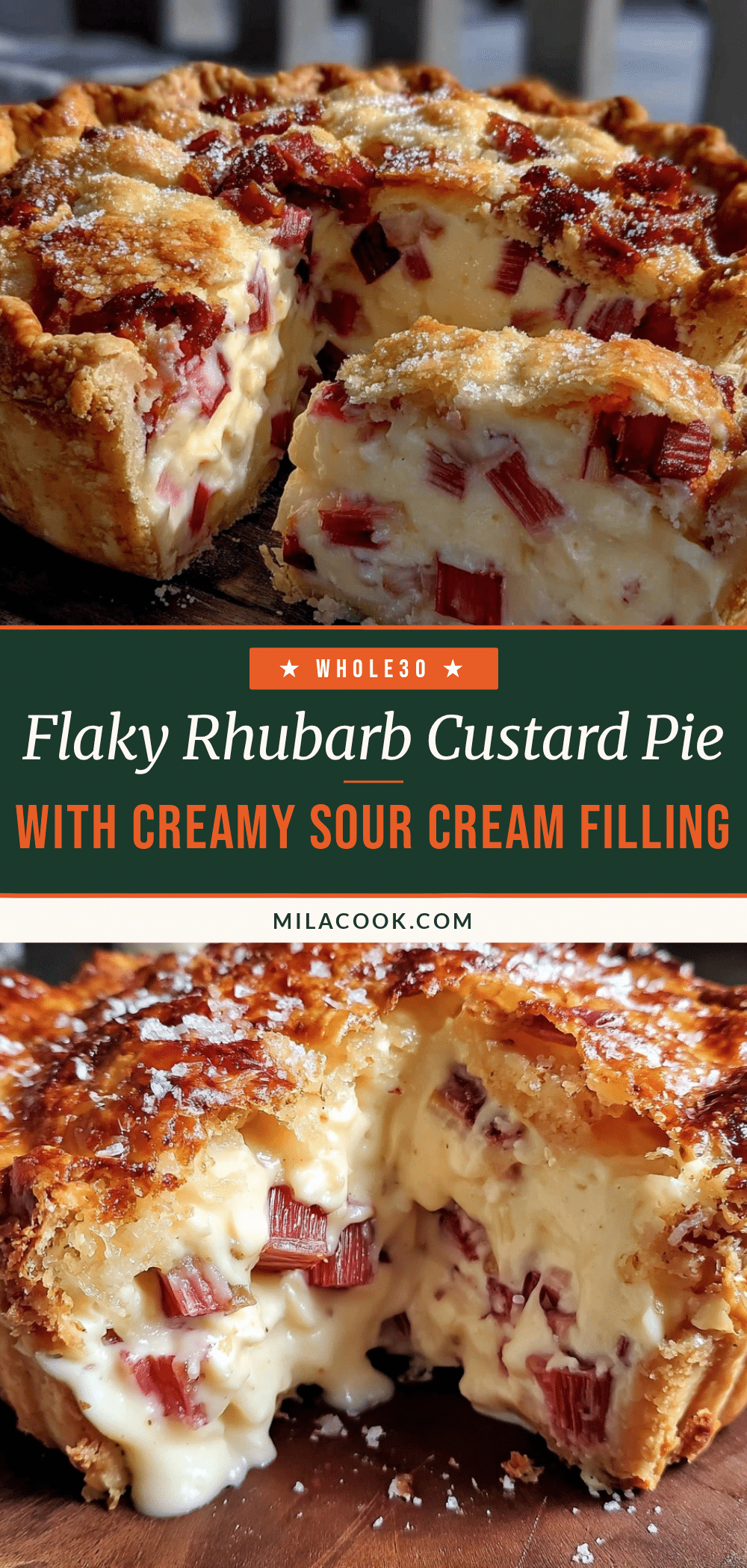
Classic Rhubarb Custard Pie

A nostalgic and fresh pie featuring tart rhubarb balanced by silky custard in a flaky, buttery crust. Perfect for spring gatherings or cozy evenings.
- Prep Time: 40 minutes
- Cook Time: 50 minutes
- Total Time: 1 hour 30 minutes
- Yield: 8 servings 1x
- Category: Dessert
- Cuisine: American
Ingredients
- 2 ½ cups (315g) all-purpose flour
- 1 cup (226g) unsalted butter, cold and cut into small cubes
- 1 teaspoon salt
- 1 tablespoon granulated sugar (optional)
- 6–8 tablespoons ice water, chilled
- 4 cups (about 500g) fresh rhubarb, chopped into 1/2-inch pieces
- 1 cup (200g) granulated sugar
- 3 large eggs, room temperature
- 1 cup (240ml) whole milk
- 1 cup (240ml) heavy cream
- 2 teaspoons vanilla extract
- 2 tablespoons all-purpose flour
- Pinch of salt
- Optional: 1/4 teaspoon ground cinnamon or nutmeg
Instructions
- Make the Crust: In a large bowl, whisk together the flour, salt, and sugar. Add the cold butter cubes and use a pastry cutter or your fingers to cut the butter into the flour until the mixture resembles coarse crumbs with some pea-sized pieces remaining.
- Add Ice Water: Sprinkle 6 tablespoons of ice water over the mixture. Gently mix with a fork until the dough just begins to come together. Add more water, one tablespoon at a time, if it feels too dry. Avoid overworking the dough.
- Shape and Chill: Divide the dough into two discs, wrap each in plastic wrap, and refrigerate for at least 30 minutes.
- Prepare Rhubarb: Rinse and chop the rhubarb into 1/2-inch pieces. Set aside.
- Roll Out Bottom Crust: On a floured surface, roll out one disc of dough to about 12 inches diameter, roughly 1/8 inch thick. Transfer it carefully into the pie dish, pressing gently to fit the bottom and sides. Trim any excess dough. Chill again.
- Make Custard Filling: In a medium bowl, whisk together eggs, sugar, flour, salt, and vanilla extract until smooth. Slowly whisk in milk and cream until fully combined.
- Assemble Pie: Spread the rhubarb evenly over the chilled crust. Pour the custard mixture over the rhubarb, filling the dish close to the top but not overflowing.
- Roll Out Top Crust: Roll out the second dough disc to about 12 inches. Place it whole over the filling or cut into strips for a lattice top. Trim and crimp edges to seal.
- Preheat Oven: Heat oven to 375°F (190°C). Place the pie on a baking sheet to catch drips.
- Bake: Bake for 45-55 minutes, or until crust is golden brown and custard is set but slightly jiggly in the center. Cover crust edges with foil after 25 minutes if browning too fast.
- Cool: Let pie cool on a rack for at least 2 hours before slicing.
Notes
Keep butter cold to ensure a flaky crust. Chill dough before rolling. Use a pie shield or foil strips to prevent crust edges from burning. The custard should be set but slightly jiggly in the center. Adjust sugar based on rhubarb tartness. Frozen rhubarb can be used if thawed and drained.
Nutrition
- Serving Size: 1 slice (1/8 of pie)
- Calories: 320
- Fat: 18
- Carbohydrates: 35
- Protein: 5
Keywords: rhubarb pie, custard pie, flaky crust, spring dessert, homemade pie, rhubarb custard pie