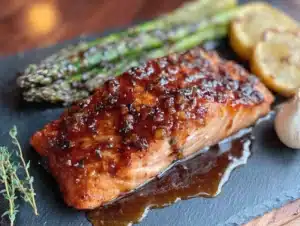
Love this? Save it for later!
Share the inspiration with your friends
This was supposed to be a simple weeknight grilled salmon—just salt, pepper, and a squeeze of lemon. I grabbed the wrong piece of cedar plank from the stack in the garage, the grill was hotter than I planned, and I was already scrambling because my friend was arriving sooner than expected. What came out was nothing like the plan—and honestly, better. The cedar plank had this smoky, woody aroma that seeped into the fish, and the accidental combination of maple syrup and Dijon mustard I tossed together as a glaze added this tangy-sweet pop that I didn’t even know I wanted.
I remember the moment I pulled the salmon off the grill: the glaze was caramelized just right, and the edges of the fish had this irresistible char. I was a bit panicked at first—not sure if the intense heat would ruin the delicate flesh or if the glaze would burn. But as I took that first bite, all those fears melted away. Maybe you’ve been there, rushing through a recipe and ending up with something unexpectedly delicious? That’s exactly how this Flavorful Cedar Plank Salmon with Maple Dijon Glaze came to be a staple in my cooking rotation.
Since that chaotic evening, I’ve made this recipe countless times, each batch reminding me that sometimes mistakes in the kitchen turn into treasured discoveries. If you’re ready for a salmon recipe that’s simple, impressive, and packed with flavor, I think you’ll love this one as much as I do.
Why You’ll Love This Recipe
Honestly, this cedar plank salmon recipe has become my go-to whenever I want something that feels special without the fuss. It’s tested and approved by friends who usually prefer simpler meals, and even the picky eaters ask for seconds. Here’s why I think you’ll appreciate it too:
- Quick & Easy: From prep to plate in under 30 minutes—perfect for busy evenings or when you want that grilled flavor fast.
- Simple Ingredients: No need for complicated grocery runs. You likely have maple syrup and Dijon mustard in your pantry already.
- Perfect for Outdoor Gatherings: Whether it’s a casual barbecue or a summer dinner party, the cedar plank adds a smoky charm that guests love.
- Crowd-Pleaser: Kids, adults, seafood novices—everyone seems to enjoy the balance of sweet and tangy in the glaze.
- Unbelievably Delicious: The cedar plank imparts a subtle smoky flavor, while the maple Dijon glaze caramelizes beautifully, creating a perfect texture contrast.
What sets this recipe apart from the usual grilled salmon is that little twist of the maple Dijon glaze combined with the aromatic cedar plank. It’s not just grilled salmon with sauce; it’s a flavor profile that stays with you. The glaze isn’t overpowering but complements the fish’s natural richness. Plus, the cedar plank cooking method keeps the salmon moist and adds that woodsy depth that’s hard to replicate otherwise.
Honestly, after the first bite, I found myself closing my eyes and savoring it—something I don’t do lightly. If you want a recipe that feels like a cozy, soul-satisfying meal but is quick enough for your hectic schedule, this one fits the bill.
What Ingredients You Will Need
This recipe uses simple, wholesome ingredients that combine to create bold flavor and a satisfying texture without any fuss. Most are pantry staples or easy to find at your local market.
- For the Salmon:
- 1 large salmon fillet (about 1.5–2 lbs / 680–900g), skin on (look for wild-caught if possible for best flavor)
- Salt (preferably kosher or sea salt)
- Freshly ground black pepper
- Olive oil (a light drizzle to help the glaze stick)
- For the Maple Dijon Glaze:
- 3 tablespoons pure maple syrup (I recommend Grade A for a balanced sweetness)
- 2 tablespoons Dijon mustard (look for a smooth, tangy variety like Grey Poupon)
- 1 tablespoon apple cider vinegar (adds brightness and balances sweetness)
- 1 teaspoon soy sauce (optional, for a subtle umami kick)
- 1/2 teaspoon garlic powder (adds depth without overpowering)
- Freshly ground black pepper to taste
- For Cooking:
- 1 untreated cedar plank (soaked for at least 1 hour to prevent burning)
Feel free to swap the apple cider vinegar with lemon juice if you want a brighter citrus note. If you’re avoiding soy, just skip the soy sauce—though it does add a nice layer of flavor. For a gluten-free option, double-check your mustard and soy sauce labels. Also, if you can’t get cedar planks, you can try alder or maple wood planks as alternatives—they’ll impart slightly different but still lovely smoky notes.
Equipment Needed
To make this Flavorful Cedar Plank Salmon with Maple Dijon Glaze, you’ll need a handful of simple kitchen tools. Here’s what I use and recommend:
- Grill: A gas or charcoal grill works great. If you only have an indoor grill pan, you can still get a nice sear, but you’ll miss some of the smoky cedar flavor.
- Cedar Plank: Untreated, food-grade cedar planks are essential. I usually buy them from my local grilling supply shop or online. Remember to soak it in water for at least an hour before grilling to avoid flare-ups.
- Brush: For applying the maple Dijon glaze evenly over the salmon.
- Fish Spatula: A thin, flexible spatula helps when transferring the delicate cooked salmon off the plank without breaking it.
- Mixing Bowl: To whisk together the glaze ingredients.
- Measuring Spoons: For accuracy in the glaze.
If you don’t have a cedar plank, you could use a cast iron grill pan or foil packets, but the flavor won’t be quite the same. For budget-friendly cooks, cedar planks are pretty affordable and reusable if cleaned gently after use. Just avoid soap; warm water and a scrub brush do the trick.
Preparation Method
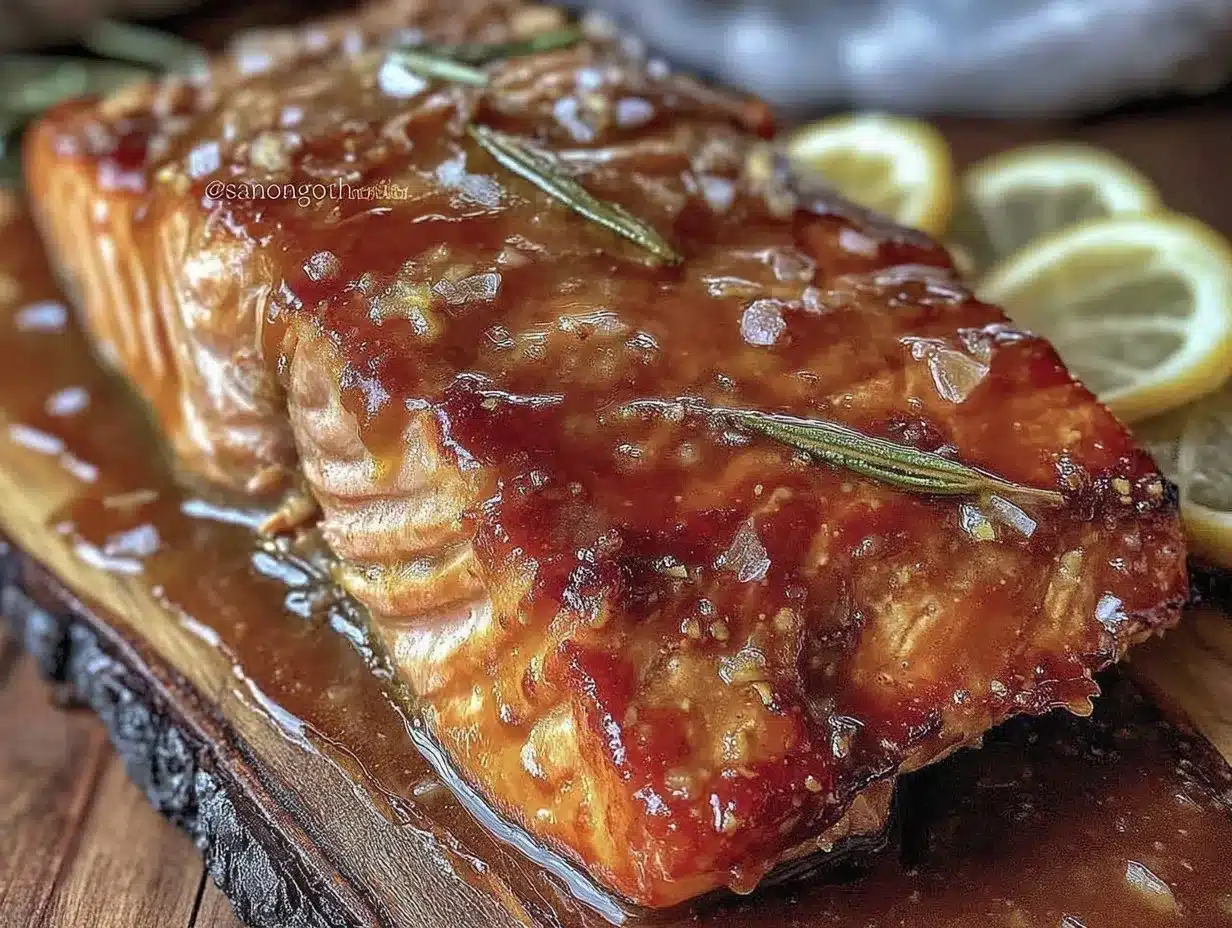
- Soak the Cedar Plank: Place the untreated cedar plank in a large shallow pan or baking dish and cover it with water. Let it soak for at least 1 hour. This is critical to keep the plank from catching fire on the grill.
- Prepare the Glaze: While the plank soaks, whisk together 3 tablespoons maple syrup, 2 tablespoons Dijon mustard, 1 tablespoon apple cider vinegar, 1 teaspoon soy sauce, ½ teaspoon garlic powder, and freshly ground black pepper in a mixing bowl. Set aside.
- Preheat the Grill: Heat your grill to medium-high (around 375–400°F / 190–205°C). If using charcoal, let the coals burn down to a steady heat.
- Prep the Salmon: Pat the salmon fillet dry with paper towels. Drizzle lightly with olive oil and season generously with salt and pepper on both sides. This helps the glaze stick and improves flavor.
- Place Salmon on Plank: Remove the cedar plank from water and pat dry. Lay the salmon skin-side down on the plank.
- Apply the Glaze: Brush about half of the maple Dijon glaze evenly over the salmon, coating the top and sides gently.
- Grill the Salmon: Place the plank directly on the grill grates. Close the lid and cook for about 15–20 minutes. Check at the 12-minute mark to brush on the remaining glaze. The salmon is done when it flakes easily with a fork and reaches an internal temperature of 145°F (63°C).
- Remove and Rest: Using a fish spatula, carefully transfer the salmon off the plank and onto a serving dish. Let it rest for 5 minutes to allow juices to redistribute.
- Serve: Garnish with lemon wedges or fresh herbs if desired. Enjoy warm.
Quick tip: If your grill heat is uneven, rotate the plank halfway through cooking to avoid hot spots. Also, watch closely after brushing the glaze the second time—sugars can burn fast if the heat spikes.
Cooking Tips & Techniques
Cooking salmon on a cedar plank isn’t just a fancy trick—it’s a technique that really boosts flavor and helps keep the fish moist. Here’s what I’ve learned from trial and error:
- Soaking the Plank: Don’t skip this! A dry plank will catch fire and ruin your fish (and your nerves).
- Temperature Control: Medium-high heat is your best friend. Too hot, and the glaze burns; too low, and you miss that beautiful caramelization.
- Glaze Application: Applying glaze in two stages keeps the flavor intense without burning sugars. Brush lightly at first, then more generously later.
- Fish Handling: Use a flexible fish spatula and be gentle. Salmon flesh is delicate and can fall apart if you’re rough.
- Timing: Salmon cooks fast. Keep an eye on it—overcooked salmon dries out, and undercooked can be unsafe.
- Don’t Press the Fish: When flipping or transferring, avoid pressing down; it squeezes out juices.
I once left the glaze on too thick in the beginning and ended up with a burnt crust that was bitter. Lesson learned: thin layers first, then build flavor gradually. The smoky aroma from the cedar also mingles with the glaze beautifully, so don’t rush the plank soaking or cooking times.
Variations & Adaptations
This cedar plank salmon recipe is pretty versatile, so feel free to tweak it to your taste or dietary needs:
- Spicy Twist: Add a teaspoon of chili flakes or a dash of hot sauce to the glaze for a little kick.
- Herb-Infused: Mix fresh chopped dill or thyme into the glaze or sprinkle over the salmon before grilling.
- Gluten-Free: Use tamari instead of soy sauce in the glaze to keep it gluten-free without sacrificing umami.
- Low-Sugar: Reduce maple syrup to 1 tablespoon and add a splash of fresh lemon juice for brightness.
- Cooking Method Adaptation: If you don’t have a grill, bake the salmon on the soaked cedar plank in a 400°F (205°C) oven for 15–20 minutes.
One time, I swapped the maple syrup for honey and added a splash of orange juice—it was a nice change but I prefer the maple’s deeper flavor. The great thing is, the cedar plank method works with almost any glaze or seasoning you like.
Serving & Storage Suggestions
This salmon is best served warm, straight off the grill, ideally with a squeeze of fresh lemon or a sprinkle of fresh herbs like parsley or dill. It pairs wonderfully with simple sides like grilled asparagus, roasted potatoes, or a crisp garden salad.
For beverages, a chilled Sauvignon Blanc or a light lager complements the sweet and smoky flavors nicely—though honestly, it’s just as good with sparkling water and good company.
To store leftovers, wrap the salmon tightly in plastic wrap or place in an airtight container and refrigerate for up to 2 days. Reheat gently in a low oven (about 275°F / 135°C) covered with foil to prevent drying out.
Flavors tend to mellow and meld after refrigeration, making leftovers perfect for salmon salads or flaky sandwiches the next day.
Nutritional Information & Benefits
This recipe is not only tasty but packs a nutritious punch. A 6-ounce (170g) serving of salmon provides approximately:
| Calories | 350 |
|---|---|
| Protein | 34g |
| Fat | 22g (mostly heart-healthy omega-3s) |
| Carbohydrates | 6g (from the maple syrup) |
Salmon is rich in omega-3 fatty acids, which support heart and brain health. The maple syrup and Dijon mustard add flavor without artificial additives, and the minimal use of oil keeps it light. This dish suits gluten-free and low-carb diets, provided you choose gluten-free soy sauce. Just watch for allergies if you aren’t used to fish or mustard.
From a wellness perspective, I find recipes like this an easy way to get nutrient-dense foods on the table without sacrificing flavor or time.
Conclusion
This Flavorful Cedar Plank Salmon with Maple Dijon Glaze is proof that sometimes the best dishes come from unexpected moments and a little kitchen chaos. It’s an easy, delicious way to bring a smoky, sweet, and tangy punch to your dinner table without hours of work or fancy ingredients.
Feel free to play around with the glaze or sides to match your own tastes—that’s what keeps this recipe fresh and exciting for me. Honestly, it’s become one of my favorite “go-to” meals when I want to impress or just treat myself with something satisfying and wholesome.
If you try it out, I’d love to hear how you made it your own or if you have any special tips. Drop a comment below and share your experience! Cooking should be fun and forgiving, and this recipe fits that bill perfectly.
Here’s to many delicious meals ahead!
Frequently Asked Questions
Can I use other types of fish with cedar planks?
Absolutely! Cedar planks work wonderfully with other firm fish like trout, steelhead, or even shellfish like shrimp. Just adjust cooking times based on thickness.
Do I have to soak the cedar plank before grilling?
Yes, soaking for at least 1 hour prevents the wood from catching fire and helps produce that smoky aroma that infuses the salmon.
Can I make the maple Dijon glaze ahead of time?
Yes, the glaze can be prepared a day in advance and stored in the fridge. Just give it a good stir before using.
What if I don’t have a grill? Can I bake the salmon?
You can bake the salmon on a soaked cedar plank in a 400°F (205°C) oven for 15–20 minutes. The flavor will be similar, though slightly less smoky.
How do I know when the salmon is done?
The salmon flakes easily with a fork and reaches an internal temperature of 145°F (63°C). Overcooking will dry it out, so keep an eye on it especially near the end of cooking.
Pin This Recipe!
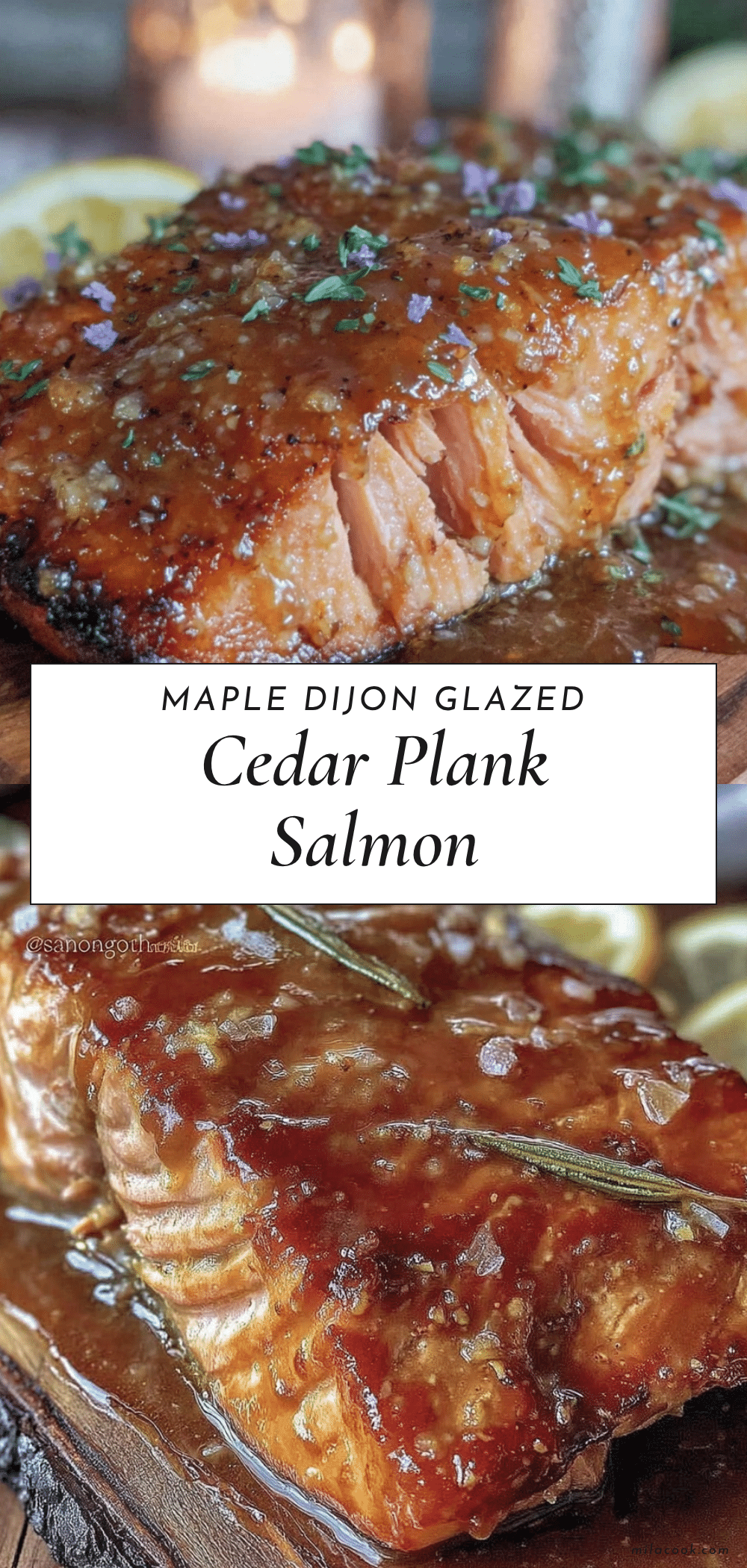
Flavorful Cedar Plank Salmon Recipe with Easy Maple Dijon Glaze

A simple yet impressive grilled salmon recipe featuring a smoky cedar plank and a tangy-sweet maple Dijon glaze, perfect for quick weeknight dinners or outdoor gatherings.
- Prep Time: 10 minutes
- Cook Time: 20 minutes
- Total Time: 30 minutes
- Yield: 4 servings 1x
- Category: Main Course
- Cuisine: American
Ingredients
- 1 large salmon fillet (about 1.5–2 lbs / 680–900g), skin on
- Salt (preferably kosher or sea salt)
- Freshly ground black pepper
- Olive oil (a light drizzle)
- 3 tablespoons pure maple syrup (Grade A recommended)
- 2 tablespoons Dijon mustard (smooth, tangy variety)
- 1 tablespoon apple cider vinegar
- 1 teaspoon soy sauce (optional)
- 1/2 teaspoon garlic powder
- Freshly ground black pepper to taste
- 1 untreated cedar plank (soaked for at least 1 hour)
Instructions
- Soak the untreated cedar plank in water for at least 1 hour to prevent burning.
- Whisk together maple syrup, Dijon mustard, apple cider vinegar, soy sauce, garlic powder, and black pepper in a mixing bowl to prepare the glaze.
- Preheat grill to medium-high heat (375–400°F / 190–205°C).
- Pat salmon fillet dry with paper towels. Drizzle lightly with olive oil and season generously with salt and pepper on both sides.
- Remove cedar plank from water and pat dry. Place salmon skin-side down on the plank.
- Brush about half of the maple Dijon glaze evenly over the salmon, coating the top and sides gently.
- Place the plank directly on the grill grates. Close the lid and cook for 15–20 minutes, checking at 12 minutes to brush on the remaining glaze.
- The salmon is done when it flakes easily with a fork and reaches an internal temperature of 145°F (63°C).
- Carefully transfer the salmon off the plank using a fish spatula and let it rest for 5 minutes before serving.
- Serve warm, optionally garnished with lemon wedges or fresh herbs.
Notes
Soak the cedar plank for at least 1 hour to prevent fire and impart smoky flavor. Apply glaze in two stages to avoid burning sugars. Rotate plank halfway if grill heat is uneven. Use a fish spatula to handle salmon gently to prevent breaking. If no grill is available, bake on soaked cedar plank at 400°F (205°C) for 15–20 minutes.
Nutrition
- Serving Size: 6 ounces (170g) salm
- Calories: 350
- Fat: 22
- Carbohydrates: 6
- Protein: 34
Keywords: cedar plank salmon, maple Dijon glaze, grilled salmon, easy salmon recipe, smoky salmon, weeknight dinner, seafood, healthy salmon