Love this? Save it for later!
Share the inspiration with your friends
My neighbor Sarah wasn’t trying to impress me. I’d stopped by to borrow a ladder on a crisp Saturday afternoon, and the scent of something roasting—sweet, almost caramelized—hit me before I even knocked. She opened the door with flour on her cheek and a spatula in her hand, completely unfazed by the culinary magic happening in her kitchen. “Oh, just throwing together a salad,” she said when I asked what smelled so good. Just throwing together a salad. Let me tell you, that was no ordinary salad. It was the best roasted butternut squash & pomegranate fall salad I had ever encountered, and she acted like it was nothing. I stood there, ladder forgotten, watching her toss jewel-like pomegranate seeds over a bed of greens and golden squash. Honestly, I think I might have drooled a little. Maybe you’ve been there—you walk into someone’s kitchen and suddenly realize you’ve been missing out on something extraordinary your whole life. That was my moment. I practically begged her for the recipe, and she scribbled it on a torn piece of paper while I balanced her ladder against my car. I’ve been making it ever since, and it’s the dish that gets requested for every fall gathering. It’s just that good.
Why You’ll Love This Recipe
This isn’t just another fall salad. After testing this recipe at least a dozen times—adjusting the roasting time, tweaking the dressing, swapping out different greens—I can confidently say this version is the one. It’s the kind of salad that makes you close your eyes after the first bite. The kind that converts people who claim they “don’t do salad.”
- Quick & Easy: Comes together in about 45 minutes, with only 15 minutes of active prep. Perfect for busy weeknights when you want something impressive without the stress.
- Simple Ingredients: No fancy grocery trips needed. You likely already have olive oil, maple syrup, and salt in your pantry. The fresh produce is easy to find at any grocery store during fall.
- Perfect for Fall Gatherings: Great for Thanksgiving, Friendsgiving, potlucks, or cozy Sunday dinners. It’s a showstopper that pairs beautifully with almost any main dish.
- Crowd-Pleaser: Always gets rave reviews from kids and adults alike. The sweetness of the roasted squash and the pop of pomegranate are universally loved.
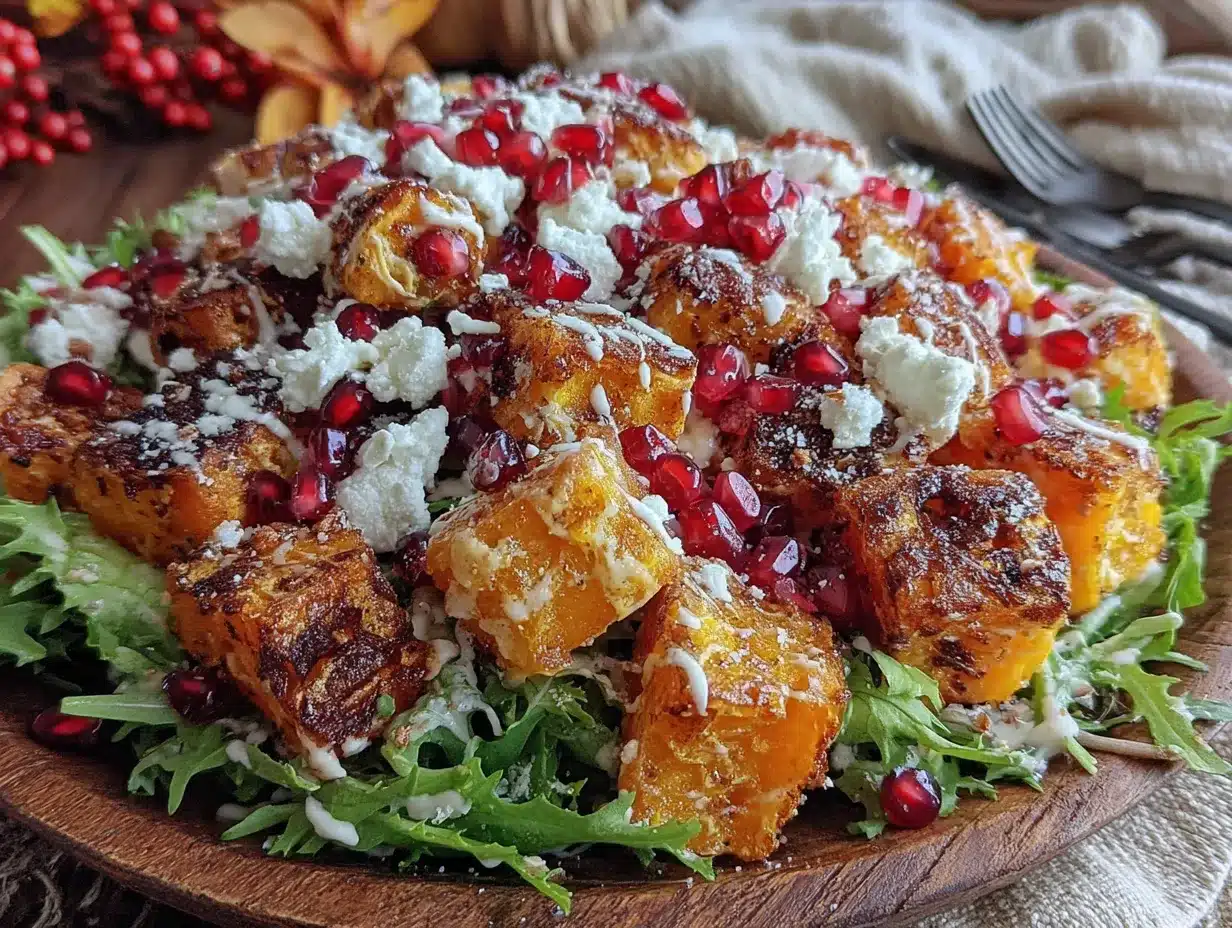
- Unbelievably Delicious: The combination of warm, caramelized butternut squash, tart pomegranate arils, creamy goat cheese, and crunchy candied pecans is next-level comfort food.
What makes this recipe different from the rest? It’s the balance. The squash is roasted until it’s perfectly tender with caramelized edges—not mushy or bland. The dressing has just the right tang to cut through the sweetness. And the textures? Oh, the textures. Creamy, crunchy, chewy, and crisp all in one bite. It’s comfort food reimagined—healthier, faster, but with the same soul-soothing satisfaction. Perfect for impressing guests without stress, or turning a simple meal into something memorable.
What Ingredients You Will Need
This recipe uses simple, wholesome ingredients to deliver bold flavor and satisfying texture without the fuss. Most of these are pantry staples or easy to find at your local grocery store during the fall season.
For the Roasted Butternut Squash
- 1 medium butternut squash, peeled, seeded, and cut into 1-inch cubes (about 4 cups)
- 2 tablespoons olive oil (I recommend extra virgin for better flavor)
- 1 tablespoon maple syrup (use pure maple syrup, not pancake syrup)
- ½ teaspoon salt
- ¼ teaspoon black pepper
- ¼ teaspoon cinnamon (adds warmth and depth)
- ⅛ teaspoon cayenne pepper (optional, for a tiny kick)
For the Candied Pecans
- ½ cup pecans, roughly chopped
- 1 tablespoon maple syrup
- Pinch of salt
For the Salad Base
- 5 ounces mixed greens (baby spinach, arugula, or a spring mix work well)
- ½ cup pomegranate arils (from about 1 pomegranate)
- ⅓ cup crumbled goat cheese (feta works as a substitute)
- ¼ cup dried cranberries (optional, for extra sweetness)
- ¼ cup thinly sliced red onion (optional, for a sharp bite)
For the Maple Balsamic Dressing
- 3 tablespoons balsamic vinegar
- 2 tablespoons maple syrup
- 1 tablespoon Dijon mustard
- 1 small garlic clove, minced
- ⅓ cup olive oil
- Salt and pepper to taste
When choosing a butternut squash, look for one that feels heavy for its size with firm, unblemished skin. I prefer buying pre-cut cubes from the store when I’m short on time—just make sure they’re uniformly sized for even roasting. For the pomegranate arils, you can buy them pre-packaged in the produce section, but honestly, seeding a fresh pomegranate is therapeutic and the flavor is brighter. If you’re dairy-free, substitute the goat cheese with a vegan alternative or simply omit it. The salad is still delicious without it.
Equipment Needed
You don’t need a fancy kitchen to make this salad. Here’s what you’ll need:
- Large baking sheet (rimmed, to prevent spillage)
- Parchment paper (for easy cleanup and preventing sticking)
- Chef’s knife and cutting board (for prepping the squash)
- Vegetable peeler (for removing the squash skin)
- Small skillet (for candying the pecans)
- Large salad bowl
- Small bowl or jar (for the dressing)
- Whisk or fork (for emulsifying the dressing)
- Measuring spoons and cups
If you don’t have a vegetable peeler, a sharp paring knife works just fine—just be careful with your fingers. I’ve definitely nicked myself more times than I’d like to admit. For the dressing, I love using a mason jar with a tight-fitting lid. Just shake it vigorously, and you have perfectly emulsified dressing with zero whisking. It’s a game-changer, honestly.
Preparation Method
- Preheat your oven to 400°F (200°C). Line a large baking sheet with parchment paper for easy cleanup. Trust me on this—scrubbing caramelized squash off a pan is not fun.
- Prepare the butternut squash. Using a sharp vegetable peeler, remove the skin from the squash. Cut off the stem and bottom ends, then slice the squash in half lengthwise. Scoop out the seeds and stringy bits with a spoon. Cut the flesh into 1-inch cubes. Try to keep them uniform in size so they roast evenly. I usually get about 4 cups of cubes from one medium squash.
- Season the squash. In a large bowl, toss the cubed squash with 2 tablespoons olive oil, 1 tablespoon maple syrup, ½ teaspoon salt, ¼ teaspoon black pepper, ¼ teaspoon cinnamon, and a pinch of cayenne if using. Make sure every piece is coated—I use my hands for this, getting a little messy in the process.
- Roast the squash. Spread the seasoned squash in a single layer on the prepared baking sheet. Don’t overcrowd—give them space so they caramelize instead of steam. Roast for 25-30 minutes, flipping halfway through, until the squash is tender and the edges are golden brown and slightly caramelized. You’ll know it’s done when a fork slides in easily. Let it cool slightly while you prepare the rest.
- Make the candied pecans. While the squash roasts, heat a small skillet over medium heat. Add ½ cup chopped pecans and toast them for 2-3 minutes, stirring frequently, until fragrant. Be careful—they burn fast. Add 1 tablespoon maple syrup and a pinch of salt. Stir continuously for about 1 minute until the syrup coats the pecans and starts to bubble. Remove from heat and spread them on a piece of parchment paper to cool. They’ll harden as they cool, creating a delicious candy coating.
- Prepare the dressing. In a small bowl or mason jar, combine 3 tablespoons balsamic vinegar, 2 tablespoons maple syrup, 1 tablespoon Dijon mustard, and 1 minced garlic clove. Whisk or shake to combine. Slowly drizzle in ⅓ cup olive oil while whisking continuously, or add it to the jar and shake vigorously until emulsified. Season with salt and pepper to taste. Give it a taste—it should be tangy, sweet, and slightly sharp from the mustard. Adjust if needed.
- Assemble the salad. In a large salad bowl, add 5 ounces of mixed greens. Top with the warm roasted butternut squash (yes, warm—it slightly wilts the greens and makes everything cozy), ½ cup pomegranate arils, the candied pecans, ⅓ cup crumbled goat cheese, and sliced red onion if using. Drizzle with the dressing and toss gently. I like to add the dressing gradually—you might not need all of it. Start with half and add more as needed.
- Serve immediately. This salad is best enjoyed right after assembling while the squash is still warm and the greens are crisp. Garnish with extra pomegranate arils and a few candied pecans on top for a beautiful presentation.
Cooking Tips & Techniques
I’ve made this salad more times than I can count, and I’ve learned a few things the hard way. Let me save you some trouble.
Don’t skip the parchment paper. The first time I made this, I roasted the squash directly on the pan. Let’s just say I spent twenty minutes scrubbing burnt-on maple syrup. Parchment paper makes cleanup a breeze and prevents the squash from sticking.
Cut the squash into uniform cubes. I know it’s tedious, but it makes a huge difference. Smaller pieces will burn while larger ones stay hard in the middle. Aim for 1-inch cubes and try to keep them consistent. If you’re really short on time, buy pre-cut squash from the store—just check that the pieces are similar in size.
Roast the squash in a single layer. Crowding the pan traps steam and prevents caramelization. If your baking sheet is too small, use two pans or roast in batches. The caramelized edges are the best part—you don’t want to miss out on them.
Toast the pecans carefully. Nuts go from fragrant to burnt in about thirty seconds. Keep your eyes on them and stir constantly. When you add the maple syrup, it will bubble quickly—keep stirring until it coats the nuts, then remove from heat immediately. I once got distracted by my phone and ended up with a pan of blackened, bitter pecans. Not my finest moment.
Warm squash + cold greens = magic. Don’t let the squash cool completely before adding it to the salad. The warmth gently wilts the greens and softens the goat cheese, creating this beautiful, cohesive dish. It’s the secret to making a salad feel like comfort food.
Make the dressing ahead. The dressing keeps well in the fridge for up to a week. I often make a double batch and use it on other salads throughout the week. Just bring it to room temperature and shake well before using.
Variations & Adaptations
One of the best things about this salad is how adaptable it is. Here are some variations I’ve tried and loved:
Vegan Version: Simply omit the goat cheese or substitute with a vegan feta. The salad is still incredibly flavorful without it. I’ve also used toasted pumpkin seeds instead of pecans for a nut-free option, and they add a lovely crunch.
Protein-Packed: Add grilled chicken, roasted chickpeas, or sliced steak to turn this into a full meal. I love adding crispy garlic chicken on top—the savory garlic flavor contrasts beautifully with the sweet squash and tangy dressing. It’s my go-to weeknight dinner when I want something satisfying but healthy.
Seasonal Swaps: In the winter, swap the pomegranate arils for dried cranberries or sliced apples. In the summer, use fresh peaches and blueberries instead. The dressing works year-round with almost any fruit combination. I’ve even made this with roasted sweet potatoes when I couldn’t find butternut squash, and it was just as delicious.
Cheese Alternatives: Not a fan of goat cheese? Try crumbled feta, blue cheese, or shaved parmesan. Each brings a different flavor profile. Feta adds a saltier, tangier bite, while blue cheese gives it a bold, creamy finish. I personally love it with goat cheese—the tanginess balances the sweetness perfectly.
Grain Addition: Add cooked quinoa, farro, or wild rice to make the salad more substantial. It’s perfect for meal prep—just store the grains separately and add them when you’re ready to eat. I often make a big batch on Sunday and enjoy this salad for lunch all week.
Serving & Storage Suggestions
This salad is best served immediately while the squash is still warm and the greens are crisp. The warm squash slightly wilts the greens, creating a lovely texture contrast with the crunchy pecans and juicy pomegranate arils. I like to serve it as a side dish with roasted chicken, grilled salmon, or a hearty soup. It’s also stunning on a Thanksgiving table—the colors alone are worth it.
For a beautiful presentation, arrange the salad on a large platter instead of tossing it in a bowl. Start with a bed of greens, then layer the warm squash, pomegranate arils, candied pecans, and goat cheese. Drizzle the dressing over the top just before serving. It looks like something from a magazine, honestly.
Storage: If you have leftovers, store the components separately. The roasted squash keeps well in an airtight container in the refrigerator for up to 4 days. The dressing lasts about a week. The candied pecans are best eaten within 2 days—they lose their crunch after that. Store them in a separate container at room temperature.
Reheating: To reheat the squash, pop it in the oven at 350°F for 5-10 minutes, or microwave it for 30 seconds. Avoid reheating the entire salad—the greens will become soggy. Instead, assemble fresh portions using the prepped components. The flavors actually develop over time, so the squash tastes even better the next day.
Make-Ahead Tip: You can prep all the components up to 2 days in advance. Roast the squash, candy the pecans, make the dressing, and seed the pomegranate. Store everything separately in the fridge. When you’re ready to serve, just assemble and toss. It’s a lifesaver for holiday entertaining.
Nutritional Information & Benefits
This salad is as nourishing as it is delicious. Here’s an approximate breakdown per serving (based on 4 servings):
- Calories: 380
- Protein: 8g
- Fat: 24g (mostly healthy fats from olive oil, pecans, and goat cheese)
- Carbohydrates: 38g
- Fiber: 7g
- Sugar: 18g (natural sugars from maple syrup, squash, and pomegranate)
- Vitamin A: Over 200% of the daily value (thanks to the butternut squash!)
- Vitamin C: 35% of the daily value
Butternut squash is packed with vitamin A, which supports eye health and immune function. Pomegranate arils are rich in antioxidants, particularly punicalagins, which have anti-inflammatory properties. The pecans provide healthy fats and magnesium, while the greens offer iron and folate. This salad is naturally gluten-free and can easily be made vegan or dairy-free. It’s a nutrient-dense meal that doesn’t feel like “eating healthy”—it just feels like eating well.
Frequently Asked Questions
Can I use frozen butternut squash?
You can, but fresh is better. Frozen squash releases more water as it roasts, which prevents caramelization. If you’re in a pinch, thaw the frozen squash completely and pat it dry with paper towels before seasoning and roasting. The texture won’t be quite as good, but it still tastes delicious.
How do I seed a pomegranate without making a mess?
I’ve tried every method, and this one works best: Cut the pomegranate in half horizontally. Hold one half over a bowl, cut-side down. Whack the back of it firmly with a wooden spoon. The seeds will fall out through your fingers into the bowl. It’s oddly satisfying and surprisingly clean. Just wear an apron—pomegranate juice stains.
Can I make this salad ahead of time?
You can prep all the components ahead, but don’t assemble the salad until you’re ready to serve. The greens will wilt and become soggy if dressed too early. Store the roasted squash, candied pecans, pomegranate arils, and dressing separately in the fridge. Assemble just before serving for the best texture and flavor.
What can I substitute for goat cheese?
Feta cheese is the best substitute—it has a similar tangy, creamy texture. Blue cheese adds a bolder flavor, while shaved parmesan brings a nutty, salty note. For a dairy-free option, use a vegan feta or simply omit the cheese. The salad is still incredibly flavorful without it.
How do I keep the candied pecans crunchy?
Store them in an airtight container at room temperature, not in the fridge. The humidity in the refrigerator will soften them. They’re best eaten within 2 days of making them. If they lose their crunch, you can re-toast them in a dry skillet over medium heat for 1-2 minutes.
Conclusion
This roasted butternut squash and pomegranate fall salad is more than just a recipe—it’s the dish that made me fall in love with salads again. It’s warm, comforting, and packed with textures and flavors that feel truly special. Whether you’re serving it at a holiday gathering or enjoying it as a weeknight dinner, it never fails to impress. I love how forgiving it is—you can swap ingredients, adjust the dressing, or add protein, and it still comes together beautifully. Honestly, it’s become my go-to for everything from Thanksgiving to lazy Sunday lunches. I hope you give it a try and make it your own. Add extra goat cheese if that’s your thing. Throw in some roasted chickpeas for crunch. Use whatever greens you have on hand. That’s the beauty of this salad—it adapts to you. If you make it, I’d love to hear how it turned out. Drop a comment below or tag me in your photos. Happy cooking, friends!
Pin This Recipe!
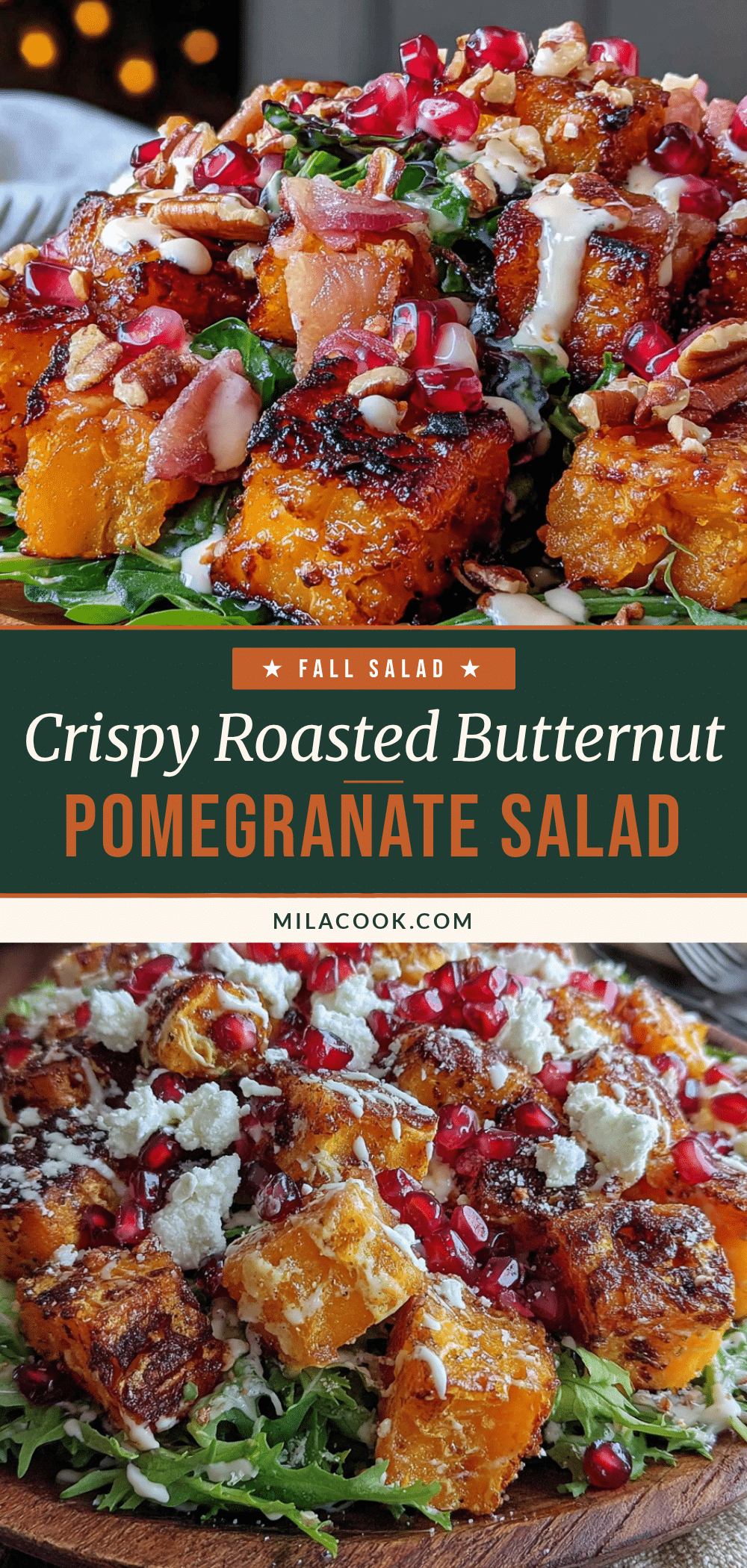
Best Roasted Butternut Squash & Pomegranate Fall Salad Recipe
A warm and comforting fall salad featuring caramelized roasted butternut squash, tart pomegranate arils, creamy goat cheese, and crunchy candied pecans, all tossed in a tangy maple balsamic dressing.
- Prep Time: 15 minutes
- Cook Time: 30 minutes
- Total Time: 45 minutes
- Yield: 4 servings 1x
- Category: Salad
- Cuisine: American
Ingredients
- 1 medium butternut squash, peeled, seeded, and cut into 1-inch cubes (about 4 cups)
- 2 tablespoons olive oil
- 1 tablespoon maple syrup
- ½ teaspoon salt
- ¼ teaspoon black pepper
- ¼ teaspoon cinnamon
- ⅛ teaspoon cayenne pepper (optional)
- ½ cup pecans, roughly chopped
- 1 tablespoon maple syrup
- Pinch of salt
- 5 ounces mixed greens (baby spinach, arugula, or spring mix)
- ½ cup pomegranate arils
- ⅓ cup crumbled goat cheese
- ¼ cup dried cranberries (optional)
- ¼ cup thinly sliced red onion (optional)
- 3 tablespoons balsamic vinegar
- 2 tablespoons maple syrup
- 1 tablespoon Dijon mustard
- 1 small garlic clove, minced
- ⅓ cup olive oil
- Salt and pepper to taste
Instructions
- Preheat your oven to 400°F (200°C). Line a large baking sheet with parchment paper.
- Prepare the butternut squash: peel, cut in half lengthwise, scoop out seeds, and cut into 1-inch cubes.
- In a large bowl, toss the cubed squash with 2 tablespoons olive oil, 1 tablespoon maple syrup, ½ teaspoon salt, ¼ teaspoon black pepper, ¼ teaspoon cinnamon, and a pinch of cayenne (if using).
- Spread the seasoned squash in a single layer on the prepared baking sheet. Roast for 25-30 minutes, flipping halfway, until tender and caramelized.
- While the squash roasts, heat a small skillet over medium heat. Add ½ cup chopped pecans and toast for 2-3 minutes until fragrant. Add 1 tablespoon maple syrup and a pinch of salt, stirring for about 1 minute until coated. Spread on parchment paper to cool.
- In a small bowl or mason jar, combine 3 tablespoons balsamic vinegar, 2 tablespoons maple syrup, 1 tablespoon Dijon mustard, and 1 minced garlic clove. Slowly drizzle in ⅓ cup olive oil while whisking or shake until emulsified. Season with salt and pepper.
- In a large salad bowl, combine 5 ounces mixed greens, warm roasted squash, ½ cup pomegranate arils, candied pecans, ⅓ cup crumbled goat cheese, and optional dried cranberries and red onion. Drizzle with dressing and toss gently.
- Serve immediately while the squash is still warm.
Notes
For best results, roast squash in a single layer to ensure caramelization. Warm squash slightly wilts the greens, creating a cozy texture. Store components separately for leftovers; the dressing keeps up to a week in the fridge. Candied pecans are best eaten within 2 days.
Nutrition
- Serving Size: 1 serving
- Calories: 380
- Sugar: 18
- Sodium: 450
- Fat: 24
- Saturated Fat: 5
- Carbohydrates: 38
- Fiber: 7
- Protein: 8
Keywords: fall salad, roasted butternut squash, pomegranate, goat cheese, candied pecans, maple balsamic dressing, Thanksgiving salad, vegetarian, gluten-free