Love this? Save it for later!
Share the inspiration with your friends
My brother-in-law Mark asked why I couldn’t just crank the oven as high as it would go and let the prime rib roast “figure itself out.” I started to explain why that wouldn’t work — something about even cooking and carryover heat and the science of a perfect crust. Then I stopped. Honestly, I had never tried it that way. I had spent years fussing with reverse searing and temperature probes and complicated roasting charts, and here was a guy who had never made a prime rib in his life suggesting I just… blast it.
I let him talk me into it. Partly because I was tired, partly because it was Christmas Eve and the kitchen was already a disaster zone, and partly because there is something humbling about realizing you might be overcomplicating things. That roast came out of the oven with a crust so deep and crackling I could hear it from across the room. The inside was a perfect rosy pink from edge to center. Mark just shrugged and said, “Told you.”
That was three years ago, and I have not made prime rib any other way since. I have refined it, sure — added the herb crust that makes the outside taste like a garden exploded in the best way, tweaked the timing so it works every single time. But the core of this recipe is still that moment of letting go of control. You know that feeling when you have been doing something the “right” way for so long you forgot to ask if there was an easier way? This is that recipe. It is the holiday centerpiece that makes you look like a hero while you sip wine and actually enjoy your own party.
Why You’ll Love This Recipe
Let me tell you why this herb-crusted prime rib roast has become my go-to for every holiday gathering. I have tested this method at least a dozen times — on Christmas, New Year’s Eve, even a random Tuesday in February when I needed to feel fancy. It works. Every. Single. Time.
- Foolproof Method: The high-heat blast technique eliminates the guesswork. No flipping, no rotating, no stress. The oven does the heavy lifting.
- Simple Ingredients: You likely already have garlic, rosemary, thyme, and olive oil in your kitchen. The only special purchase is the roast itself.
- Perfect for Holidays: This is the centerpiece that makes everyone stop talking when you bring it to the table. It commands attention without demanding your constant presence.
- Crowd-Pleaser: I have served this to picky eaters, steak snobs, and vegetarian-curious relatives. Everyone reaches for seconds.
- Unbelievably Delicious: The herb crust creates this incredible savory shell that gives way to buttery, tender meat. It is the kind of bite that makes you close your eyes.
What makes this recipe different from the dozens of prime rib recipes out there is the timing. Most recipes have you babysitting the oven for hours. This one gives you a clear schedule — high heat, then off, then a final blast. It is designed for the cook who wants to be present for the party, not trapped in the kitchen.
This isn’t just a recipe. It is the kind of meal that creates memories. The first time I made it for my family, my mom asked for the recipe before she finished her first slice. That never happens.
What Ingredients You Will Need
This recipe uses straightforward, high-quality ingredients to build layers of flavor without complicated techniques. The magic is in the combination and the method.
- Prime Rib Roast (bone-in, 4-6 pounds): Bone-in is non-negotiable here. The bones act as a natural roasting rack and add incredible flavor to the meat. I recommend asking your butcher for a “first cut” roast from the loin end for the most tender results. (Costco has reliably good prime ribs if you don’t have a local butcher.)
- Fresh Rosemary (3 tablespoons, finely chopped): Go fresh here. Dried rosemary is too brittle and burns under high heat. The fresh stuff melts into the crust and perfumes the whole kitchen.
- Fresh Thyme (2 tablespoons, leaves stripped): Thyme is the quiet workhorse of this herb crust. It adds an earthy undertone that keeps the garlic from overpowering everything.
- Garlic (6 cloves, minced): Use fresh garlic, not the pre-minced stuff in a jar. The flavor difference is massive when you are using high heat.
- Olive Oil (3 tablespoons): Extra virgin is fine, but don’t use your fancy finishing oil. A good quality everyday olive oil works perfectly.
- Dijon Mustard (2 tablespoons): This is the secret ingredient that helps the herb crust stick to the meat and adds a subtle tangy depth. You won’t taste mustard — you will just wonder why the crust is so good.
- Coarse Sea Salt (2 teaspoons): Use a coarse salt, not fine table salt. The texture matters for the crust, and coarse salt dissolves more evenly during the high-heat blast.
- Freshly Ground Black Pepper (1 teaspoon): Grind it fresh. Pre-ground pepper doesn’t have the same punch, and this recipe deserves the real thing.
- Beef Broth (1 cup, for the pan): This is optional but recommended. It creates the foundation for a quick pan sauce while the roast rests.
For the best results, take the roast out of the refrigerator 2 hours before cooking. Cold meat cooks unevenly, and you want that center to be perfectly rosy. I usually pull mine out, season it generously with salt, and let it sit on the counter while I prep the herb paste. This also gives the salt time to penetrate the meat — a technique called dry brining that makes every bite more flavorful.
Equipment Needed
You don’t need a lot of fancy gear for this recipe, which is part of why I love it. Here is what you will need:
- Roasting Pan: A heavy-duty pan with low sides works best. You want the heat to circulate around the roast, not trap steam. I use a stainless steel pan I picked up at a restaurant supply store for $25.
- Instant-Read Thermometer: This is non-negotiable. Do not trust the pop-up thermometers that come with some roasts. I use a Thermapen because it reads in 3 seconds, but any reliable instant-read thermometer works.
- Chef’s Knife: A sharp knife makes carving the prime rib so much easier. If your knife is dull, the meat will shred instead of slicing cleanly.
- Cutting Board: A large wooden or plastic board with a groove to catch juices. You will want those juices for serving.
- Small Bowl: For mixing the herb paste. Nothing fancy — any bowl will do.
- Aluminum Foil: For tenting the roast while it rests. This step is crucial.
If you don’t have a roasting pan, a rimmed baking sheet works in a pinch. Just place a wire rack on top to keep the roast elevated. I have done this more times than I want to admit when my roasting pan was buried in the back of a cabinet.
Preparation Method
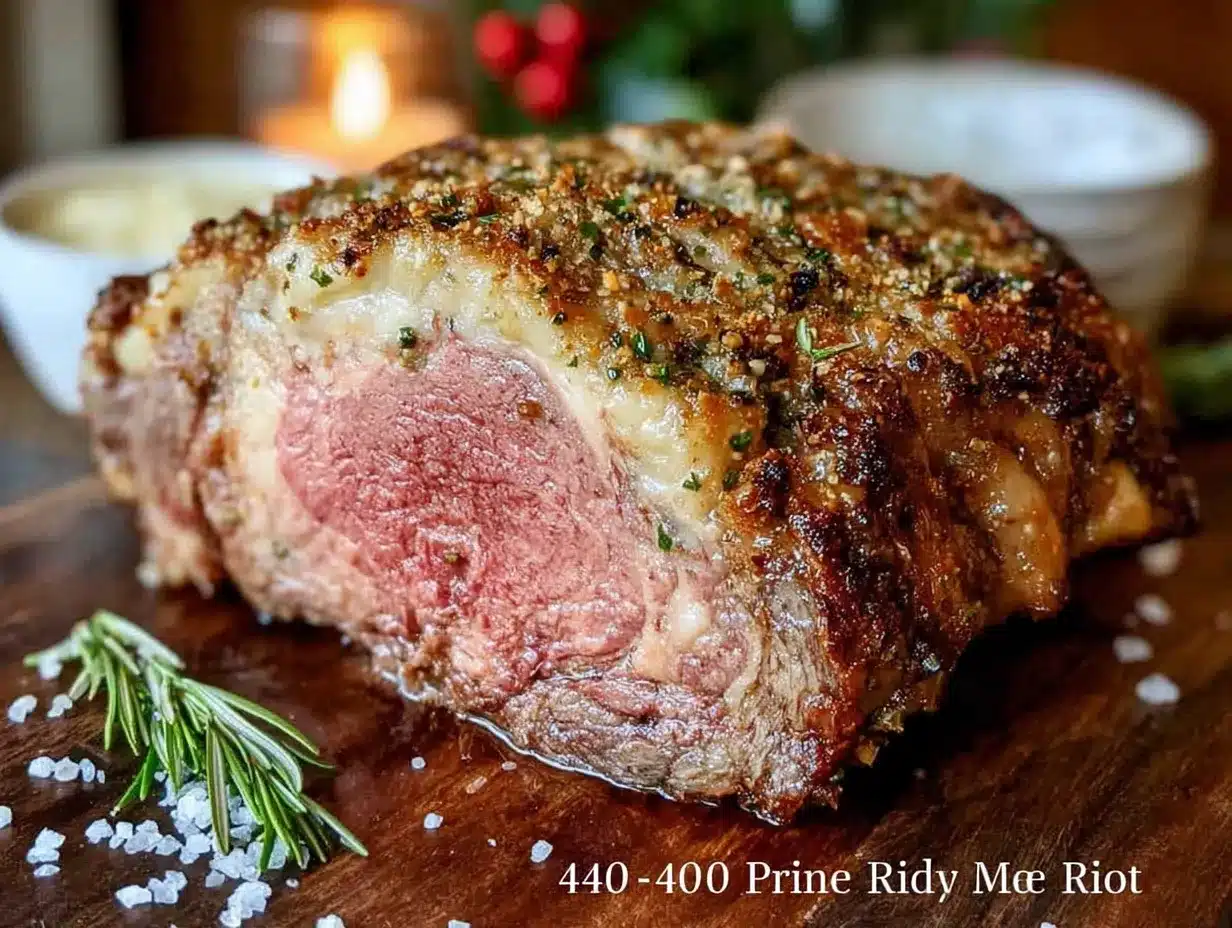
Let me walk you through this step by step. Trust the process — it might feel wrong at first, but the results speak for themselves.
- Prep the Roast (2 hours before cooking): Remove the prime rib from the refrigerator and let it come to room temperature. Pat it dry with paper towels — moisture is the enemy of a good crust. Season generously with salt and let it sit. This is the hardest part because you just want to cook it, but patience pays off.
- Make the Herb Paste (30 minutes before cooking): In a small bowl, combine the chopped rosemary, thyme, minced garlic, olive oil, Dijon mustard, and black pepper. Mix until it forms a thick, fragrant paste. Smell it. That is the smell of Christmas.
- Preheat the Oven (20 minutes before cooking): Set your oven to 500°F. Yes, 500. Let it preheat fully. This is the “blast” part of the method, and you need the oven screaming hot.
- Coat the Roast (10 minutes before cooking): Rub the herb paste all over the roast, getting it into every crevice. Don’t be shy — you want a thick, even coating. Place the roast bone-side down in the roasting pan. If you have kitchen twine, tie it around the roast between the bones to help it hold its shape.
- High-Heat Blast (15 minutes): Put the roast in the oven and set a timer for 15 minutes. Do not open the door. The initial blast creates that incredible crust. Your kitchen will smell like a steakhouse.
- Turn Off the Oven (DO NOT OPEN THE DOOR): After 15 minutes, turn the oven off completely. Leave the roast inside. Do not open the door. This is the part that feels wrong. I promise you, it works. The residual heat continues cooking the roast gently and evenly.
- Wait (2 to 3 hours depending on roast size): For a 4-6 pound roast, leave it in the turned-off oven for 2 hours. For larger roasts, add 30 minutes per pound. Do not peek. Every time you open the door, you lose heat and mess up the timing.
- Check Temperature (after the wait): Open the oven and insert your thermometer into the thickest part of the meat, avoiding the bone. You are looking for 120-125°F for medium-rare. If it is under, turn the oven back on to 500°F and check every 5 minutes.
- Final Blast (5-10 minutes): If the crust needs more color — and it usually does — turn the oven back to 500°F and roast for another 5-10 minutes. Watch it closely. You want deep brown, not burnt.
- Rest (20-30 minutes): Remove the roast from the oven, tent it loosely with foil, and let it rest on a cutting board. The internal temperature will rise another 5-10 degrees during this time. This is when you make your pan sauce if you want one.
The first time I made this, I was convinced I had ruined dinner. The roast sat in a cold oven for two hours while I nervously checked the clock. When I finally pulled it out and sliced into it, the meat was perfectly medium-rare from edge to center. My husband actually laughed at my relief.
Cooking Tips & Techniques
After making this recipe more times than I can count, I have learned a few things the hard way. Here are my best tips:
Don’t skip the rest at room temperature. I know it feels risky leaving raw meat on the counter, but two hours is perfectly safe. A cold roast will cook unevenly — the outside will be overdone before the center even starts to warm up.
Use a thermometer, not time. Ovens vary wildly. My old oven ran 25 degrees hot, and I ruined a $80 roast before I figured it out. The thermometer is your insurance policy.
Let the roast rest properly. I made the mistake of carving too early once, and all the beautiful red juices ran out onto the cutting board. That is flavor you can never get back. Twenty minutes of patience saves the whole meal.
Slice against the grain. Look at the direction of the muscle fibers and cut perpendicular to them. This makes the meat more tender. I learned this after serving a few chewy slices to guests who were too polite to say anything.
Save the bones. After you carve the roast, the bones are perfect for making beef stock. I freeze them and toss them in the pot the next time I make soup. Waste not, want not.
Variations & Adaptations
This recipe is flexible, and I have tried several variations over the years. Here are some of my favorites:
Garlic and Herb Butter Crust: Replace the olive oil with 4 tablespoons of softened butter. Mix it with the herbs and garlic, then spread it over the roast. The butter adds richness and helps the crust get extra crispy. I do this for Christmas dinner because, well, it is Christmas.
Smoked Prime Rib: If you have a smoker, this recipe adapts beautifully. Smoke the roast at 225°F for about 3-4 hours until it reaches 120°F internal, then finish with a 500°F blast in the oven for the crust. The smoky flavor combined with the herb crust is absolutely unreal.
Horseradish Crust: Add 2 tablespoons of prepared horseradish to the herb paste. The heat cuts through the richness of the beef and adds a welcome kick. My father-in-law requests this version every time he visits.
Individual Prime Rib Roasts: If you are cooking for a smaller crowd, buy individual bone-in ribeye steaks and follow the same method. Reduce the initial blast to 10 minutes and the oven-off time to 45 minutes. Perfect for a romantic dinner.
Serving & Storage Suggestions
This prime rib is the star of the show, so keep the sides simple. I usually serve it with roasted potatoes, creamed spinach, and a simple arugula salad with lemon vinaigrette. The richness of the meat pairs beautifully with something bright and acidic.
For beverages, a full-bodied red wine like Cabernet Sauvignon or a Malbec is the classic choice. If you prefer beer, a dark stout or a brown ale works wonderfully. For non-alcoholic options, sparkling water with a splash of cranberry juice and a rosemary sprig feels festive.
Storage: Leftover prime rib keeps in the refrigerator for 3-4 days. Wrap it tightly in plastic wrap or store it in an airtight container. The meat actually gets more tender as it sits.
Reheating: The key to reheating prime rib without drying it out is low and slow. Place slices in a baking dish with a splash of beef broth, cover with foil, and warm in a 300°F oven for 10-15 minutes. Do not use the microwave unless you enjoy eating shoe leather.
Freezing: Prime rib freezes beautifully for up to 3 months. Slice it first, wrap each portion tightly in plastic wrap and then foil, and thaw in the refrigerator overnight before reheating.
Nutritional Information & Benefits
Prime rib is a special occasion meal, so I don’t stress too much about the numbers. But for those who are curious, here is the estimated nutritional breakdown per serving (based on a 6-ounce portion):
- Calories: 450
- Protein: 45g
- Fat: 30g
- Carbohydrates: 2g
- Iron: 15% of the daily value
- Vitamin B12: 80% of the daily value
Beef is an excellent source of high-quality protein, iron, and B vitamins. The herbs in the crust add antioxidants and anti-inflammatory compounds. This is not a health food, but it is real food made with real ingredients. I believe in enjoying special meals without guilt and balancing them with lighter eating the rest of the week.
If you are watching your sodium, reduce the salt in the herb paste and skip the initial salting step. The roast will still be delicious.
Conclusion
This herb-crusted prime rib roast has become my holiday signature for a reason. It delivers incredible results with less stress than any other method I have tried. The crust is aromatic and crackling, the meat is tender and perfectly pink, and the whole process lets you actually enjoy your own party.
I love this recipe because it reminds me that sometimes the simplest approach is the best. My brother-in-law Mark still brings up “his” method every Christmas, and I let him take the credit. Some battles are not worth fighting — especially when the result is this good.
I would love to hear how this turns out for you. Did you try any variations? Did your family fight over the crispy ends like mine does? Drop a comment below and share your experience. And if you snap a photo, tag me — I want to see your beautiful roast!
Frequently Asked Questions
Can I use a boneless prime rib roast?
Yes, but the cooking time will be slightly shorter because heat penetrates more quickly without the bone. Reduce the oven-off time by about 30 minutes and start checking the temperature earlier.
What if my roast is larger than 6 pounds?
For larger roasts, increase the initial blast to 20 minutes and the oven-off time to 3 hours. The same principle applies — you are using residual heat to cook gently.
How do I make a pan sauce from the drippings?
After removing the roast, place the pan on the stovetop over medium heat. Add 1 cup of beef broth and whisk to scrape up the browned bits. Simmer for 5 minutes, then whisk in 1 tablespoon of butter. Season with salt and pepper.
Can I prepare the herb paste in advance?
Absolutely. Make the herb paste up to 2 days ahead and store it in the refrigerator. Let it come to room temperature before spreading it on the roast.
What is the best way to carve a prime rib?
Remove the bones first by cutting along the line where the meat meets the bone. Then slice the meat against the grain into 1/2-inch thick slices. This gives you the most control and the prettiest presentation.
Pin This Recipe!
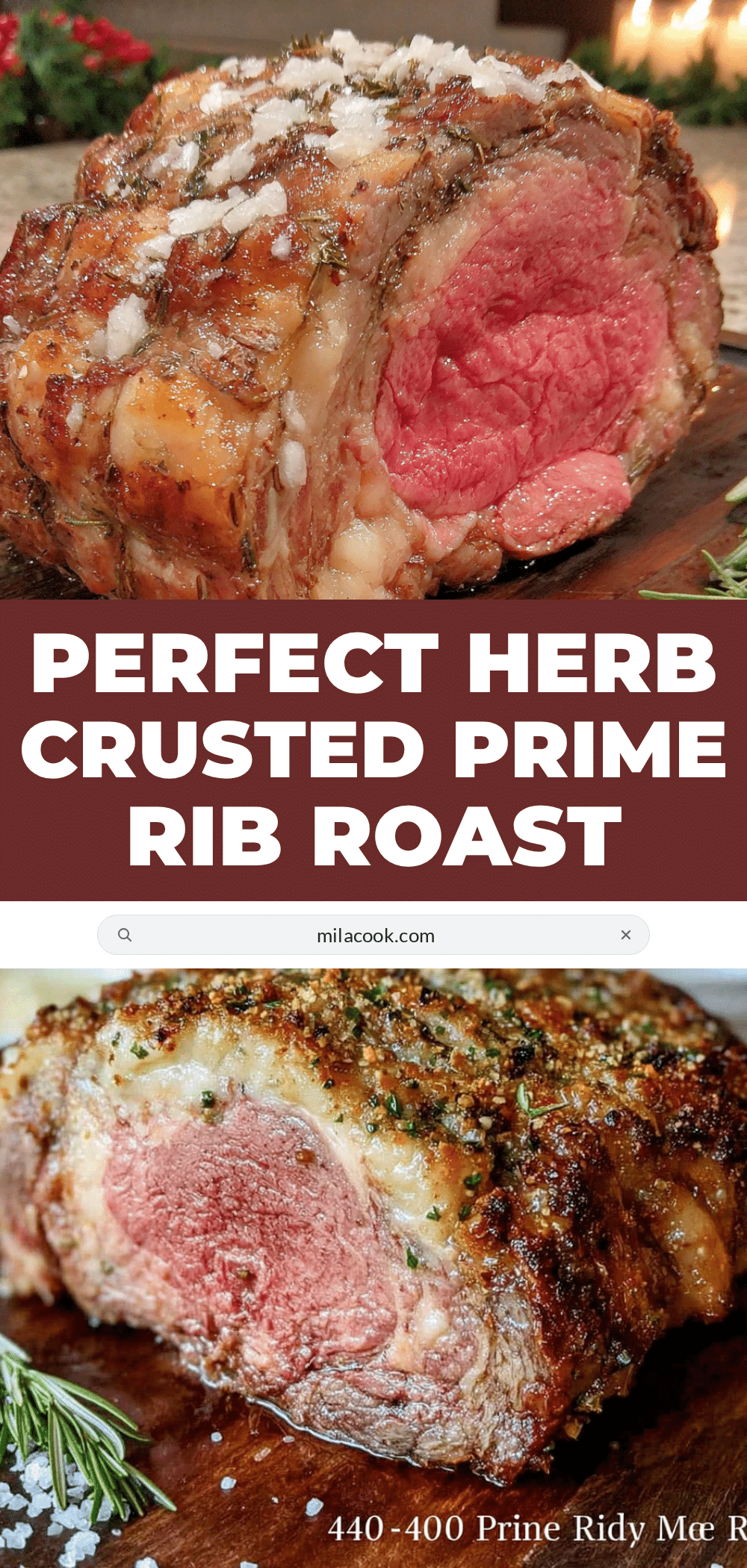
The Perfect Holiday Prime Rib Roast Recipe
This foolproof herb-crusted prime rib roast uses a high-heat blast technique for a deep, crackling crust and perfectly rosy medium-rare center. It’s the stress-free holiday centerpiece that lets you enjoy your own party.
- Prep Time: 2 hours 30 minutes
- Cook Time: 2 hours 30 minutes
- Total Time: 5 hours
- Yield: 8 servings
- Category: Main Course
- Cuisine: American
Ingredients
- Prime rib roast (bone-in, 4-6 pounds)
- Fresh rosemary (3 tablespoons, finely chopped)
- Fresh thyme (2 tablespoons, leaves stripped)
- Garlic (6 cloves, minced)
- Olive oil (3 tablespoons)
- Dijon mustard (2 tablespoons)
- Coarse sea salt (2 teaspoons)
- Freshly ground black pepper (1 teaspoon)
- Beef broth (1 cup, for the pan, optional)
Instructions
- Prep the Roast (2 hours before cooking): Remove the prime rib from the refrigerator and let it come to room temperature. Pat it dry with paper towels. Season generously with salt and let it sit.
- Make the Herb Paste (30 minutes before cooking): In a small bowl, combine the chopped rosemary, thyme, minced garlic, olive oil, Dijon mustard, and black pepper. Mix until it forms a thick, fragrant paste.
- Preheat the Oven (20 minutes before cooking): Set your oven to 500°F. Let it preheat fully.
- Coat the Roast (10 minutes before cooking): Rub the herb paste all over the roast, getting it into every crevice. Place the roast bone-side down in the roasting pan. If you have kitchen twine, tie it around the roast between the bones.
- High-Heat Blast (15 minutes): Put the roast in the oven and set a timer for 15 minutes. Do not open the door.
- Turn Off the Oven (DO NOT OPEN THE DOOR): After 15 minutes, turn the oven off completely. Leave the roast inside. Do not open the door.
- Wait (2 to 3 hours depending on roast size): For a 4-6 pound roast, leave it in the turned-off oven for 2 hours. For larger roasts, add 30 minutes per pound. Do not peek.
- Check Temperature (after the wait): Open the oven and insert your thermometer into the thickest part of the meat, avoiding the bone. You are looking for 120-125°F for medium-rare. If it is under, turn the oven back on to 500°F and check every 5 minutes.
- Final Blast (5-10 minutes): If the crust needs more color, turn the oven back to 500°F and roast for another 5-10 minutes. Watch it closely.
- Rest (20-30 minutes): Remove the roast from the oven, tent it loosely with foil, and let it rest on a cutting board. The internal temperature will rise another 5-10 degrees during this time.
Notes
Don’t skip the rest at room temperature. Use a thermometer, not time. Let the roast rest properly. Slice against the grain. Save the bones for stock.
Nutrition
- Serving Size: 6 ounces
- Calories: 450
- Sodium: 600
- Fat: 30
- Saturated Fat: 12
- Carbohydrates: 2
- Protein: 45
Keywords: prime rib, holiday roast, herb crust, beef, Christmas dinner, New Year's Eve, special occasion