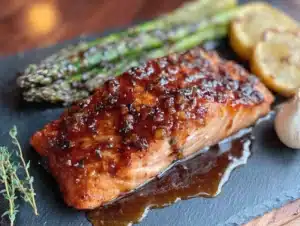
Love this? Save it for later!
Share the inspiration with your friends
I was standing in the frozen foods aisle at Aldi last Tuesday, staring blankly at a bag of salmon fillets, when the smell hit me. It wasn’t from the store—it was that weird thing where your brain just conjures a memory out of nowhere. Suddenly I was twenty-three, standing in my first tiny apartment kitchen, and the whole place smelled like burnt garlic and desperation. I had tried to impress a date with salmon. I had failed. Miserably. The smoke alarm went off, the salmon was dry as cardboard, and I ended up ordering pizza. That night, I swore I’d figure out how to cook salmon properly. It took me years of trial and error—honestly, a lot of error—to land on this quick honey garlic salmon with asparagus. It’s the recipe I wish I’d had back then. The one that makes you look like you know what you’re doing, even if you’re still figuring it out. And let me tell you, once you taste that sticky, savory-sweet glaze against tender, flaky fish and crisp-tender asparagus, you’ll understand why this is the only salmon recipe I’ve made for the last five years. Maybe you’ve had one of those nights where you just need dinner on the table fast, but you also want it to feel like a real meal. This is that recipe.
Why You’ll Love This Recipe
This isn’t just another salmon recipe floating around the internet. I’ve tested this one at least a dozen times—burned it, undercooked it, oversalted it—so you don’t have to. Here is why this version works every single time:
- Ready in 20 Minutes: From fridge to plate in the time it takes to watch one episode of a sitcom. Perfect for those nights when you’re starving and hangry.
- Pantry-Friendly Ingredients: You probably already have honey, soy sauce, and garlic in your kitchen right now. No fancy trips to specialty stores required.
- One-Pan Wonder: Minimal cleanup means more time for actually relaxing after dinner. The asparagus cooks right alongside the salmon, soaking up all that gorgeous glaze.
- Restaurant-Quality at Home: That glossy, caramelized finish on the salmon? It looks like something from a fancy menu, but it’s deceptively simple to achieve.
- Crowd-Pleasing Flavor: Even people who swear they don’t like fish end up going back for seconds. The honey garlic combo is just that good.
What makes this recipe different from the rest is the technique. Instead of drowning the salmon in sauce and hoping for the best, you create a glaze that reduces right in the pan, coating each fillet in a sticky, flavorful layer. The asparagus gets a quick sear before the salmon goes in, so it stays crisp-tender rather than turning into mush. It’s the kind of meal that makes you close your eyes after the first bite—comfort food that happens to be good for you, too.
What Ingredients You Will Need
This recipe keeps things simple with ingredients that work together to create big flavor without a lot of fuss. Most of these are regulars in my kitchen, and I bet they are in yours too.
For the Honey Garlic Glaze
- Honey (¼ cup): Use a good quality honey here—it’s the backbone of the sweetness. I prefer a mild wildflower honey, but whatever you have works.
- Soy sauce (3 tablespoons): Low-sodium is your friend here. You can control the salt better. Tamari works great for gluten-free.
- Garlic (4 cloves, minced): Fresh garlic makes a difference. Don’t use the jarred stuff for this—it gets bitter. Trust me on this one.
- Rice vinegar (1 tablespoon): Adds a tiny tang that balances the sweetness. Apple cider vinegar works in a pinch.
- Sesame oil (1 teaspoon): Just a little for that nutty aroma. Optional, but highly recommended.
- Cornstarch (1 teaspoon): Helps thicken the glaze so it clings to the salmon beautifully.
For the Salmon and Asparagus
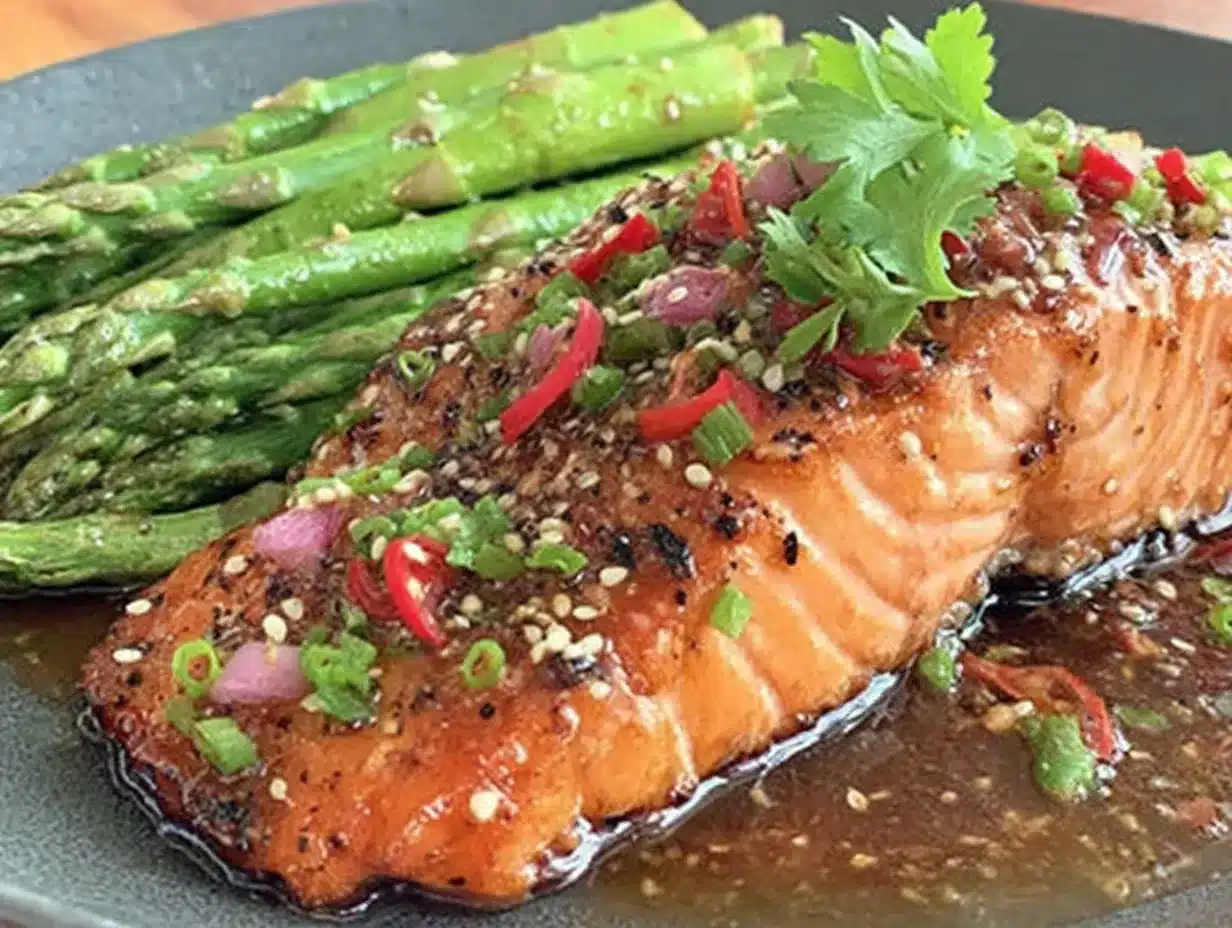
- Salmon fillets (4, about 6 ounces each): Look for fillets that are similar in thickness so they cook evenly. Skin-on or skin-off both work—I prefer skin-on for extra crispiness.
- Asparagus (1 bunch, trimmed): Thicker spears hold up better to the high heat. Snap off the woody ends naturally—they’ll break right where they should.
- Olive oil (2 tablespoons): For searing. Avocado oil works too if you have it.
- Salt and black pepper: To taste. Don’t be shy with the seasoning.
- Sesame seeds and green onions: For garnish. These are optional but make everything look prettier.
Ingredient Tips: If your salmon has pin bones, run your fingers along the fillet and pull them out with tweezers. Nobody wants to bite into one of those. For the asparagus, I like to peel the bottom inch of thicker spears—it makes them more tender without losing that satisfying crunch.
Equipment Needed
- Large skillet or frying pan (12-inch): Non-stick is easiest, but a well-seasoned cast iron works beautifully too. Just make sure it’s big enough to fit everything without crowding.
- Small bowl: For whisking together the glaze ingredients.
- Whisk or fork: To mix the glaze until smooth.
- Tongs: For flipping the salmon and turning the asparagus without breaking anything.
- Spatula: A thin metal one works best for getting under the salmon skin.
- Cutting board and knife: For mincing garlic and trimming asparagus.
- Paper towels: For patting the salmon dry—this is crucial for good searing.
If you don’t have a 12-inch skillet, you can use a smaller one and cook the salmon in batches. Just keep the cooked fillets warm on a plate while you finish the rest. I’ve also made this in a cast iron skillet on a camping trip—worked like a charm over a propane stove.
Preparation Method
- Pat the salmon dry (2 minutes): Take your salmon fillets out of the fridge and pat them thoroughly dry with paper towels. This is non-negotiable—wet salmon won’t sear properly. Season both sides with salt and pepper. Set aside while you prep everything else.
- Make the glaze (3 minutes): In a small bowl, whisk together the honey, soy sauce, minced garlic, rice vinegar, sesame oil, and cornstarch. Make sure the cornstarch is fully dissolved—no lumps allowed. The glaze should look smooth and slightly syrupy.
- Prep the asparagus (2 minutes): Rinse the asparagus and snap off the woody ends. If the spears are thick, peel the bottom inch with a vegetable peeler. Cut them in half crosswise so they fit nicely in the pan.
- Heat the pan (1 minute): Place your skillet over medium-high heat and add 1 tablespoon of olive oil. Let it get hot—you should see it shimmer slightly before you add anything.
- Sear the asparagus (3 minutes): Add the asparagus to the hot pan in a single layer. Cook for 2-3 minutes, turning occasionally, until they’re bright green and have a few charred spots. Remove them to a plate and set aside.
- Sear the salmon (4 minutes): Add the remaining tablespoon of olive oil to the pan. Place the salmon fillets skin-side down (if using skin-on) or presentation-side down. Let them cook undisturbed for 3-4 minutes. You’ll know they’re ready to flip when the edges look opaque and the skin releases easily from the pan.
- Flip and glaze (3 minutes): Carefully flip the salmon fillets using your spatula. Pour the glaze around the fillets (not directly on top—it can burn). Let it bubble and reduce for 2-3 minutes, spooning the glaze over the salmon as it thickens.
- Add the asparagus back (1 minute): Return the asparagus to the pan, tossing it gently in the remaining glaze. Let everything heat through together for about a minute.
- Serve immediately: Transfer the salmon and asparagus to plates. Spoon any remaining glaze from the pan over the top. Garnish with sesame seeds and sliced green onions if you’re feeling fancy.
Visual Cues: The salmon should flake easily with a fork but still look moist inside. The glaze should be thick enough to coat the back of a spoon. The asparagus should be tender but still have a slight snap when you bite into it.
Cooking Tips & Techniques
Here is where I share the hard-earned wisdom from all those failed salmon dinners. First, let your salmon sit at room temperature for about 10 minutes before cooking. Cold salmon straight from the fridge cooks unevenly—the outside will be overdone before the center is warm. I learned this the hard way after serving raw-centered salmon to my in-laws. Not my finest moment.
Don’t overcrowd the pan. If your skillet is too small, the salmon will steam instead of sear, and you’ll lose that beautiful golden crust. Cook in batches if you need to. The extra five minutes is worth it for that caramelized exterior.
Watch the garlic carefully. Garlic burns fast, especially when combined with honey and soy sauce. If you see the glaze getting too dark too quickly, reduce the heat to medium. Burnt garlic tastes bitter and will ruin the whole dish. I keep a small bowl of water nearby just in case I need to deglaze the pan quickly.
For consistent results, use a thermometer. Salmon is perfectly cooked at 125°F to 130°F in the thickest part. If you don’t have a thermometer, look for the opaque white lines (albumin) starting to appear on the sides—that’s a sign it’s almost done.
Multitasking tip: While the salmon sears, use that time to set the table or make a quick salad. The whole cooking process is only about 12 minutes, so stay close to the stove.
Variations & Adaptations
One of the best things about this quick honey garlic salmon with asparagus is how adaptable it is. Here are some variations I’ve tried and loved:
- Spicy Honey Garlic: Add ½ teaspoon of red pepper flakes or a squirt of sriracha to the glaze. The heat cuts through the sweetness beautifully. My husband requests this version constantly.
- Lemon Herb Twist: Swap the sesame oil for olive oil and add the juice of half a lemon along with a teaspoon of dried thyme. It gives the dish a brighter, more Mediterranean feel.
- Low-Carb Option: Replace the honey with a sugar-free honey substitute or use monk fruit sweetener. The glaze won’t get quite as sticky, but the flavor is still spot-on.
- Vegetable Swap: No asparagus? Green beans, broccoli florets, or snap peas all work beautifully. Just adjust the cooking time based on the vegetable’s density.
- Air Fryer Method: Cook the salmon at 400°F for 8-10 minutes, brushing with glaze halfway through. Steam or roast the asparagus separately. It’s a great option when you don’t want to watch the stove.
I once made this with frozen salmon fillets (thawed overnight in the fridge) and it turned out just as good. Just make sure to pat them extra dry since frozen fish tends to release more water as it cooks.
Serving & Storage Suggestions
This dish is best served immediately, right when the salmon is still warm and the glaze is glossy. I like to plate it with the asparagus fanned out next to the salmon, then drizzle any remaining pan sauce over everything. A sprinkle of sesame seeds and green onions adds that final touch that makes it look like it came from a restaurant.
For sides, I usually go with something simple to let the salmon shine. Steamed jasmine rice or quinoa soaks up the extra glaze beautifully. A light cucumber salad with rice vinegar and a pinch of sugar balances the richness. If you’re watching carbs, cauliflower rice works great too.
Storage: Leftovers keep in an airtight container in the fridge for up to 3 days. The asparagus will soften over time, but the flavor holds up well. I don’t recommend freezing this dish—the texture of both the salmon and asparagus suffers during thawing.
Reheating: The best way to reheat is in a skillet over medium-low heat with a splash of water or extra soy sauce. Cover the pan to trap steam and warm gently for about 3-4 minutes. The microwave works in a pinch, but it will dry out the salmon and make the asparagus limp. If you must use the microwave, do it in 30-second bursts at 50% power.
One thing I’ve noticed: the flavors actually meld together even more overnight. Cold leftovers straight from the fridge make an amazing salad topping the next day for lunch.
Nutritional Information & Benefits
Here is the approximate nutritional breakdown per serving (one fillet plus asparagus, without rice):
| Nutrient | Amount |
|---|---|
| Calories | 385 |
| Protein | 38g |
| Fat | 18g |
| Carbohydrates | 22g |
| Fiber | 3g |
| Sugar | 18g |
| Sodium | 680mg |
Salmon is packed with omega-3 fatty acids, which are great for heart and brain health. Asparagus is loaded with fiber, folate, and vitamins A, C, and K. Together, they make a meal that’s as nutritious as it is delicious. This recipe is naturally gluten-free if you use tamari instead of soy sauce, and it’s also dairy-free and low in carbs (especially if you skip the rice).
Potential allergens include fish and soy. If you have a soy allergy, coconut aminos make an excellent substitute for the soy sauce—just reduce the honey slightly since coconut aminos are sweeter.
Conclusion
This quick honey garlic salmon with asparagus has become my go-to for so many reasons. It’s fast enough for a hectic Tuesday night, but impressive enough for company. The ingredients are simple, the technique is forgiving, and the result is genuinely delicious. Every time I make it, I think about that twenty-three-year-old version of myself, standing in a smoky kitchen, ordering pizza in defeat. I wish I could go back and hand her this recipe. But since I can’t, I’ll share it with you instead.
I’d love to hear how this turns out for you. Did you add your own twist? Swap the asparagus for something else? Leave a comment below and let me know—I read every single one. And if you snap a photo of your finished dish, tag me so I can see your beautiful creation. Happy cooking, friend. You’ve got this.
Frequently Asked Questions
Can I use frozen salmon for this recipe?
Yes, absolutely. Just thaw the fillets completely in the refrigerator overnight, then pat them very dry with paper towels before cooking. Frozen salmon tends to release more moisture, so drying is extra important for getting that good sear.
How do I know when the salmon is fully cooked?
The easiest way is to use an instant-read thermometer—125°F to 130°F in the thickest part is perfect. Without a thermometer, look for the salmon to turn opaque and flake easily with a fork. The center should still look slightly translucent when you take it off the heat; it will continue cooking from residual heat.
Can I make the glaze ahead of time?
Yes, you can whisk together the glaze ingredients up to 3 days in advance and store it in the fridge. Give it a good stir before using, as the cornstarch will settle at the bottom. This makes weeknight dinner even faster.
What can I substitute for honey to make this sugar-free?
You can use a sugar-free honey substitute, monk fruit sweetener, or even a sugar-free maple syrup. The texture of the glaze will be slightly thinner, but the flavor will still be delicious. Just keep an eye on it while cooking since sugar-free sweeteners can burn faster.
Is this recipe keto-friendly?
With the honey, this recipe isn’t strictly keto. However, you can easily make it low-carb by using a sugar-free sweetener instead of honey. The rest of the ingredients are naturally low in carbs. Pair it with cauliflower rice or a green salad to keep the carb count down.
Pin This Recipe!
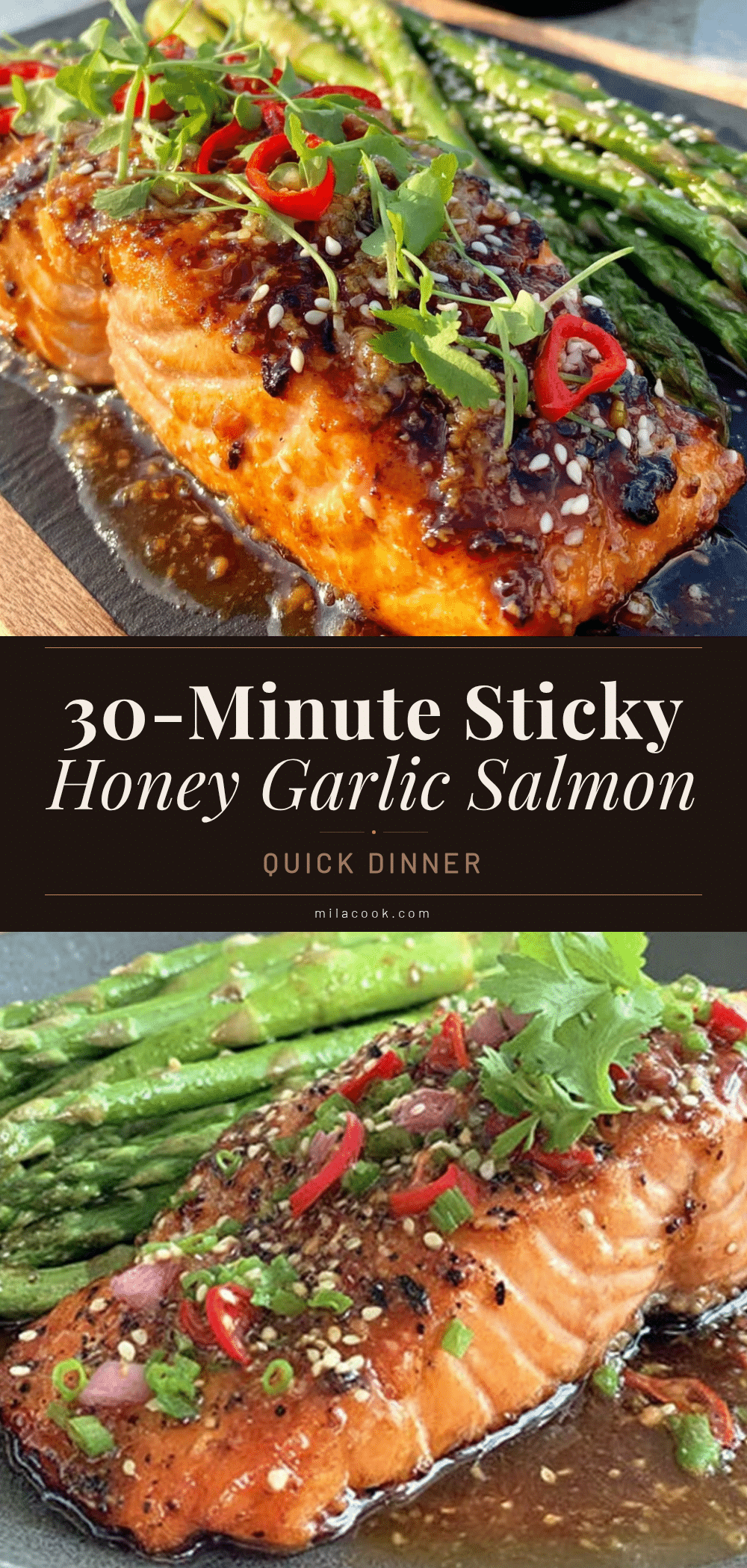
Quick Honey Garlic Salmon with Asparagus in 20 Minutes
This quick honey garlic salmon with asparagus is a one-pan wonder that delivers restaurant-quality flavor in just 20 minutes. The sticky, savory-sweet glaze coats tender, flaky salmon and crisp-tender asparagus for a meal that’s both impressive and easy enough for a hectic weeknight.
- Prep Time: 10 minutes
- Cook Time: 10 minutes
- Total Time: 20 minutes
- Yield: 4 servings 1x
- Category: Main Course
- Cuisine: American
Ingredients
- ¼ cup honey
- 3 tablespoons low-sodium soy sauce
- 4 cloves garlic, minced
- 1 tablespoon rice vinegar
- 1 teaspoon sesame oil
- 1 teaspoon cornstarch
- 4 salmon fillets (about 6 ounces each)
- 1 bunch asparagus, trimmed
- 2 tablespoons olive oil
- Salt and black pepper to taste
- Sesame seeds for garnish (optional)
- Green onions, sliced for garnish (optional)
Instructions
- Pat the salmon dry with paper towels and season both sides with salt and pepper. Set aside.
- In a small bowl, whisk together honey, soy sauce, minced garlic, rice vinegar, sesame oil, and cornstarch until smooth.
- Rinse asparagus, snap off woody ends, and cut in half crosswise.
- Heat 1 tablespoon olive oil in a large skillet over medium-high heat until shimmering.
- Add asparagus in a single layer and cook for 2-3 minutes, turning occasionally, until bright green with charred spots. Remove to a plate.
- Add remaining 1 tablespoon olive oil to the pan. Place salmon fillets skin-side down (if using skin-on) and cook undisturbed for 3-4 minutes until edges look opaque and skin releases easily.
- Flip salmon carefully. Pour glaze around the fillets (not directly on top) and let bubble for 2-3 minutes, spooning glaze over salmon as it thickens.
- Return asparagus to the pan, tossing gently in the glaze. Heat through for about 1 minute.
- Serve immediately, spooning remaining glaze over the top. Garnish with sesame seeds and green onions if desired.
Notes
Let salmon sit at room temperature for 10 minutes before cooking for even cooking. Don’t overcrowd the pan; cook in batches if needed. Watch garlic carefully to prevent burning. For consistent results, use a thermometer: salmon is perfectly cooked at 125°F to 130°F. Leftovers keep in an airtight container in the fridge for up to 3 days. Reheat in a skillet over medium-low heat with a splash of water or soy sauce.
Nutrition
- Serving Size: 1 fillet with aspara
- Calories: 385
- Sugar: 18
- Sodium: 680
- Fat: 18
- Saturated Fat: 3
- Carbohydrates: 22
- Fiber: 3
- Protein: 38
Keywords: honey garlic salmon, salmon with asparagus, quick salmon recipe, one-pan salmon, healthy salmon dinner, 20-minute meal