Love this? Save it for later!
Share the inspiration with your friends
I was at the farmers’ market last Saturday, hovering near the Korean chili stall for probably the tenth time that summer. The woman running it, Mrs. Kim, finally caught my eye and just laughed. She didn’t say anything at first, just watched me pick up a bag of gochugaru, put it down, pick it up again. I was clearly overthinking it. Then she reached under her table, pulled out a small plastic container, and handed it to me. “For your grill,” she said. “Less sugar. More taste.” Inside was a deep red paste that smelled like garlic, sesame, and something I couldn’t quite name. I tried to pay her, but she just waved me off and turned to help another customer. That container sat in my fridge for two days while I figured out what to do with it. Honestly, I was a little intimidated. Korean BBQ has this reputation, you know? All that marinade time, the special cuts of meat, the tabletop grills. But Mrs. Kim’s paste was already perfect. It didn’t need hours to work its magic. So I grabbed some sirloin from the butcher, cut it into chunks, and threaded them onto skewers. I grilled them on a Tuesday night, standing in my tiny backyard, and the smoke smelled like a whole new kind of cooking. This recipe is my way of saying thank you to her. It’s lighter than traditional versions—less sugar, more punch from the gochujang and ginger—but it still has that sticky, caramelized finish that makes Korean BBQ so unforgettable. Maybe you’ve been standing in an aisle somewhere, staring at an ingredient you didn’t know how to use. I get it. This skewer is where you start.
Why You’ll Love This Recipe
This isn’t just another BBQ skewer recipe. I’ve tested this one at least six times, tweaking the balance of sweet and heat until it hit that perfect spot. My neighbor, who is a chef, tried it and asked for the marinade recipe. That’s when I knew I had something worth sharing.
- Quick & Easy : The marinade comes together in under 10 minutes, and the beef only needs 30 minutes to soak up all that flavor. Perfect for a weeknight when you want something special without the all-day prep.
- Simple Ingredients : You don’t need a specialty grocery store run. Most of these ingredients are pantry staples or easy to find at any decent supermarket. Gochujang is widely available now, and you can even order it online.
- Perfect for Grilling Season : Whether you’re firing up the charcoal for a weekend cookout or using a grill pan in your kitchen, these skewers work. They’re great for summer parties, backyard dinners, or even a cozy indoor meal when it’s raining outside.
- Crowd-Pleaser : I brought these to a potluck last month, and they were gone before the burgers. Kids love the sweetness, and adults appreciate the subtle kick of heat. It’s a rare recipe that makes everyone happy.
- Unbelievably Delicious : The combination of gochujang’s fermented depth, the brightness of fresh ginger, and the caramelized char from the grill creates layers of flavor that feel complex but come from just a handful of ingredients. You will close your eyes after the first bite. I promise.
This recipe is comfort food reimagined—healthier, faster, but with the same soul-soothing satisfaction that good BBQ should have. It is the kind of meal that makes you feel like you treated yourself, even though you made smart choices with the ingredients.
What Ingredients You Will Need
This recipe uses simple, wholesome ingredients to deliver bold flavor and satisfying texture without the fuss. Most of these are pantry staples or easy to find at your local grocery store. I have noted a few substitutions where they work well.
- Beef sirloin, cut into 1-inch cubes (1.5 lbs / 680g) – Sirloin is leaner than ribeye but still tender enough for quick grilling. Look for a piece with some marbling for best flavor. I usually buy from a local butcher when I can.
- Gochujang (3 tablespoons / 45g) – This Korean chili paste is the heart of the recipe. It adds heat, depth, and a slight sweetness. I prefer the brand Chung Jung One for its balanced flavor. It is widely available in the Asian section of most supermarkets.
- Low-sodium soy sauce (2 tablespoons / 30ml) – Use a good quality soy sauce like Kikkoman. Low-sodium helps control the salt level so you can add more later if needed.
- Honey (2 tablespoons / 30ml) – This replaces the larger amount of sugar found in traditional Korean BBQ marinades. It adds sweetness with a lower glycemic impact. You can substitute with maple syrup or agave if you prefer.
- Rice vinegar (1 tablespoon / 15ml) – Adds a bright acidity that balances the richness of the beef and the heat of the gochujang. Unseasoned rice vinegar works best.
- Sesame oil (1 tablespoon / 15ml) – A little goes a long way. It adds that nutty, toasty flavor that is signature to Korean cooking. Toasted sesame oil is what you want here.
- Fresh ginger, grated (1 tablespoon / 15g) – Fresh ginger adds a warmth and zing that powdered ginger just cannot replicate. I keep a knob in the freezer and grate it straight from frozen—it releases more juice and is easier to handle.
- Garlic, minced (4 cloves) – Fresh garlic is non-negotiable here. It adds pungency that mellows beautifully on the grill. Pre-minced jarred garlic will work in a pinch, but use double the amount.
- Sesame seeds (1 tablespoon / 9g) – For garnish. Toasted sesame seeds add a nice crunch and visual appeal. Toast them in a dry pan for 2 minutes until fragrant.
- Green onions, sliced (3 stalks) – Also for garnish. They add a fresh, sharp contrast to the rich marinade.
- Bamboo skewers (about 12) – Soak them in water for at least 30 minutes before grilling to prevent burning. If you use metal skewers, no soaking needed.
Equipment Needed
You don’t need a lot of fancy tools for this recipe. Here is what I use and a few alternatives that work just as well.
- Grill or grill pan – A charcoal grill adds the best smoky flavor, but a gas grill or a cast-iron grill pan on the stove works perfectly. I have used a George Foreman electric grill in a pinch, and it still turned out great.
- Mixing bowl – A medium bowl for the marinade. Glass or stainless steel is best because it doesn’t absorb odors.
- Whisk or fork – For mixing the marinade ingredients together until smooth.
- Tongs – For turning the skewers on the grill. Long-handled tongs keep your hands safe from the heat.
- Basting brush – Optional, but useful for brushing extra marinade onto the skewers while they cook. I use a silicone brush because it is easy to clean.
- Cutting board and sharp knife – For cubing the beef and slicing the green onions. A sharp knife makes the job safer and faster.
- Measuring spoons – Accurate measurements matter, especially with the gochujang and soy sauce.
- Platter or serving dish – For presenting the finished skewers. A white platter makes the colors pop.
Preparation Method
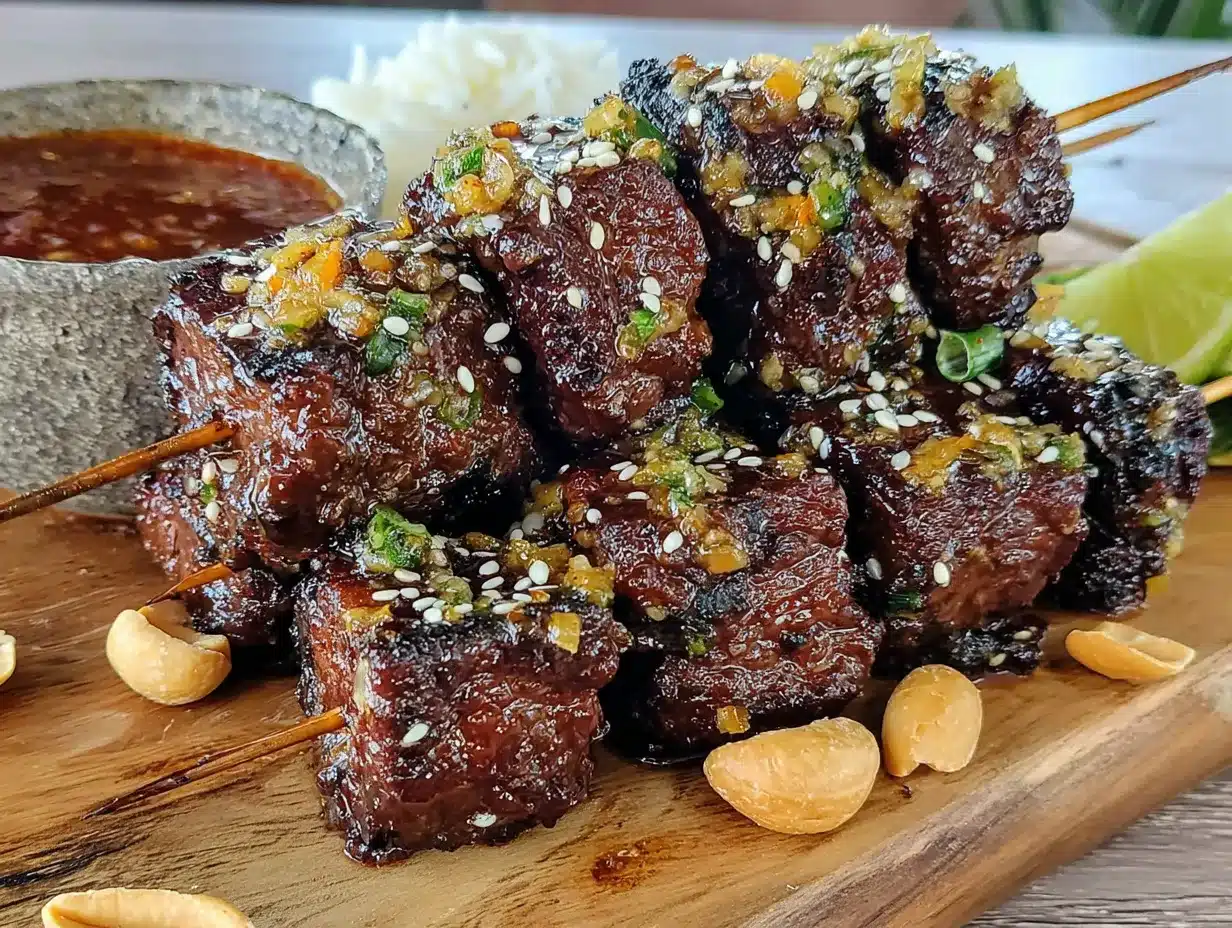
Follow these steps carefully, and you will have perfectly charred, juicy skewers every time. I have included sensory cues so you know what to look for at each stage.
- Soak the skewers (if using bamboo). Place them in a shallow dish of water and let them soak for at least 30 minutes. This prevents them from catching fire on the grill. I usually do this first so they are ready when I need them.
- Make the marinade. In a medium bowl, combine the gochujang, low-sodium soy sauce, honey, rice vinegar, sesame oil, grated ginger, and minced garlic. Whisk until smooth. The mixture should be a thick, deep red paste with a glossy sheen. Taste it—you should get heat first, followed by sweetness, with a tangy finish. If it tastes too salty, add a teaspoon more honey. If it is not spicy enough, add another half tablespoon of gochujang.
- Prepare the beef. Pat the beef sirloin dry with paper towels. This helps the marinade stick better. Cut the beef into 1-inch cubes, trying to keep them uniform in size so they cook evenly. Place the cubes in a large resealable plastic bag or a glass dish.
- Marinate the beef. Pour the marinade over the beef cubes. Seal the bag and massage it gently to coat every piece. If using a dish, cover it with plastic wrap. Refrigerate for at least 30 minutes, but no longer than 2 hours. The acid in the rice vinegar and the enzymes in the ginger will start to break down the meat if left too long, making it mushy. I once left it for 4 hours, and the texture was off—lesson learned.
- Thread the skewers. Remove the beef from the refrigerator. Thread 4 to 5 cubes onto each soaked skewer, leaving a small gap between pieces for even cooking. Do not pack them too tightly; the heat needs to circulate. If you want, you can alternate with pieces of bell pepper or onion, but I prefer to keep these pure beef to let the marinade shine.
- Preheat the grill. Heat your grill or grill pan to medium-high heat (about 400°F / 200°C). You want it hot enough to sear the meat quickly but not so hot that the sugar in the marinade burns. If using a charcoal grill, wait until the coals are covered with white ash. If using a gas grill, let it preheat for 10 minutes with the lid closed.
- Grill the skewers. Place the skewers on the grill grates. Cook for 3 to 4 minutes per side, turning once with tongs. You are looking for a deep char with slightly blackened edges—that is where the flavor lives. The internal temperature should reach 135°F (57°C) for medium-rare. If you like your beef more done, cook for an additional minute per side. Watch for flare-ups from the dripping marinade; move the skewers to a cooler part of the grill if needed.
- Rest and garnish. Remove the skewers from the grill and let them rest for 5 minutes on a platter. This allows the juices to redistribute. Sprinkle with toasted sesame seeds and sliced green onions. The contrast of the dark, charred beef against the bright green and white garnish is beautiful.
Cooking Tips & Techniques
I have made these skewers more times than I can count, and I have definitely made my share of mistakes. Here is what I have learned along the way.
- Don’t over-marinate. I know it is tempting to let the beef sit in the marinade all day, but the ginger and vinegar will turn the meat mushy if left longer than 2 hours. Set a timer. Trust me on this one.
- Pat the beef dry before marinating. Excess moisture dilutes the marinade and prevents it from clinging to the meat. A quick pat with a paper towel makes a noticeable difference in the final flavor.
- Oil the grill grates, not the meat. Dip a folded paper towel in vegetable oil and use tongs to rub it over the hot grates. This prevents sticking without washing off the marinade. I learned this after losing half a skewer to the grill on my first attempt.
- Watch for sugar burn. The honey in the marinade can burn quickly if the heat is too high. If you see black smoke or the sugar starts to char too fast, lower the heat or move the skewers to a cooler zone. A little char is good; a lot is bitter.
- Let the skewers rest. I know you are hungry, but those 5 minutes of resting are crucial. The juices need time to settle back into the meat. If you cut into a skewer right off the grill, all that goodness will end up on the plate instead of in your mouth.
- Double up on skewers if using bamboo. Threading the meat onto two parallel skewers makes flipping easier and prevents the meat from spinning around when you try to turn it. This is a pro tip I picked up from a grilling book.
Variations & Adaptations
This recipe is flexible, and I have tried a few different versions depending on what I have in the fridge or who I am cooking for.
- Chicken version : Substitute boneless, skinless chicken thighs for the beef. Chicken thighs stay juicier than breasts and can handle the strong marinade. Cook for 5 to 6 minutes per side until the internal temperature reaches 165°F (74°C). I made this for a friend who doesn’t eat red meat, and she asked for the recipe immediately.
- Vegetarian option : Use firm tofu or extra-firm tofu pressed for 30 minutes to remove excess water. Cut into 1-inch cubes and marinate for 1 hour. Grill for 4 to 5 minutes per side until grill marks appear. You can also use portobello mushrooms, which have a meaty texture that holds up well on the grill.
- Spice level adjustment : If you want more heat, add 1 teaspoon of gochugaru (Korean chili flakes) to the marinade. For a milder version, reduce the gochujang to 2 tablespoons and add an extra tablespoon of honey. I have done both, and each version has its own charm.
- Gluten-free adaptation : Use tamari or coconut aminos instead of soy sauce. Tamari has a similar flavor profile and works beautifully. I have tested this with tamari, and the taste is almost identical.
- Oven-baked method : If you don’t have a grill, preheat your oven to 425°F (220°C). Place the skewers on a wire rack set over a baking sheet. Bake for 12 to 15 minutes, turning once halfway through. Then switch the oven to broil for 2 to 3 minutes to get a nice char. It is not exactly the same as grilling, but it gets the job done on a rainy day.
Serving & Storage Suggestions
These skewers are versatile and can be served in many ways. Here is how I like to enjoy them and how to store leftovers if you have any (which is rare in my house).
- Serving temperature : Serve the skewers hot off the grill for the best texture and flavor. The caramelized exterior is at its peak when fresh. If you are serving them at a party, you can keep them warm on a platter tented with foil for up to 20 minutes.
- Presentation ideas : Arrange the skewers on a large white platter and sprinkle with extra sesame seeds and green onions. Add a small bowl of extra gochujang on the side for dipping. For a more casual meal, serve them over a bed of steamed rice with a side of quick-pickled cucumbers.
- Complementary dishes : These skewers pair beautifully with Korean-style cucumber salad for a refreshing crunch. A simple bowl of steamed jasmine rice or sesame ginger noodles rounds out the meal perfectly. For drinks, a cold beer or a glass of Riesling with a touch of sweetness balances the heat.
- Storage instructions : Remove the beef from the skewers and store in an airtight container in the refrigerator for up to 3 days. The flavors actually meld further overnight, making leftovers even more delicious. I have been known to eat them cold straight from the fridge as a snack.
- Reheating methods : The best way to reheat is in a hot skillet over medium-high heat for 2 to 3 minutes per side. This restores some of the charred texture. You can also reheat in the oven at 350°F (175°C) for 8 to 10 minutes. Avoid the microwave, as it makes the beef rubbery and dulls the flavor.
- Freezing : You can freeze the marinated raw beef in a freezer bag for up to 3 months. Thaw overnight in the refrigerator and then thread onto skewers and grill as directed. I have done this on busy weeks, and it works like a charm.
Nutritional Information & Benefits
This recipe is designed to be a lighter take on traditional Korean BBQ, but it still delivers on flavor and satisfaction. Here is a rough breakdown per serving (2 skewers, assuming 6 servings total).
- Calories : Approximately 285 calories per serving. This is significantly lower than traditional versions that use more sugar and fattier cuts of meat.
- Protein : About 32 grams per serving. Beef sirloin is a lean cut that provides high-quality protein, which is great for muscle repair and keeping you full.
- Fat : Around 12 grams per serving, with only 3.5 grams of saturated fat. Using lean sirloin and minimal sesame oil keeps the fat content in check.
- Carbohydrates : Approximately 14 grams per serving, mostly from the honey and gochujang. This is lower than many BBQ sauces that rely on brown sugar or corn syrup.
- Key benefits : Gochujang contains capsaicin, which may boost metabolism and reduce inflammation. Ginger is known for its anti-inflammatory properties and aids digestion. Garlic supports immune health. This is a meal that tastes indulgent but actually supports your wellness goals.
- Dietary considerations : This recipe is dairy-free and nut-free. For a gluten-free version, use tamari instead of soy sauce. It is not suitable for a low-sodium diet unless you use a reduced-sodium soy sauce and gochujang.
Conclusion
This recipe started with a container of chili paste from a kind woman at a farmers’ market, and it has become a staple in my kitchen. It is proof that healthy eating doesn’t have to mean boring food. These Lighter Sweet and Spicy Korean BBQ Beef Skewers are everything I want in a meal—quick to prepare, packed with flavor, and flexible enough to fit whatever diet or occasion you have. I love that I can serve them to guests and feel proud, or make them on a random Tuesday and feel like I treated myself. I encourage you to play with the spice level, swap in chicken or tofu, or serve them over a big bowl of greens. Make it your own. And if you try this recipe, I would love to hear how it turned out. Drop a comment below or tag me in your photos. Happy grilling!
Frequently Asked Questions
Can I use a different cut of beef for this recipe?
Yes, you can use flank steak, ribeye, or even top round. Just keep in mind that leaner cuts like top round may be tougher and benefit from a shorter marinating time. Ribeye will be more tender but also higher in fat. Sirloin strikes a nice balance between flavor, tenderness, and leanness.
How do I prevent the skewers from burning on the grill?
Soak bamboo skewers in water for at least 30 minutes before grilling. This prevents them from catching fire. You can also use metal skewers, which do not burn and are reusable. If using metal, be careful when handling them as they get very hot.
Can I make the marinade ahead of time?
Absolutely. You can prepare the marinade up to 3 days in advance and store it in an airtight container in the refrigerator. Give it a good stir before using, as the ingredients may separate slightly. This is a great time-saver for busy weeknights.
Is this recipe very spicy?
It has a moderate level of heat, similar to a mild buffalo sauce. The gochujang provides warmth rather than intense heat, and the honey balances it with sweetness. If you are sensitive to spice, reduce the gochujang to 2 tablespoons. If you love heat, add gochugaru or a pinch of cayenne.
What can I serve with these skewers for a complete meal?
I love serving them with steamed rice and a simple vegetable side. A Korean-style cucumber salad adds a refreshing crunch, and sesame ginger noodles make the meal feel more substantial. You can also serve them in lettuce wraps with rice and pickled vegetables for a fun, interactive dinner.
Pin This Recipe!
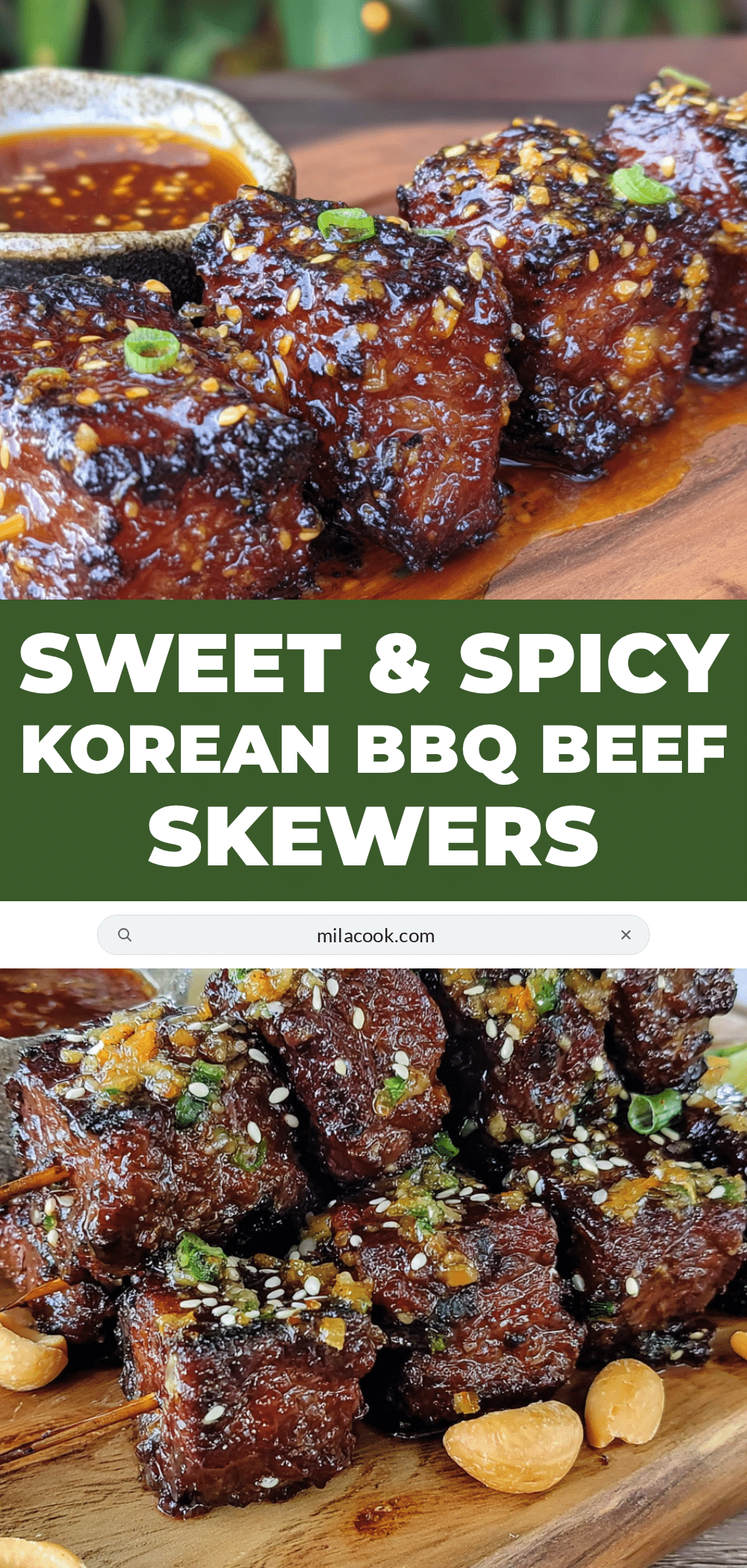
Lighter Sweet & Spicy Korean BBQ Beef Skewers
These lighter Korean BBQ beef skewers feature a quick marinade with gochujang, ginger, and honey for a perfect balance of sweet and spicy. Ready in under an hour, they’re ideal for weeknight grilling or summer cookouts.
- Prep Time: 15 minutes
- Cook Time: 8 minutes
- Total Time: 53 minutes
- Yield: 6 servings 1x
- Category: Main Course
- Cuisine: Korean
Ingredients
- 1.5 lbs (680g) beef sirloin, cut into 1-inch cubes
- 3 tablespoons (45g) gochujang
- 2 tablespoons (30ml) low-sodium soy sauce
- 2 tablespoons (30ml) honey
- 1 tablespoon (15ml) rice vinegar
- 1 tablespoon (15ml) sesame oil
- 1 tablespoon (15g) fresh ginger, grated
- 4 cloves garlic, minced
- 1 tablespoon (9g) sesame seeds, for garnish
- 3 stalks green onions, sliced, for garnish
- 12 bamboo skewers, soaked in water for 30 minutes
Instructions
- Soak the skewers (if using bamboo) in a shallow dish of water for at least 30 minutes.
- Make the marinade: In a medium bowl, combine gochujang, soy sauce, honey, rice vinegar, sesame oil, grated ginger, and minced garlic. Whisk until smooth.
- Prepare the beef: Pat the beef sirloin dry with paper towels. Cut into 1-inch cubes, keeping them uniform in size.
- Marinate the beef: Place beef cubes in a large resealable plastic bag or glass dish. Pour marinade over beef, seal bag, and massage to coat. Refrigerate for at least 30 minutes, but no longer than 2 hours.
- Thread the skewers: Remove beef from refrigerator. Thread 4-5 cubes onto each soaked skewer, leaving a small gap between pieces.
- Preheat the grill: Heat grill or grill pan to medium-high heat (about 400°F / 200°C).
- Grill the skewers: Place skewers on grill grates. Cook for 3-4 minutes per side, turning once with tongs. Internal temperature should reach 135°F (57°C) for medium-rare.
- Rest and garnish: Remove skewers from grill and let rest for 5 minutes. Sprinkle with toasted sesame seeds and sliced green onions.
Notes
Don’t over-marinate; the ginger and vinegar can make the meat mushy if left longer than 2 hours. Pat the beef dry before marinating for better flavor. Oil the grill grates, not the meat, to prevent sticking. Watch for sugar burn from the honey; lower heat if needed. Let skewers rest for 5 minutes before serving. For easier flipping, thread meat onto two parallel skewers.
Nutrition
- Serving Size: 2 skewers
- Calories: 285
- Sugar: 10
- Sodium: 480
- Fat: 12
- Saturated Fat: 3.5
- Carbohydrates: 14
- Fiber: 1
- Protein: 32
Keywords: Korean BBQ, beef skewers, gochujang, sweet and spicy, grilled, healthy, weeknight dinner