Love this? Save it for later!
Share the inspiration with your friends
My neighbor, a woman named Carol who gardens like she’s on a mission, had a firm rule for years: chicken breasts were to be grilled plain, with maybe a little salt and pepper if you were feeling wild. Potatoes were for mashing, and herbs were for decoration, not flavor. She swore up and down that a one-pan meal was a shortcut for people who didn’t really care about cooking. Honestly, I believed her for a while.
Then, last spring, I was out on my back deck, trying to wrangle a pile of fresh herbs from my own scrappy garden into something edible. The air smelled like damp soil and optimism. I had a bag of baby potatoes, a few chicken thighs, and a lemon that was about to go soft. I was just throwing things in a pan—no plan, no recipe. I figured it would be fine, just a Tuesday night thing. About forty minutes later, I was pulling this golden, fragrant pan out of the oven, and I caught a movement out of the corner of my eye. Carol was standing at the fence, peering over, her nose practically twitching.
“What is that?” she asked, trying to sound casual.
I didn’t say much. I just cut a piece of chicken and handed it over the fence on a fork. She ate it, and I swear her eyes got a little wide. The next week, I saw her buying chicken thighs. The week after that, she asked me for the recipe. I mean, I didn’t really have one written down, but that’s how this Spring One-Pan Lemon Herb Chicken and Potatoes was born. It’s the dish that proved me wrong about a plain-chicken neighbor, and it might just prove you wrong about how easy a real, satisfying dinner can be.
Why You’ll Love This Recipe
Let me tell you, this isn’t just another chicken and potato recipe. This is the one that makes you look like you spent hours in the kitchen when you really just tossed everything in a pan and let the oven do the work. I’ve tested this version about six times, tweaking the herb amounts and the lemon ratio, and I can say with confidence—this is the sweet spot.
- Quick & Easy: From start to table in about 50 minutes, and most of that time is hands-off. You just chop, toss, and roast.
- Simple Ingredients: You probably have garlic, lemons, and dried herbs in your pantry right now. No weird specialty items needed.
- Perfect for Spring: This dish screams fresh and bright, exactly what you want when the weather finally turns warm. Great for Easter, a lazy Sunday, or a busy Tuesday.
- Crowd-Pleaser: I’ve served this to picky kids, diet-conscious friends, and serious meat-and-potatoes folks. Everyone goes back for seconds.
- Unbelievably Delicious: The chicken gets this crispy, golden skin while staying juicy. The potatoes soak up all the lemony, herby pan juices. It’s next-level comfort food.
What makes this recipe different? It’s the technique of smashing the garlic cloves and leaving them whole, so they roast into these sweet, buttery nuggets that you can spread on the chicken or mix into the potatoes. It’s a little thing, but it changes everything. Plus, the lemon slices soften and caramelize, adding a pop of tartness that cuts through the richness. This isn’t just a meal; it’s the kind of dinner that makes you close your eyes after the first bite. It’s spring on a sheet pan.
What Ingredients You Will Need
This recipe uses simple, fresh ingredients that come together to create something truly special. You don’t need a long grocery list—just a few key players that do the heavy lifting. Here’s what you’ll need to grab:
- Chicken Thighs (bone-in, skin-on): About 6 to 8 thighs (roughly 2 pounds or 900 grams). The bone keeps the meat moist, and the skin gets beautifully crispy. You can use boneless thighs, but reduce the cooking time by about 10 minutes. I really prefer the skin-on version for the texture.
- Baby Potatoes: 1.5 pounds (about 680 grams). Halved or quartered if they’re bigger. I like the Yukon Gold or red baby potatoes because they hold their shape and get creamy inside. (For the best texture, get potatoes that are roughly the same size so they cook evenly.)
- Lemons: 2 medium lemons. One for juicing, one for slicing and roasting. The roasted lemon slices turn into these little candy-like bursts of flavor. Don’t skip them!
- Garlic: 1 whole head of garlic, cloves separated and peeled. Smash each clove gently with the flat side of your knife. This releases the flavor without burning it.
- Fresh Herbs: A big handful of fresh rosemary (about 3 sprigs) and fresh thyme (about 6 sprigs). If you can only find dried, use 1 teaspoon of dried rosemary and 1 teaspoon of dried thyme. But honestly, fresh makes a big difference here.
- Olive Oil: 3 to 4 tablespoons (45 to 60 ml) of good extra-virgin olive oil. It helps everything crisp up and carries the herb flavors.
- Dried Oregano: 1 teaspoon. It adds a subtle, earthy background note that ties the lemon and herbs together. I use the dried stuff here because it stands up to the heat better than fresh.
- Salt and Black Pepper: To taste. I use about 1.5 teaspoons of kosher salt and 1/2 teaspoon of black pepper for the whole dish. Don’t be shy with the salt—it wakes everything up.
- Chicken Broth (optional): About 1/4 cup (60 ml). If your pan looks a little dry halfway through, splash this in to create more pan juices. It’s not essential, but it helps if you want extra sauce for spooning over rice or bread.
I usually grab my lemons from the farmers market in spring when they’re at their peak. For the chicken, I like Bell & Evans or a local farm brand if I can find it—the flavor is just cleaner. If you need a dairy-free option, you’re already good; this recipe is naturally dairy-free.
Equipment Needed
You don’t need a fancy kitchen for this one. Here’s what you’ll need:
- Large Sheet Pan or Roasting Pan: A half-sheet pan (18×13 inches) works perfectly. It needs to have a rim to catch the juices. I have a cheap one that’s gotten a little stained over the years, and it still does the job.
- Chef’s Knife: For cutting the potatoes and lemons. A sharp one makes the job so much easier—I learned that lesson the hard way after a few close calls.
- Cutting Board: Wood or plastic, whatever you have.
- Mixing Bowl: A large bowl for tossing the potatoes and chicken with the oil and herbs. You can also do this right on the pan to save a dish.
- Tongs: For flipping the chicken and potatoes halfway through. Metal tongs are best; the plastic ones might melt if they touch the hot pan.
- Measuring Spoons: For the salt, pepper, and oregano.
- Small Knife or Garlic Smasher: To smash the garlic cloves.
If you don’t have a sheet pan, a 9×13 baking dish will work, but the chicken might not get as crispy because the sides are higher and trap steam. For a budget-friendly option, the restaurant supply store has great sheet pans for under $10. To keep your pan in good shape, avoid using abrasive scrubbers—just soak it in warm soapy water after dinner.
Preparation Method
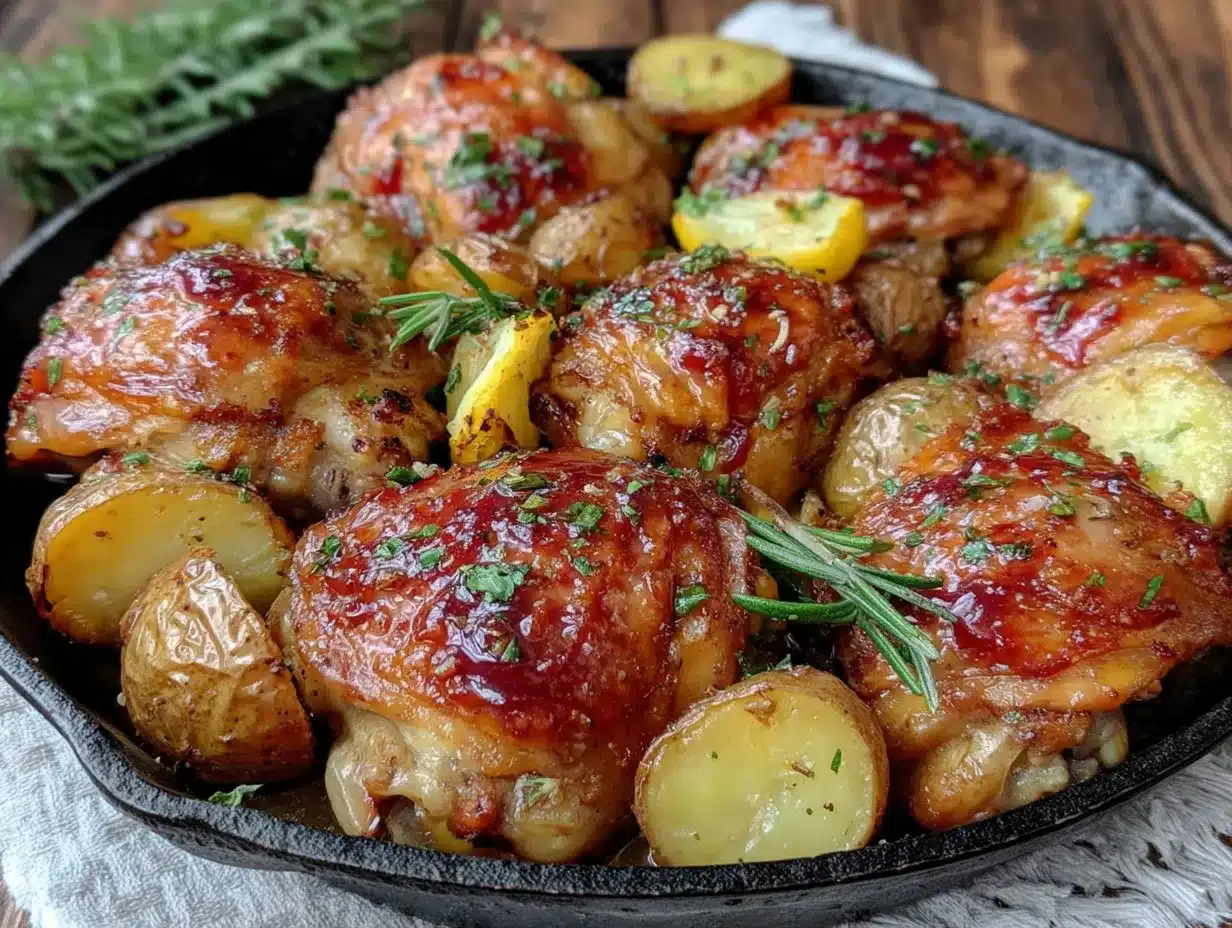
Alright, let’s get cooking. This is the part where the magic happens, and I’ll walk you through it step by step. Trust me, it’s easier than it sounds.
- Preheat your oven to 400°F (200°C). Get that heat going first. A hot oven is key for crispy skin. While it’s heating, line your sheet pan with parchment paper or foil for easier cleanup. (I always forget this step, and then I’m scrubbing for ten minutes. Learn from my mistakes!)
- Prep the potatoes. Wash and dry the baby potatoes. Cut any larger ones in half or quarters so they’re all about the same size—roughly 1 to 1.5 inches. This helps them cook evenly. Put them in a large mixing bowl.
- Prep the chicken. Pat the chicken thighs dry with paper towels. This is important for crispy skin. Season them generously on both sides with salt and pepper. Place them in the bowl with the potatoes.
- Make the herb mixture. In a small bowl, combine 3 tablespoons of olive oil, the juice of one lemon, 1 teaspoon of dried oregano, and the leaves from the fresh rosemary and thyme sprigs (strip them off the stems). Give it a whisk. Smell that? That’s spring in a bowl.
- Toss everything together. Pour the herb-oil mixture over the chicken and potatoes. Use your hands or a spatula to toss everything until it’s well coated. Don’t be shy—get in there. The potatoes should look glossy, and the chicken should be covered in herbs.
- Arrange on the pan. Spread the potatoes out in a single layer on the prepared sheet pan. Place the chicken thighs on top, skin-side up, nestled among the potatoes. Tuck the smashed garlic cloves and the sliced lemon (from the second lemon, cut into thin rounds) around the pan. Don’t pile the lemon slices on top of the chicken; let them roast alongside.
- Roast for 35 to 40 minutes. Place the pan in the preheated oven. After 20 minutes, pull the pan out and use tongs to flip the potatoes and turn the chicken over. This ensures even browning. Return the pan to the oven. If the potatoes look a little dry at this point, splash in the 1/4 cup of chicken broth.
- Finish roasting. Roast for another 15 to 20 minutes, or until the chicken reaches an internal temperature of 165°F (74°C) and the potatoes are fork-tender and golden. The skin should be crispy and deep golden brown. If you want extra crispiness, you can broil for the last 2 minutes, but watch it carefully so it doesn’t burn.
- Rest and serve. Remove the pan from the oven and let it rest for 5 minutes. This lets the juices redistribute in the chicken. Squeeze a little extra lemon juice over the top if you like it tangy. Serve the chicken with the potatoes, roasted garlic, and caramelized lemon slices. The lemon slices are edible—they’re soft and sweet, a little surprise on your plate.
A quick note: if you’re using boneless chicken thighs, check for doneness at the 25-minute mark. They cook faster. And if your potatoes aren’t quite done when the chicken is, just remove the chicken to a plate and pop the potatoes back in for a few more minutes.
Cooking Tips & Techniques
After making this dish about a dozen times, I’ve picked up a few tricks that make a real difference. Let me share them so you don’t have to learn the hard way.
Don’t overcrowd the pan. This is the number one mistake I see. If the chicken and potatoes are piled on top of each other, they’ll steam instead of roast. You want that golden, crispy exterior. If your pan is too small, use two pans or cook in batches. I once tried to cram everything into a 9×13 dish, and it turned out soggy. Never again.
Pat the chicken dry. I know it seems like a small step, but moisture is the enemy of crispy skin. Use a paper towel and really get in there. Season it right after, so the salt can start to penetrate the meat.
Smash, don’t mince, the garlic. Mincing garlic for roasting is a recipe for burnt, bitter bits. Smashing the cloves whole lets them soften and sweeten in the oven. They turn into these little jammy pockets of flavor. You can spread them on the chicken or just eat them whole like I do.
Use a meat thermometer. I used to guess, and sometimes I’d end up with dry chicken or, worse, undercooked meat. A simple instant-read thermometer takes the guesswork out. Chicken thighs are done at 165°F (74°C), and they stay juicy even a few degrees past that because of the fat content.
Let it rest. I know you’re hungry, and the kitchen smells amazing. But cutting into the chicken right away will release all those juices onto the cutting board. Give it five minutes. Trust me, it’s worth the wait. I once skipped this step when I was in a rush, and the chicken was noticeably drier.
Timing is everything. While the chicken is roasting, you can prep a simple salad or set the table. I like to make a quick arugula salad with lemon vinaigrette to serve alongside. It takes five minutes and balances the richness of the dish.
Variations & Adaptations
This recipe is like a good pair of jeans—it fits almost any occasion with a few tweaks. Here are some ways to make it your own:
Herb Swap: Not a fan of rosemary? Use fresh dill or tarragon instead. Dill gives it a bright, almost pickly flavor that’s great with lemon. Tarragon adds a subtle licorice note that’s surprisingly good with chicken. I tried a dill version last summer, and it was perfect with a side of roasted asparagus.
Vegetable Add-Ins: Spring is the perfect time to add other veggies. Toss in some asparagus spears (cut into 2-inch pieces) during the last 15 minutes of roasting. Or add halved cherry tomatoes and sliced zucchini. Just be careful not to overcrowd the pan. I’ve done a version with baby carrots and fennel wedges, and it was like a garden on a plate.
Dietary Adaptations: This recipe is naturally gluten-free and dairy-free, so no changes needed there. For a lower-carb option, swap the potatoes for cauliflower florets or turnips. They won’t get as crispy, but they’ll absorb all that lemony goodness. If you’re watching your fat intake, you can use boneless, skinless chicken breasts, but reduce the cooking time to about 25 to 30 minutes and check for doneness early.
Spice It Up: Add a pinch of red pepper flakes to the herb mixture for a little heat. Or sprinkle some smoked paprika over the chicken before roasting—it adds a smoky depth that plays beautifully with the lemon. I made a version with a teaspoon of harissa paste mixed into the oil, and it was a game-changer for spice lovers.
One-Pan Fish: This technique works great with fish too. Swap the chicken for salmon fillets or cod, and reduce the roasting time to about 15 to 20 minutes. Use the same herb mixture. Just keep an eye on the fish—it cooks quickly.
Serving & Storage Suggestions
This dish is a meal in itself, but a few simple sides can round it out beautifully. Here’s how I like to serve and store it.
Serving Temperature and Presentation: Serve the chicken and potatoes straight from the oven, still warm. Arrange them on a large platter with the roasted lemon slices and garlic cloves scattered on top. Sprinkle a little fresh parsley or chives over everything for a pop of green. It looks impressive without any extra effort. I like to set the pan right on a trivet on the table for a casual, family-style dinner.
Complementary Dishes: A simple green salad with a lemon vinaigrette is my go-to pairing. The acidity cuts through the richness of the chicken. Steamed green beans or sautéed spinach also work well. For a heartier meal, serve with crusty bread to soak up the pan juices. A glass of crisp white wine, like a Sauvignon Blanc or Pinot Grigio, is a lovely match.
Storage Instructions: Store leftovers in an airtight container in the refrigerator for up to 3 days. The flavors actually meld together overnight, so it tastes even better the next day. I’ve been known to eat the leftovers cold, straight from the fridge, for lunch.
Reheating Methods: The best way to reheat is in the oven at 350°F (175°C) for about 10 to 15 minutes, or until warmed through. This helps the skin get crispy again. The microwave works in a pinch, but the skin will be soft. If you’re in a hurry, you can reheat it in a skillet over medium heat with a splash of chicken broth to keep it moist.
Flavor Development: The lemon and herb flavors mellow and deepen overnight. If you’re meal-prepping, make this a day ahead and reheat it for dinner. It’s one of those rare dishes that gets better with time.
Nutritional Information & Benefits
Let’s talk about what’s actually in this dish, beyond the deliciousness. Per serving (about 2 thighs and a generous portion of potatoes), here’s a rough estimate:
| Nutrient | Amount |
|---|---|
| Calories | ~480 kcal |
| Protein | ~35 g |
| Fat | ~22 g |
| Carbohydrates | ~35 g |
| Fiber | ~4 g |
| Sugar | ~3 g |
| Sodium | ~600 mg |
This meal is a solid source of protein, which helps keep you full and supports muscle health. The potatoes provide complex carbohydrates for steady energy, plus a good dose of vitamin C and potassium. The olive oil is rich in heart-healthy monounsaturated fats. The lemon and herbs add antioxidants and anti-inflammatory compounds. It’s a balanced, satisfying meal that fits into most dietary patterns.
If you’re watching your sodium, reduce the added salt or use a low-sodium chicken broth. The recipe is naturally gluten-free and dairy-free, making it suitable for many common dietary restrictions. Potential allergens include chicken (obviously) and garlic, but those are pretty standard. For a lower-calorie version, use boneless, skinless chicken breasts and reduce the olive oil to 2 tablespoons.
Conclusion
So there you have it—a Spring One-Pan Lemon Herb Chicken and Potatoes that’s as easy as it is satisfying. It’s the kind of recipe that makes you feel like you’ve got dinner under control, even on the busiest nights. I love it because it captures the essence of spring in every bite: bright, fresh, and full of life. It’s proof that you don’t need complicated techniques or a dozen pots to make something truly memorable.
I hope you give this recipe a try and make it your own. Maybe you’ll add a little extra garlic, or swap in your favorite herbs. That’s the beauty of cooking—it’s always a little different each time. If you do make it, I’d love to hear how it turned out. Leave a comment below and let me know what you think. Did you add any twists? Did your family go back for seconds? Share your stories—I’m all ears.
Until next time, happy cooking, and here’s to more spring nights around the table.
Frequently Asked Questions
Can I use chicken breasts instead of thighs?
Yes, you can swap in boneless, skinless chicken breasts. Just reduce the cooking time to about 25 to 30 minutes, and check for an internal temperature of 165°F (74°C). Keep an eye on them so they don’t dry out. The potatoes might need a few extra minutes after the chicken is done.
Can I make this recipe ahead of time?
Absolutely. You can prep everything up to the point of roasting—toss the chicken and potatoes with the herbs and oil, cover, and refrigerate for up to 24 hours. When you’re ready to cook, just spread it on the pan and roast as directed. You might need to add 5 to 10 minutes to the cooking time since everything will be cold.
How do I get the chicken skin extra crispy?
Pat the chicken dry very well before seasoning. Make sure the pan isn’t overcrowded, and roast at a high temperature (400°F/200°C). For an extra crunch, you can broil the chicken for the last 2 to 3 minutes, but watch it closely so it doesn’t burn. I’ve also had good results letting the chicken sit uncovered in the fridge for an hour before roasting—it dries out the skin even more.
Can I use dried herbs instead of fresh?
Yes, dried herbs work in a pinch. Use about 1 teaspoon of dried rosemary and 1 teaspoon of dried thyme in place of the fresh sprigs. The flavor won’t be quite as bright, but it will still be delicious. I’d recommend adding the dried herbs to the oil mixture early so they have time to rehydrate.
What should I do with the leftover roasted lemon slices?
Don’t throw them away! The roasted lemon slices are delicious. You can chop them up and mix them into a salad dressing, spread them on toast with a little ricotta, or just eat them as a tangy, sweet snack. They’re also great blended into a marinade for future chicken dishes. I like to keep them in a jar in the fridge for up to a week.
Pin This Recipe!
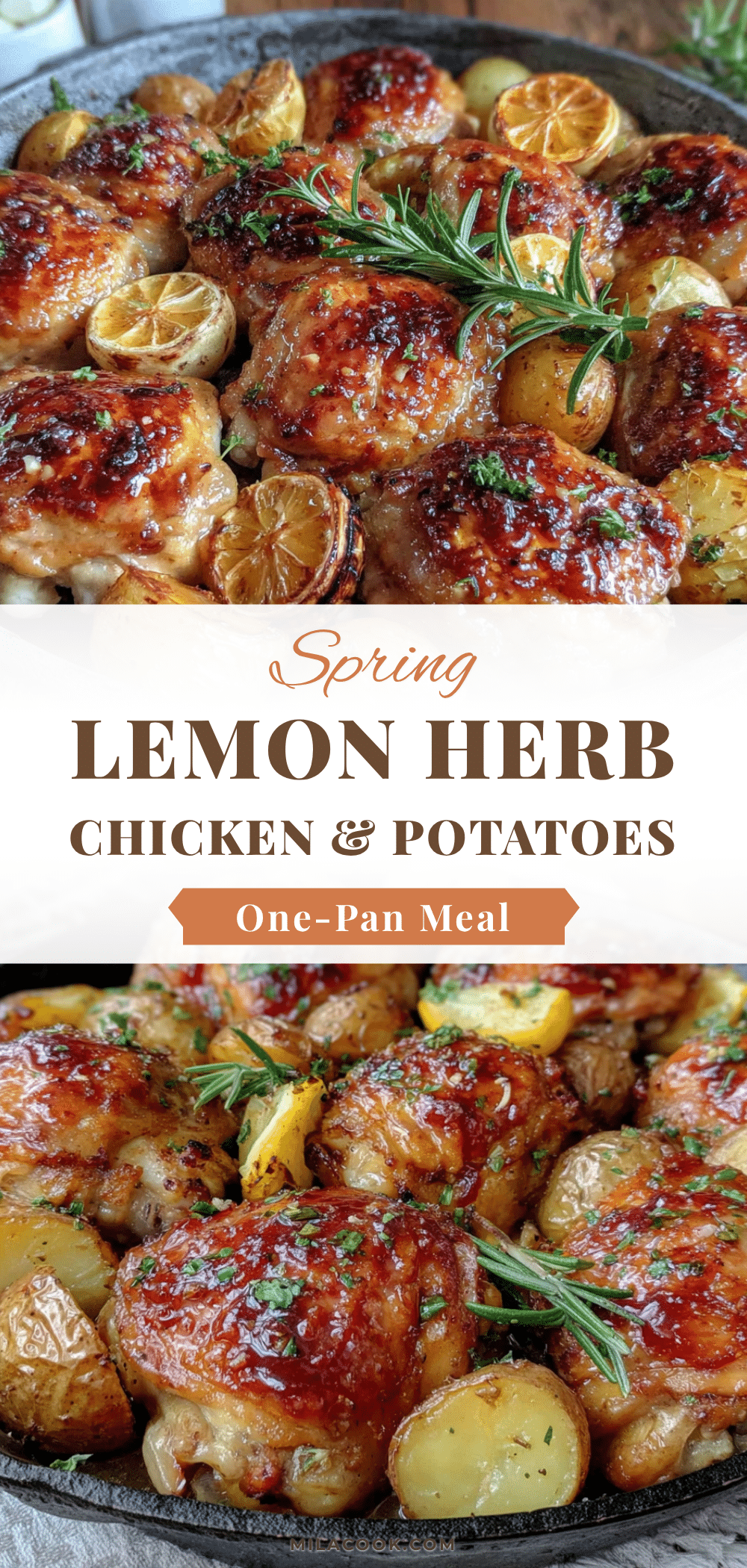
Spring One-Pan Lemon Herb Chicken and Potatoes: Easy Weeknight Dinner
A simple, one-pan meal featuring crispy-skinned chicken thighs and tender baby potatoes roasted with lemon, garlic, and fresh herbs. Perfect for a busy weeknight or a spring gathering.
- Prep Time: 15 minutes
- Cook Time: 35 to 40 minutes
- Total Time: 50 to 55 minutes
- Yield: 4 servings 1x
- Category: Main Course
- Cuisine: American
Ingredients
- 6 to 8 bone-in, skin-on chicken thighs (about 2 pounds or 900 grams)
- 1.5 pounds (about 680 grams) baby potatoes (Yukon Gold or red), halved or quartered if large
- 2 medium lemons (one juiced, one sliced into thin rounds)
- 1 whole head of garlic, cloves separated, peeled, and smashed
- 3 sprigs fresh rosemary (or 1 teaspoon dried rosemary)
- 6 sprigs fresh thyme (or 1 teaspoon dried thyme)
- 3 to 4 tablespoons (45 to 60 ml) extra-virgin olive oil
- 1 teaspoon dried oregano
- 1.5 teaspoons kosher salt (or to taste)
- 1/2 teaspoon black pepper (or to taste)
- 1/4 cup (60 ml) chicken broth (optional, for extra pan juices)
Instructions
- Preheat your oven to 400°F (200°C). Line a large sheet pan with parchment paper or foil for easier cleanup.
- Wash and dry the baby potatoes. Cut any larger ones in half or quarters so they are all about 1 to 1.5 inches in size. Place them in a large mixing bowl.
- Pat the chicken thighs dry with paper towels. Season generously on both sides with salt and pepper. Add them to the bowl with the potatoes.
- In a small bowl, combine 3 tablespoons of olive oil, the juice of one lemon, 1 teaspoon of dried oregano, and the leaves from the fresh rosemary and thyme sprigs (strip them off the stems). Whisk together.
- Pour the herb-oil mixture over the chicken and potatoes. Toss with your hands or a spatula until everything is well coated.
- Spread the potatoes in a single layer on the prepared sheet pan. Place the chicken thighs on top, skin-side up, nestled among the potatoes. Tuck the smashed garlic cloves and the sliced lemon (from the second lemon) around the pan.
- Roast for 35 to 40 minutes. After 20 minutes, remove the pan from the oven and use tongs to flip the potatoes and turn the chicken over. If the potatoes look dry, splash in the 1/4 cup of chicken broth. Return to the oven.
- Roast for another 15 to 20 minutes, or until the chicken reaches an internal temperature of 165°F (74°C) and the potatoes are fork-tender and golden. For extra crispiness, broil for the last 2 minutes, watching carefully.
- Remove the pan from the oven and let it rest for 5 minutes. Squeeze a little extra lemon juice over the top if desired. Serve the chicken with the potatoes, roasted garlic, and caramelized lemon slices.
Notes
For extra crispy skin, pat the chicken dry very well and ensure the pan is not overcrowded. Smashing the garlic cloves whole instead of mincing prevents burning and creates sweet, jammy pockets of flavor. Let the dish rest for 5 minutes before serving to keep the chicken juicy.
Nutrition
- Serving Size: 2 chicken thighs and
- Calories: 480
- Sugar: 3
- Sodium: 600
- Fat: 22
- Saturated Fat: 5
- Carbohydrates: 35
- Fiber: 4
- Protein: 35
Keywords: one-pan chicken, lemon herb chicken, roasted chicken and potatoes, spring dinner, easy weeknight dinner, sheet pan dinner