Love this? Save it for later!
Share the inspiration with your friends
My neighbor, Mrs. Chen, wasn’t trying to impress anyone. I’d stopped by to return her measuring cup — the one I’d borrowed three weeks ago and kept forgetting to give back — and the smell hit me before I even knocked. It was buttery, savory, and something else. Something deep and mysterious that made my mouth water instantly.
She opened the door with flour on her cheek and a wooden spoon in her hand. “Oh, good timing,” she said, like it was nothing. Like she hadn’t just created the most incredible aroma I’d ever smelled coming from a regular kitchen on a Tuesday afternoon. She waved me inside, grabbed the cup, and went back to mashing potatoes like this was the most ordinary thing in the world.
Let me tell you, those were not ordinary mashed potatoes. The first bite stopped me mid-sentence. There was this rich, savory depth I couldn’t place — something that made the potatoes taste creamier, more satisfying, like they’d been secretly upgraded. I asked what she put in them, and she just shrugged. “Miso. And butter. That’s it.”
I stood there in her kitchen, honestly a little offended that she’d been holding out on me all these years. She laughed at my reaction and wrote the proportions on a sticky note. I still have that note, smudged and faded, taped inside my spice cabinet. Maybe you’ve had that moment where a simple side dish completely steals the show. That’s what these miso butter mashed potatoes do. They don’t try hard. They just are that good.
I’ve been making them ever since, tweaking the ratios, testing different miso types, and honestly? They’ve ruined regular mashed potatoes for me forever.
Why You’ll Love This Recipe
These aren’t your grandmother’s mashed potatoes — though she’d probably approve. The miso adds this incredible umami richness that makes you wonder why nobody thought of it sooner. I’ve tested this recipe at least a dozen times, and every single batch got devoured before I could even think about leftovers.
- Quick & Easy: From start to table in about 30 minutes. Perfect for those nights when you want something special without spending hours in the kitchen.
- Simple Ingredients: You probably already have potatoes and butter. Just grab some miso paste from the refrigerated section — it keeps forever.
- Perfect for Weeknights or Holidays: Elegant enough for Thanksgiving, easy enough for a Tuesday. These potatoes don’t discriminate.
- Crowd-Pleaser: I’ve served these to picky eaters, food snobs, and kids. Empty bowls every time. The umami hits something primal.
- Unbelievably Delicious: The combination of creamy butter and savory miso creates this next-level comfort food that feels indulgent but uses ingredients you can feel good about.
What makes this different from every other mashed potato recipe? It’s the way miso amplifies the natural earthiness of potatoes without overpowering them. You’re not tasting miso soup here — you’re tasting potatoes that somehow taste more like themselves. Richer. Deeper. More satisfying.
This is the kind of side dish that makes you close your eyes after the first bite. It’s comfort food reimagined — faster, more interesting, but with the same soul-soothing satisfaction. Perfect for impressing guests without breaking a sweat, or turning a simple weeknight dinner into something you’ll actually look forward to.
What Ingredients You Will Need
This recipe uses simple, wholesome ingredients to deliver bold flavor and satisfying texture without the fuss. Most of these are pantry staples or easy to find at any grocery store.
- Yukon Gold potatoes, 2 pounds (about 6 medium potatoes, peeled and quartered) — These are my go-to for mashed potatoes. They’re naturally buttery and creamy, so you don’t need as much added fat. Russets work too, but Yukon Golds give you that silky texture with less effort.
- Unsalted butter, 4 tablespoons (½ stick, softened) — I use unsalted so I can control the salt level. The miso adds plenty of sodium, so starting with unsalted butter keeps things balanced. Kerrygold is my preferred brand for its rich flavor.
- White miso paste, 2 tablespoons (shiro miso) — This is the secret weapon. White miso is milder and slightly sweet, perfect for mashing into potatoes without overwhelming them. Look for it in the refrigerated section near the tofu or produce. I like the Miso Master brand for consistent quality.
- Whole milk or heavy cream, ½ cup (warm) — Whole milk gives a lighter texture; heavy cream makes it extra luxurious. Both work beautifully. Warm it up before adding so your potatoes stay hot.
- Garlic, 2 cloves (minced) — Optional but highly recommended. A little garlic rounds out the savory flavors beautifully. I sometimes roast the garlic first for a sweeter, mellower taste.
- Salt, ½ teaspoon (or to taste) — Go easy here. The miso and butter both contain salt. You can always add more at the end.
- Black pepper, ¼ teaspoon (freshly ground) — Freshly ground pepper makes a difference. The pre-ground stuff just doesn’t have the same punch.
- Chives or green onions, 2 tablespoons (chopped, for garnish) — Adds color and a mild oniony freshness that cuts through the richness. Not strictly necessary, but pretty.
For a dairy-free version, use plant-based butter and unsweetened oat milk. The miso already brings so much flavor that you won’t miss the dairy. I’ve tested this with Miyoko’s vegan butter and it works great.
Equipment Needed
Nothing fancy here — this recipe is refreshingly low-maintenance in the equipment department.
- Large pot (4-5 quart) — For boiling the potatoes. Make sure it’s big enough that the potatoes have room to move around.
- Colander — For draining. Any colander will do.
- Potato masher or ricer — I prefer a ricer for the smoothest texture, but a good old-fashioned masher works perfectly. I actually use my grandmother’s masher most of the time — it’s got character.
- Measuring cups and spoons — For accuracy, especially with the miso paste.
- Small saucepan — For warming the milk or cream. You can also microwave it in a glass measuring cup.
- Wooden spoon or rubber spatula — For folding everything together. A spatula really helps get every bit of miso incorporated.
- Mixing bowl — If you’re using a ricer, you’ll need a bowl to rice into. Otherwise, you can mash right in the pot.
Budget-friendly tip: If you don’t have a ricer, just mash thoroughly with a hand masher. A few small lumps are totally fine — some people even prefer them. I’ve made these potatoes in a tiny apartment with just a fork before. Desperate times, delicious results.
Preparation Method
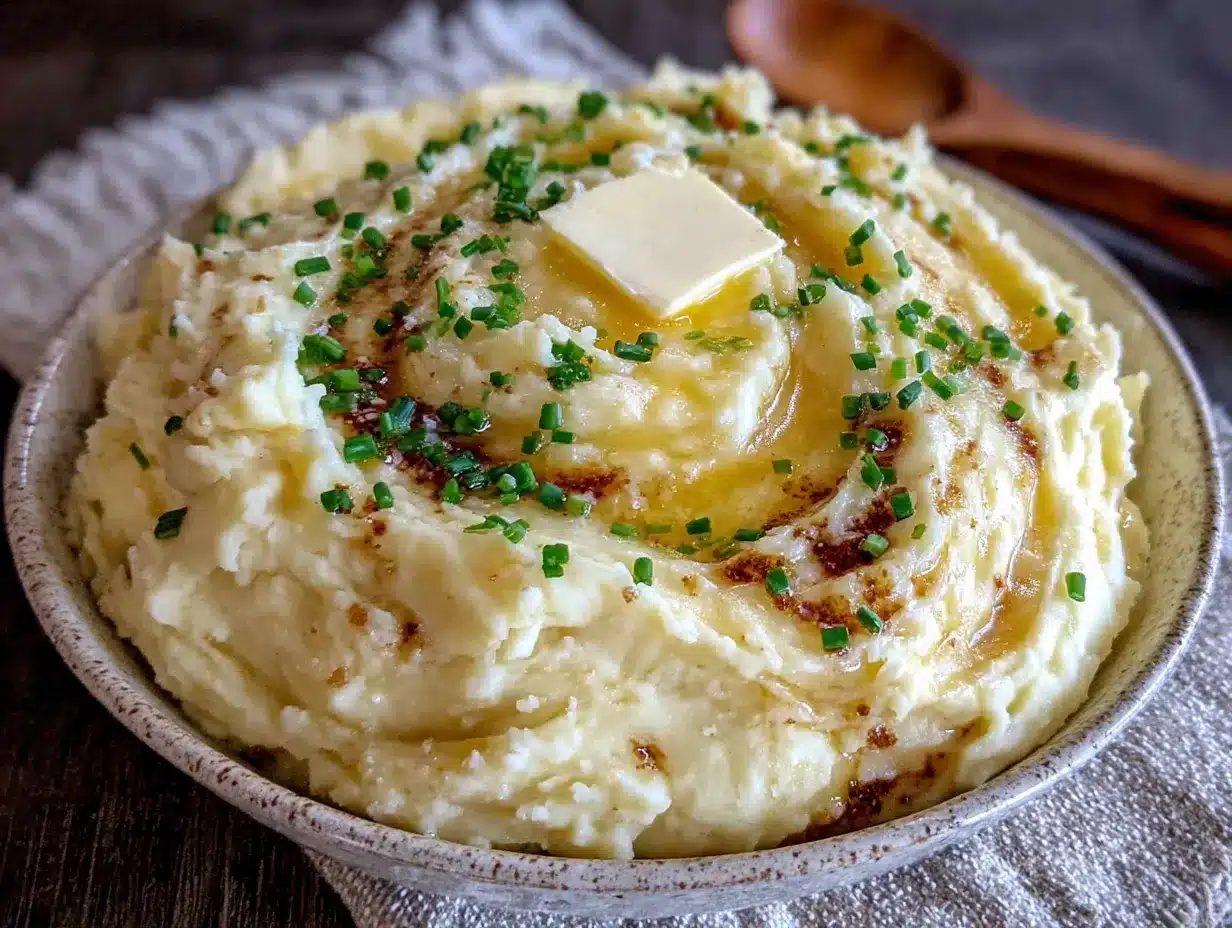
Let me walk you through this step by step. I’ve made these potatoes so many times that I could do it in my sleep, but I’ll share all the little tricks I’ve picked up along the way.
- Prep the potatoes — Peel your Yukon Gold potatoes and cut them into uniform quarters. This isn’t just about looks — even-sized pieces cook at the same rate, so you don’t end up with some mushy and some hard. Rinse them in cold water to remove excess starch, which helps prevent gummy potatoes.
- Start boiling — Place the potatoes in your large pot and cover them with cold water by about an inch. Add a generous pinch of salt — this seasons the potatoes from the inside out. Bring to a boil over high heat, then reduce to a simmer. Cook for 15-20 minutes, until a knife slides through the largest piece with no resistance. Don’t rush this — undercooked potatoes make lumpy mash.
- Warm your dairy — While the potatoes cook, warm your milk or cream in a small saucepan over low heat. You want it warm to the touch, not boiling. Cold liquid will cool down your potatoes and make them gluey when you mix. I’ve made that mistake before — trust me on this.
- Drain and dry — Once the potatoes are tender, drain them in a colander. Here’s a trick I learned the hard way: return the empty pot to the stove over low heat for about a minute to evaporate any remaining water. Then add the potatoes back and let them sit for 30 seconds to steam off excess moisture. Dry potatoes = fluffy potatoes.
- Mash or rice — If using a ricer, rice the potatoes into a large bowl. If mashing, do it right in the pot. Mash until smooth, but don’t overwork them — that’s how you get gluey potatoes. A few small lumps are fine. Actually, I kind of love a tiny lump here and there. It reminds you they’re real food.
- Add the butter — Add your softened butter to the hot potatoes and stir until melted and incorporated. The butter should coat every potato piece. This is where the magic starts.
- Incorporate the miso — Add the white miso paste. This is the crucial step. Stir vigorously to dissolve the miso completely — you don’t want any streaks of concentrated miso flavor. The paste will seem stiff at first, but it melts into the butter beautifully. Keep stirring until the color is uniform and pale golden.
- Add the warm milk — Pour in your warm milk or cream gradually, stirring as you go. You might not need all of it — stop when the potatoes reach your desired consistency. I like mine creamy but still holding their shape. Add more if you want them looser.
- Season and finish — Taste your potatoes before adding any salt. The miso and butter add quite a bit of saltiness already. Add black pepper and adjust salt if needed. Fold in the minced garlic at this point if you’re using it. The residual heat will mellow the garlic perfectly.
- Serve immediately — Transfer to a serving bowl, garnish with chopped chives or green onions, and serve hot. These potatoes wait for no one.
Cooking Tips & Techniques
I’ve messed up this recipe more times than I care to admit, so let me save you some trouble.
Don’t overwork the potatoes. This is the number one mistake. The more you mash and stir, the more starch develops, and the glueyer your potatoes get. Mash just until smooth, then stop. I once kept stirring because I was distracted by a phone call, and ended up with mashed potato paste. Edible, but sad.
Warm everything. Cold butter, cold milk, cold miso — they all fight against your hot potatoes. Let your butter sit out for 30 minutes before starting. Warm your milk. Let your miso come to room temperature while the potatoes boil. Every degree counts.
Use the right miso. White miso (shiro) is the way to go here. It’s milder and sweeter than red or brown miso. I tried this recipe with red miso once, and the flavor was too intense — almost bitter. Stick with white miso for that perfect savory balance.
Salt at the end. I know I said to salt the water, but for final seasoning, taste first. Miso varies in saltiness between brands. What’s perfect for one batch might be too salty for another. Trust your taste buds.
Multitask smartly. While your potatoes boil, prep your garnish, warm your milk, and set out your butter. Everything comes together fast at the end, so having your ingredients ready makes the process smooth and stress-free.
Variations & Adaptations
This recipe is surprisingly flexible. Here are some ways I’ve played with it over the years.
Roasted Garlic Miso Potatoes: Roast a whole head of garlic while the potatoes boil — cut the top off, drizzle with olive oil, wrap in foil, and bake at 400°F for 40 minutes. Squeeze the soft cloves into the potatoes along with the miso. The sweetness of roasted garlic pairs beautifully with the savory miso. This is my favorite variation for special occasions.
Vegan Miso Mashed Potatoes: Use plant-based butter (I like Miyoko’s) and unsweetened oat milk. The miso adds so much savory depth that you honestly won’t miss the dairy. My vegan friend brought these to a potluck and nobody guessed they were plant-based.
Spicy Miso Mash: Add 1 teaspoon of gochujang (Korean chili paste) along with the miso for a spicy kick. The heat builds slowly and works surprisingly well with the creamy potatoes. I tried this on a whim one night and it’s become my go-to when I want something with more attitude.
Herb-Infused Version: Stir in 2 tablespoons of fresh chopped rosemary or thyme along with the butter. The herbs add a lovely aromatic quality that complements the miso. I do this version in the fall when I have herbs from my garden.
Lighter Option: Swap half the potatoes with cauliflower. Steam cauliflower florets along with the potatoes, then mash together. You get the creamy texture with fewer carbs, and the miso masks any cauliflower flavor. Don’t tell anyone — they won’t know.
Serving & Storage Suggestions
These potatoes are best served hot, straight from the pot. The texture is at its absolute peak when fresh. Transfer them to a warm serving bowl and garnish with chives or green onions for a pop of color.
They pair beautifully with almost any protein. I love them alongside a simple roasted chicken, pan-seared steak, or baked salmon. They’re also incredible as a base for saucy dishes like mushroom stroganoff or braised short ribs. Honestly, I’ve eaten them as a main course with a side salad and felt completely satisfied.
For a holiday spread, these hold their own against turkey, gravy, and all the fixings. I’ve brought them to three different Thanksgivings and they always get the most compliments — sorry, green bean casserole.
Storage: Leftovers keep in an airtight container in the refrigerator for up to 4 days. The flavor actually deepens overnight as the miso continues to meld with the potatoes. I sometimes make a double batch just for next-day lunches.
Reheating: The best method is on the stovetop over low heat with a splash of milk or water. Stir frequently until warmed through. You can microwave individual portions, but add a tablespoon of milk first and cover with a damp paper towel to prevent drying out.
Freezing: These freeze surprisingly well. Portion into freezer-safe bags, flatten, and freeze for up to 3 months. Thaw in the refrigerator overnight, then reheat on the stovetop with a little extra butter. The texture will be slightly denser, but still delicious.
One thing I’ve noticed — the miso flavor becomes more pronounced after a day in the fridge. Some people love this. If you prefer a milder miso taste, eat them fresh.
Nutritional Information & Benefits
Per serving (about 1 cup, based on 6 servings):
- Calories: 245
- Total Fat: 12g
- Saturated Fat: 7g
- Carbohydrates: 32g
- Fiber: 3g
- Sugar: 2g
- Protein: 5g
- Sodium: 380mg
These potatoes aren’t health food, but they’re made with real ingredients that offer some surprising benefits. Potatoes are actually a good source of vitamin C, potassium, and vitamin B6 — especially if you leave the skins on (though this recipe works best peeled).
Miso is a fermented food, which means it contains probiotics that support gut health. The fermentation process also makes the nutrients in soy more bioavailable. Just keep in mind that high heat kills probiotics, so the gut benefits are minimal in cooked dishes. Still, miso is rich in antioxidants and contains all nine essential amino acids.
This recipe is naturally gluten-free (check your miso label — most white miso is made from rice and soy, not wheat). It’s also nut-free and can easily be made dairy-free. For those watching sodium, use low-sodium miso and skip the added salt.
I like to think of these potatoes as a way to make comfort food a little more interesting without pretending it’s something it’s not. They’re indulgent, yes. But they’re made with intention and real food. That counts for something.
Conclusion
These creamy miso butter mashed potatoes have become my signature side dish, and I didn’t even plan it. They just happened — in Mrs. Chen’s kitchen, on a random Tuesday, from someone who wasn’t trying to be impressive. That’s the best kind of recipe, if you ask me.
The beauty of this dish is how little it asks of you. Simple ingredients, straightforward technique, and a flavor payoff that feels almost unfair. The miso doesn’t scream for attention — it just makes everything taste more like itself. Richer. Deeper. More satisfying.
I hope you try these and make them your own. Add more garlic. Swap the herbs. Make them vegan. However you adapt them, they’ll be good. This recipe is forgiving that way.
If you give these a try, I’d love to hear about it. Drop a comment below and let me know how they turned out — did you add anything? Change anything? Serve them with something amazing? The best recipes evolve through sharing, and I’m always looking for new ideas.
Now go make some potatoes. Your dinner table deserves them.
Frequently Asked Questions
Can I use red miso instead of white miso?
You can, but the flavor will be much stronger and saltier. Red miso is aged longer and has a more intense, savory taste. If you only have red miso, use half the amount and taste before adding more. I personally prefer white miso for this recipe — it’s milder and lets the potato flavor shine through.
Can I make these ahead of time?
Yes! These potatoes reheat beautifully. Make them up to two days ahead, store in the refrigerator, and reheat on the stovetop with a splash of milk. The flavor actually deepens overnight. Just don’t add the garnish until right before serving.
How do I prevent my mashed potatoes from becoming gluey?
Don’t overwork them. Mash just until smooth, then stop. Also, avoid using a food processor or immersion blender — they overmix the starch and create a gummy texture. Hand mashing or ricing gives you the best control.
Is this recipe gluten-free?
Most white miso is made from soybeans and rice, making it naturally gluten-free. However, some brands use barley, so always check the label if you’re cooking for someone with celiac disease. I recommend Hikari or Miso Master for reliably gluten-free options.
Can I use sweet potatoes instead of Yukon Golds?
Absolutely. Sweet potatoes have a different texture — they’re starchier and less creamy — but the miso pairs surprisingly well with their natural sweetness. Peel and boil them the same way. You might need a little extra butter to achieve the same creamy consistency.
Pin This Recipe!
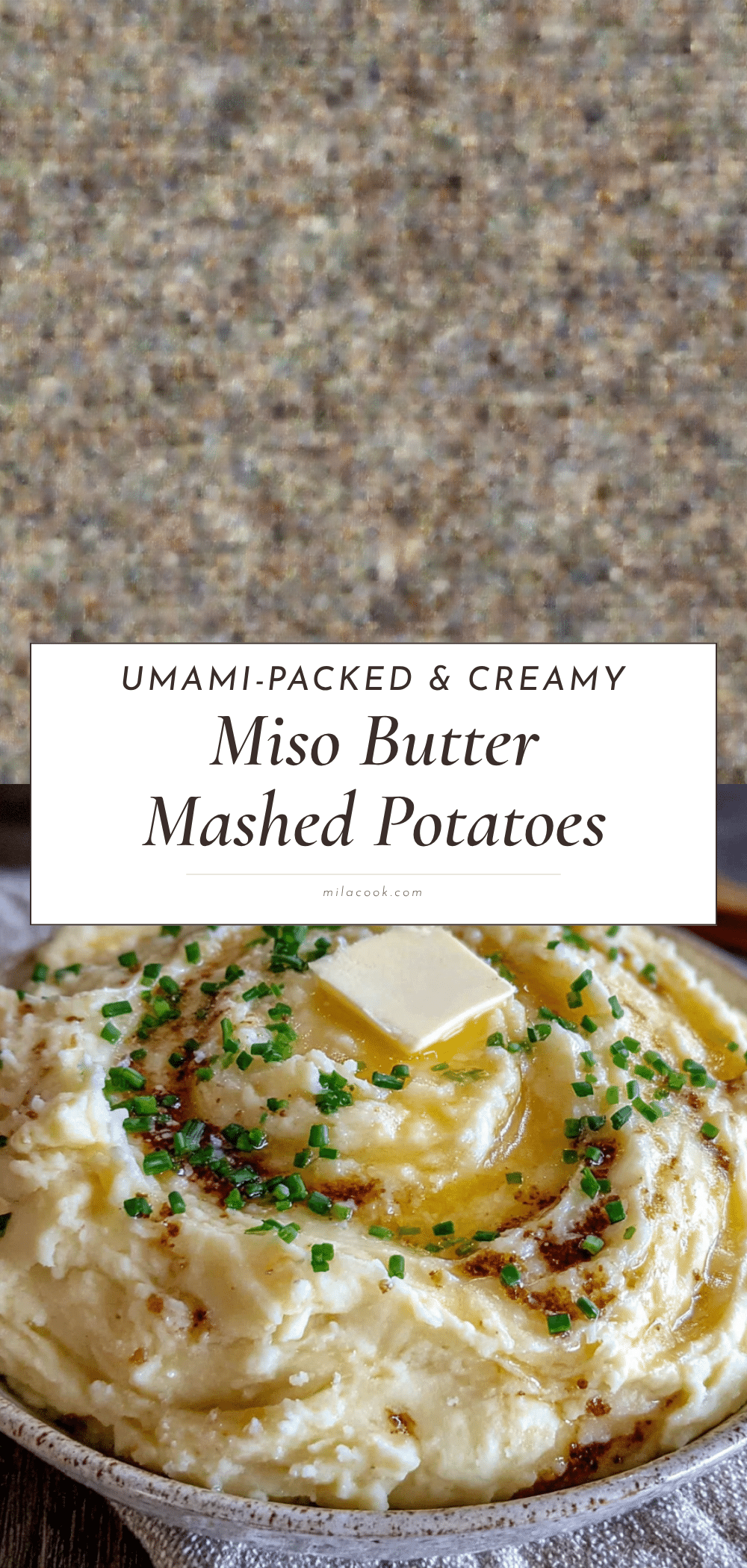
The Best Creamy Miso Mashed Potatoes Recipe (Umami)

These creamy miso butter mashed potatoes are a quick and easy side dish that combines the rich, savory depth of white miso with buttery Yukon Gold potatoes. Perfect for weeknights or holidays, they deliver next-level comfort food with simple ingredients.
- Prep Time: 10 minutes
- Cook Time: 20 minutes
- Total Time: 30 minutes
- Yield: 6 servings 1x
- Category: Side Dish
- Cuisine: American
Ingredients
- 2 pounds Yukon Gold potatoes (about 6 medium, peeled and quartered)
- 4 tablespoons unsalted butter (½ stick, softened)
- 2 tablespoons white miso paste (shiro miso)
- ½ cup whole milk or heavy cream (warm)
- 2 cloves garlic (minced, optional)
- ½ teaspoon salt (or to taste)
- ¼ teaspoon black pepper (freshly ground)
- 2 tablespoons chives or green onions (chopped, for garnish)
Instructions
- Peel the Yukon Gold potatoes and cut into uniform quarters. Rinse in cold water to remove excess starch.
- Place potatoes in a large pot and cover with cold water by about an inch. Add a generous pinch of salt. Bring to a boil over high heat, then reduce to a simmer. Cook for 15-20 minutes until a knife slides through the largest piece with no resistance.
- While potatoes cook, warm the milk or cream in a small saucepan over low heat until warm to the touch (do not boil).
- Drain the potatoes in a colander. Return the empty pot to the stove over low heat for about a minute to evaporate any remaining water. Add potatoes back and let sit for 30 seconds to steam off excess moisture.
- Mash the potatoes with a potato masher or rice them into a large bowl. Mash until smooth but do not overwork.
- Add the softened butter to the hot potatoes and stir until melted and incorporated.
- Add the white miso paste and stir vigorously until completely dissolved and the color is uniform and pale golden.
- Gradually pour in the warm milk or cream, stirring as you go. Stop when the potatoes reach your desired consistency.
- Taste and season with black pepper and additional salt if needed. Fold in minced garlic if using.
- Transfer to a serving bowl, garnish with chopped chives or green onions, and serve immediately.
Notes
Don’t overwork the potatoes to avoid gluey texture. Warm all ingredients before mixing. Use white miso for best flavor. Salt at the end as miso varies in saltiness. For dairy-free, use plant-based butter and unsweetened oat milk. Leftovers keep in the refrigerator for up to 4 days and reheat well on the stovetop with a splash of milk.
Nutrition
- Serving Size: 1 cup
- Calories: 245
- Sugar: 2
- Sodium: 380
- Fat: 12
- Saturated Fat: 7
- Carbohydrates: 32
- Fiber: 3
- Protein: 5
Keywords: miso mashed potatoes, creamy mashed potatoes, umami mashed potatoes, easy side dish, Thanksgiving side, comfort food, miso butter potatoes