Love this? Save it for later!
Share the inspiration with your friends
“I wasn’t expecting kitchen magic at 7 AM on a sleepy Sunday,” I said to myself as I stood in my cramped apartment kitchen, staring at a pan with eggs that looked more like a rubbery mess than breakfast. Honestly, scrambled eggs had always been a mystery to me—either too dry or too runny, and never that fluffy, soft dream you see in cooking videos. Maybe you’ve been there too: trying to keep it simple but ending up with disappointment. Well, let me tell you how I stumbled upon the secret to fluffy soft scrambled eggs, perfect for beginners like me.
It all started one morning when I was babysitting my nephew, Jamie, who insisted he wanted “the best scrambled eggs ever.” I panicked, of course, but remembering a tip from a casual chat with my neighbor—an old retired chef named Mr. Lopez—I decided to give it a try. He didn’t give me a fancy recipe or anything; just a few simple pointers about heat control and timing. I forgot to grab the salt before starting and even spilled a bit of milk on the floor (classic me), but that batch came out better than anything I’d made before. The eggs were soft, fluffy, and honestly, I closed my eyes after the first bite. Since then, this recipe has become my go-to morning fix and a little kitchen confidence booster.
So, if you’ve been struggling with scrambled eggs that never quite hit the mark, this fluffy soft scrambled eggs recipe for beginners is your new best friend. It’s forgiving, simple, and just downright delicious. Let’s get cracking!
Why You’ll Love This Recipe
After testing countless versions of scrambled eggs (yes, I’m a bit obsessed), I can confidently say this recipe is a keeper. Here’s why it stands out:
- Quick & Easy: Takes less than 10 minutes from start to finish — perfect for rushed mornings or lazy brunches.
- Simple Ingredients: No fancy or hard-to-find items required; you probably already have everything in your kitchen.
- Perfect for Beginners: The step-by-step instructions make it nearly foolproof, even if you’ve never cooked eggs before.
- Crowd-Pleaser: Whether it’s a family breakfast or a casual friend brunch, these eggs always get compliments.
- Unbelievably Delicious: The creamy, fluffy texture is comforting without being greasy or heavy.
What makes this recipe different? It’s all about gentle heat and slow cooking, plus a small splash of dairy that makes the eggs incredibly soft without turning runny. I also share a personal trick from Mr. Lopez that keeps the eggs from overcooking or drying out. Honestly, it’s comfort food that doesn’t feel like a shortcut — it’s the real deal, done right.
If you want to impress without stress, or simply crave that perfect soft scramble you remember from a cozy café, this recipe will become your new staple.
What Ingredients You Will Need
This recipe uses simple, wholesome ingredients to deliver bold flavor and that satisfying soft texture without any fuss. These are pantry staples and a couple of fresh essentials, all easy to source or swap if needed.
- Large eggs (3 to 4; room temperature is best for even cooking)
- Unsalted butter (1 tablespoon; brings richness and creaminess)
- Whole milk or half-and-half (1 tablespoon; adds softness and light fluffiness) — use dairy-free milk like almond or oat milk if you prefer
- Salt (a pinch; enhances natural egg flavor)
- Freshly ground black pepper (to taste)
- Fresh herbs like chives or parsley (optional; for a fresh pop of color and flavor)
Pro tip: I like to use organic, free-range eggs from my local farmer’s market—they really do taste richer. But any good-quality eggs will work just fine.
Equipment Needed
- Non-stick skillet (8-inch or similar size; helps prevent sticking and makes cleanup easier)
- Silicone spatula (great for gentle folding of the eggs without breaking them)
- Whisk or fork (to beat the eggs thoroughly)
- Mixing bowl (medium-sized for whisking eggs and milk)
- Stove or electric cooktop with adjustable low heat settings
If you don’t have a non-stick skillet, a well-seasoned cast iron pan can work, but you’ll need to watch the heat very carefully to avoid sticking. Personally, I’ve tried using a regular stainless steel pan, and while it’s doable, it requires a bit more butter and patience.
For beginners, I recommend keeping your tools simple. A silicone spatula is worth investing in because it’s gentle and flexible, which makes folding the eggs easier and helps keep that fluffy texture intact.
Preparation Method
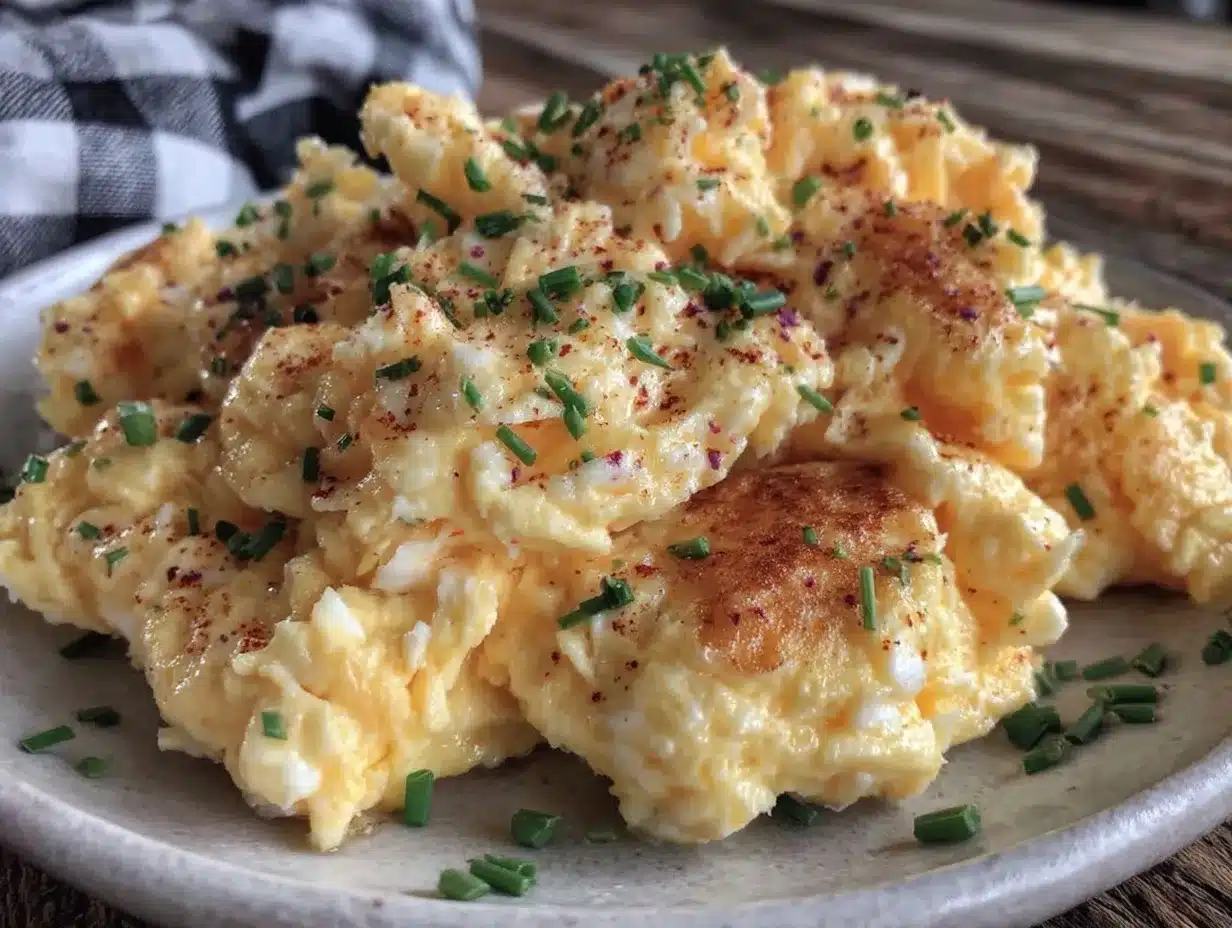
- Crack and whisk the eggs: In a mixing bowl, crack 3 to 4 large eggs. Add 1 tablespoon of whole milk or half-and-half. Season with a pinch of salt. Use a whisk or fork to beat the mixture until the yolks and whites combine fully and the mixture looks slightly frothy — about 30 seconds. This step adds air, which helps with fluffiness.
- Heat the pan and melt butter: Place your non-stick skillet over low to medium-low heat. Add 1 tablespoon of unsalted butter and let it melt gently, swirling the pan to coat the surface evenly. You want the butter to foam slightly but not brown — this usually takes about 1 to 2 minutes.
- Pour eggs into the pan: Once the butter is foaming, pour the egg mixture gently into the pan. Immediately reduce the heat to the lowest setting. High heat cooks eggs too fast and dries them out, so patience is key here.
- Slowly stir and fold: Using your silicone spatula, gently stir the eggs in small circles, scraping the bottom and sides of the pan. Fold the eggs over themselves rather than stirring vigorously to keep them soft and fluffy. Continue this slow stirring for about 3 to 5 minutes.
- Watch for the perfect texture: The eggs will start to set around the edges and softly hold together. When they’re mostly cooked but still slightly runny in places (look for a creamy, custard-like texture), remove the pan from heat. The residual heat will finish cooking them without drying them out.
- Season and serve: Add freshly ground black pepper and chopped fresh herbs if you like. Give a final gentle fold and immediately plate the eggs to enjoy while warm and fluffy.
Note: If you overcook, the eggs turn rubbery — trust me, I’ve been there. Keep the heat low and pull them off the stove early for that melt-in-your-mouth softness.
Cooking Tips & Techniques
Let me share a few lessons I learned the hard way so you don’t have to:
- Low and slow is your friend: Cooking eggs on low heat keeps them tender. High heat cooks too fast and toughens the proteins.
- Don’t overbeat: Whisk just enough to mix and add some air. Overbeating can lead to dry eggs.
- Butter over oil: Butter adds flavor and helps achieve that silky texture. Olive oil can work but changes the texture.
- Continuous folding: Gentle folding prevents large curds and keeps the eggs creamy.
- Remove early: Eggs keep cooking from residual heat after you take them off the stove. Take them out just before they look done.
I once tried cranking the heat thinking it would speed things up — disaster. The eggs turned grainy and dry, and I learned my lesson. Also, multitasking while scrambling eggs is tricky. Focus on the pan and keep stirring gently to avoid any burnt spots.
Variations & Adaptations
- Dairy-free version: Replace milk and butter with coconut milk and olive oil. The texture is slightly different but still soft and tasty.
- Cheesy scramble: Stir in a handful of shredded cheese like cheddar or mozzarella just before finishing cooking for a melty twist.
- Veggie boost: Add finely chopped spinach, tomatoes, or mushrooms sautéed separately and folded in at the end for extra color and nutrition.
- Herb variations: Swap fresh chives for dill, basil, or tarragon depending on your mood.
- Spiced up: A pinch of smoked paprika or a dash of hot sauce can add a nice kick if you like bold flavors.
Personally, I love adding a bit of crumbled feta and fresh dill for a Mediterranean vibe. It’s simple but feels special. You can adapt this recipe easily to suit your taste and dietary needs without losing that fluffy softness.
Serving & Storage Suggestions
Serve these fluffy soft scrambled eggs immediately while they’re warm and creamy. They pair wonderfully with toasted sourdough or a buttery croissant for a comforting breakfast. For a fuller meal, serve alongside sautéed mushrooms or a fresh avocado salad.
If you have leftovers (though rare!), store them in an airtight container in the refrigerator for up to 24 hours. To reheat, gently warm them in a pan over low heat, stirring occasionally to bring back softness without drying out.
Keep in mind, scrambled eggs taste best fresh, but if you need to prep ahead, reheating gently helps maintain their delicate texture. Flavors also mellow nicely when paired with fresh herbs right before serving.
Nutritional Information & Benefits
This recipe for fluffy soft scrambled eggs is not only delicious but packed with protein and essential nutrients. Each serving (about 3 large eggs) provides roughly 210 calories, 14 grams of protein, 15 grams of healthy fats, and essential vitamins like B12 and D.
Eggs are a fantastic source of high-quality protein and choline, which supports brain health. Using whole milk and butter adds richness but keeps the dish balanced. For those watching cholesterol, using egg whites or egg substitutes can be an option, though you might lose some of the creamy texture.
This dish fits well into low-carb and gluten-free diets. Just a heads-up: it contains dairy and eggs, so it’s not suitable for those with allergies to these ingredients.
Conclusion
This fluffy soft scrambled eggs recipe for beginners has become a kitchen staple for me, and I hope it will be for you too. It’s forgiving, simple, and tastes like a little morning hug. I love how it turns a basic ingredient like eggs into something special without fuss or fancy tricks.
Feel free to customize—the beauty of scrambled eggs is how flexible they are! Whether you add cheese, herbs, or a splash of cream, you’ll find your perfect version in no time. Let me know how your eggs turn out or if you’ve found your own twist. I’d love to hear your stories and tips.
Happy cooking, and remember: sometimes the simplest recipes bring the biggest joy!
FAQs
What’s the secret to making scrambled eggs fluffy and soft?
Low heat, gentle folding, and adding a bit of milk or cream help create a fluffy, tender texture. Avoid high heat to prevent dryness.
Can I use a microwave to make fluffy scrambled eggs?
Microwaving eggs can be quick but often results in uneven cooking. For best softness and fluffiness, stovetop cooking on low heat is recommended.
How many eggs should I use per person?
Usually, 2 to 3 large eggs per person make a satisfying serving of scrambled eggs.
Can I prepare scrambled eggs ahead of time?
They’re best fresh but can be stored in the fridge for up to 24 hours. Reheat gently on low heat to keep softness.
What can I add to scrambled eggs to boost flavor?
Fresh herbs, cheese, sautéed veggies, or a sprinkle of spices like paprika can add delicious layers of flavor without complicating the recipe.
Pin This Recipe!
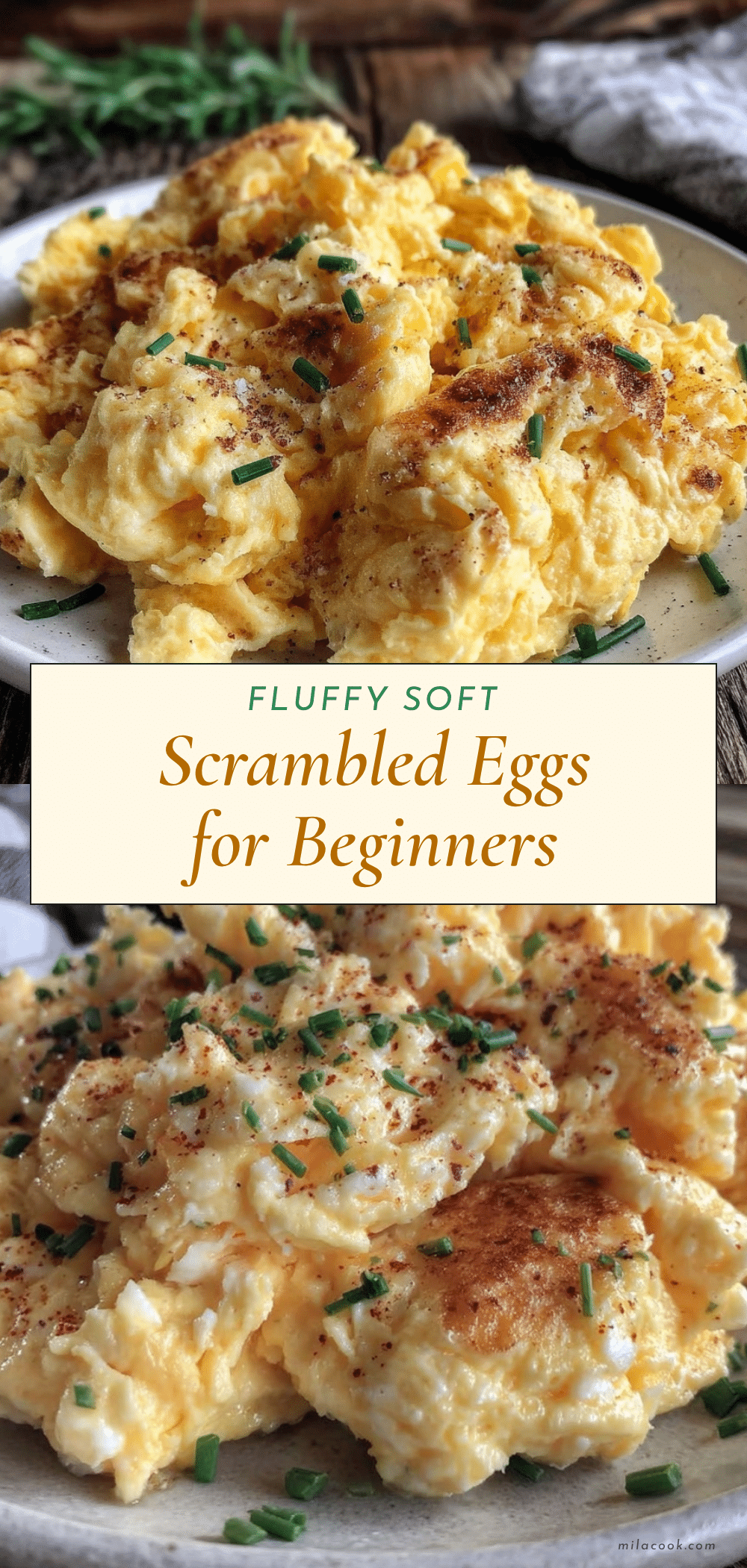
Fluffy Soft Scrambled Eggs Recipe Easy Step by Step for Beginners

A simple and forgiving recipe for fluffy, soft scrambled eggs perfect for beginners. This method uses gentle heat and a splash of milk to achieve creamy, tender eggs.
- Prep Time: 5 minutes
- Cook Time: 5 minutes
- Total Time: 10 minutes
- Yield: 2 servings 1x
- Category: Breakfast
- Cuisine: American
Ingredients
- 3 to 4 large eggs (room temperature)
- 1 tablespoon unsalted butter
- 1 tablespoon whole milk or half-and-half (or dairy-free milk like almond or oat milk)
- Pinch of salt
- Freshly ground black pepper to taste
- Fresh herbs like chives or parsley (optional)
Instructions
- Crack 3 to 4 large eggs into a mixing bowl. Add 1 tablespoon of whole milk or half-and-half and a pinch of salt. Whisk thoroughly with a fork or whisk until yolks and whites are fully combined and the mixture is slightly frothy, about 30 seconds.
- Place a non-stick skillet over low to medium-low heat. Add 1 tablespoon of unsalted butter and let it melt gently, swirling the pan to coat evenly. Butter should foam slightly but not brown, about 1 to 2 minutes.
- Pour the egg mixture gently into the pan. Immediately reduce heat to the lowest setting to avoid overcooking.
- Using a silicone spatula, gently stir the eggs in small circles, scraping the bottom and sides of the pan. Fold the eggs over themselves rather than stirring vigorously to keep them soft and fluffy. Continue slow stirring for about 3 to 5 minutes.
- When the eggs are mostly cooked but still slightly runny in places with a creamy, custard-like texture, remove the pan from heat. Residual heat will finish cooking the eggs without drying them out.
- Season with freshly ground black pepper and chopped fresh herbs if desired. Give a final gentle fold and serve immediately while warm and fluffy.
Notes
Cook eggs on low heat and fold gently to keep them soft and fluffy. Remove from heat when slightly runny as residual heat finishes cooking. Avoid high heat to prevent dryness and rubbery texture. Use butter for richness and creaminess. For dairy-free version, substitute milk and butter with coconut milk and olive oil.
Nutrition
- Serving Size: About 3 large eggs p
- Calories: 210
- Sugar: 1
- Sodium: 150
- Fat: 15
- Saturated Fat: 7
- Carbohydrates: 1
- Protein: 14
Keywords: scrambled eggs, fluffy eggs, soft scrambled eggs, easy breakfast, beginner recipe, creamy eggs