Love this? Save it for later!
Share the inspiration with your friends
I wasn’t expecting cooking advice from a plumber, but there I was, standing in my own kitchen, listening to him describe exactly how to make meatloaf. He had crawled out from under my sink to deliver the verdict—new pipes needed, of course—and somehow we got to talking about dinner. Or maybe he was just hungry. Either way, he started telling me about his grandmother’s buttermilk meatloaf like I had asked for the secret to life itself. And honestly? He wasn’t wrong to share it.
Here’s the thing about buttermilk meatloaf—it sounds like one of those things people say sounds good but never actually make. But this version, with its brown sugar glaze that gets all sticky and caramelized around the edges, is the real deal. The plumber told me his grandmother swore by buttermilk because it keeps the meat tender without making it soggy. I scribbled his instructions on the back of an old receipt while he wiped his hands on a rag. That was three years ago, and I haven’t made meatloaf any other way since.
The first time I made it, I forgot to line the loaf pan with parchment paper. Let me tell you, scraping caramelized brown sugar glaze off a metal pan is not my idea of a good time. But that first bite? Worth every second of scrubbing. The meatloaf was moist, savory, and had this subtle tang from the buttermilk that balanced the sweetness of the glaze perfectly. My husband actually asked me to make it again the next week, which for a man who usually says “it was fine” about dinner, is basically a standing ovation.
Maybe you’ve been there—trying recipe after recipe for a classic comfort dish, only to end up with something dry or bland. This buttermilk meatloaf is the one that finally stuck. It’s the kind of recipe you’ll make for Sunday supper, for company, or just because you want leftovers that actually taste better the next day. And it all started with a plumber, a leaky pipe, and a grandmother who knew exactly what she was doing.
Why You’ll Love This Recipe
I have tested this buttermilk meatloaf recipe more times than I care to count, and I can tell you with confidence—it works every single time. The combination of buttermilk and brown sugar glaze creates something that is hard to beat. Here is why this recipe deserves a permanent spot in your dinner rotation:
- Quick & Easy: You only need about 15 minutes of prep time. The oven does the rest. Perfect for busy weeknights when you want something hearty without spending hours in the kitchen.
- Simple Ingredients: No fancy grocery trips required. Buttermilk, ground beef, breadcrumbs, and brown sugar are all pantry staples. You likely have everything you need right now.
- Perfect for Sunday Supper: This meatloaf feels special enough for company but easy enough for a regular Tuesday. It pairs beautifully with mashed potatoes and green beans for a classic Southern meal.
- Crowd-Pleaser: I have served this to picky eaters, meatloaf skeptics, and even my mother-in-law who claims her recipe is the best. Everyone went back for seconds.
- Unbelievably Delicious: The texture is tender without being mushy. The glaze gets sticky and caramelized in all the right places. It is comfort food at its finest.
What makes this recipe different from the rest? It is the buttermilk. Most meatloaf recipes use milk or water, but buttermilk adds a subtle tang that cuts through the richness of the beef. It also helps keep the meatloaf incredibly moist without making it dense. I have tried versions with ketchup-based glazes, but the brown sugar glaze here is something special—it caramelizes into this sweet, sticky crust that contrasts perfectly with the savory meat. This isn’t just another meatloaf recipe. It is the one you will come back to again and again.
This recipe is the kind that makes you close your eyes after the first bite. It is comfort food reimagined—faster than traditional versions, but with the same soul-soothing satisfaction. Perfect for impressing guests without stress, or turning a simple meal into something memorable.
What Ingredients You Will Need
This recipe uses simple, wholesome ingredients to deliver bold flavor and satisfying texture without the fuss. Most of these are pantry staples, which makes this meatloaf perfect for last-minute dinners.
For the Meatloaf
- Ground beef (2 pounds / 900g) – I recommend 80/20 blend for the best flavor and moisture. Too lean and the meatloaf can dry out. You can use ground turkey or chicken if needed, but add an extra tablespoon of olive oil to keep it moist.
- Buttermilk (1 cup / 240ml) – This is the star ingredient. It tenderizes the meat and adds a subtle tang. Do not substitute regular milk—the acidity of buttermilk is what makes this recipe work. If you don’t have buttermilk, you can make a quick version by adding 1 tablespoon of lemon juice or white vinegar to 1 cup of milk and letting it sit for 5 minutes.
- Breadcrumbs (1 cup / 120g) – Plain or seasoned both work. I prefer plain so I can control the seasoning. Panko breadcrumbs create a lighter texture, while traditional breadcrumbs make it more dense. For a gluten-free option, use crushed pork rinds or gluten-free breadcrumbs.
- Yellow onion (1 medium, finely diced / about 150g) – Onion adds moisture and flavor. Make sure to dice it finely so it blends into the meatloaf without leaving large chunks. I like to sauté it briefly in a little butter before adding it to the mixture—it mellows the raw onion flavor and adds sweetness.
- Large eggs (2) – Eggs bind everything together. Make sure they are at room temperature so they incorporate evenly into the meat mixture.
- Garlic (3 cloves, minced) – Fresh garlic is best. I have used garlic powder in a pinch (1 teaspoon), but fresh gives a much better flavor.
- Worcestershire sauce (2 tablespoons / 30ml) – This adds depth and umami. I recommend Lea & Perrins for the best flavor.
- Kosher salt (1½ teaspoons) – Salt is crucial for bringing out the flavor of the beef. Do not skip it.
- Black pepper (1 teaspoon) – Freshly ground is always better.
- Dried thyme (1 teaspoon) – Thyme adds an earthy note that pairs beautifully with beef. You can substitute with dried oregano or rosemary if needed.
- Smoked paprika (1 teaspoon) – This adds a subtle smokiness. Sweet paprika works too, but smoked gives it that extra something.
For the Brown Sugar Glaze
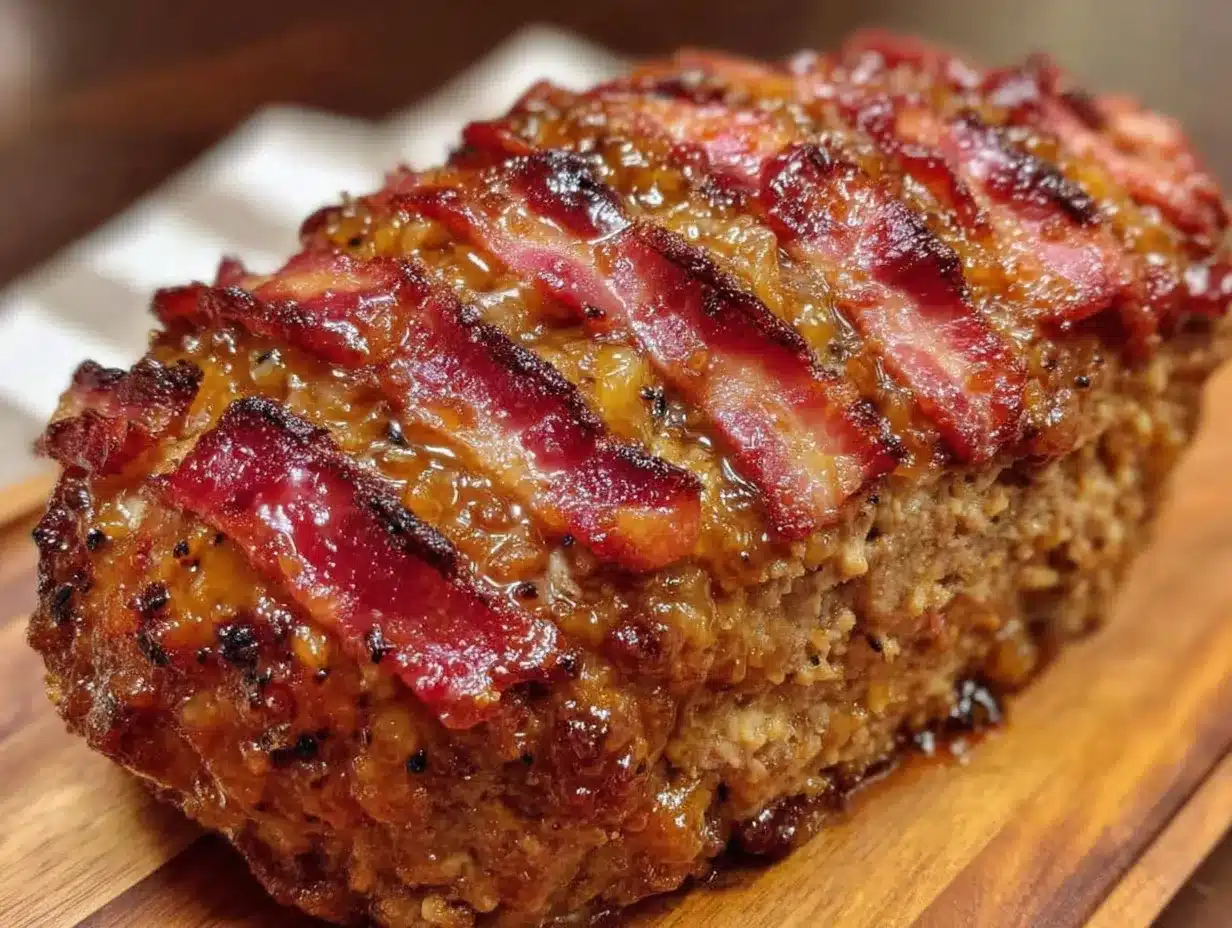
- Brown sugar (½ cup / 100g, packed) – Light or dark brown sugar both work. Dark brown sugar has more molasses flavor, which makes the glaze richer. I prefer dark brown sugar for this recipe.
- Ketchup (½ cup / 120ml) – Use a good quality ketchup. I like Heinz for its balanced sweetness and tang.
- Apple cider vinegar (1 tablespoon / 15ml) – This cuts through the sweetness and adds brightness. White vinegar works in a pinch, but apple cider vinegar adds a nicer flavor.
- Worcestershire sauce (1 tablespoon / 15ml) – This deepens the flavor of the glaze and ties it back to the meatloaf.
- Dijon mustard (1 teaspoon) – Mustard adds a subtle tang that balances the sweetness. Yellow mustard works too, but Dijon is smoother.
Equipment Needed
You do not need fancy equipment to make this buttermilk meatloaf, which is part of its charm. Here is what you will need:
- Loaf pan (9×5-inch / 23x13cm) – A standard loaf pan works perfectly. If you do not have one, you can shape the meatloaf free-form on a parchment-lined baking sheet. It will cook a little faster, so check for doneness earlier.
- Large mixing bowl – You need enough room to mix everything without making a mess. I use a big ceramic bowl that gives me plenty of space.
- Parchment paper – Line your loaf pan with parchment paper, leaving some overhang on the sides. This makes it incredibly easy to lift the meatloaf out after it cools. Trust me on this one—I learned the hard way.
- Small saucepan – For making the brown sugar glaze. A small pot works too.
- Whisk – To combine the glaze ingredients smoothly.
- Meat thermometer – This is essential for checking doneness without cutting into the meatloaf. A digital instant-read thermometer is my favorite tool for this.
- Chef’s knife and cutting board – For dicing the onion and mincing the garlic.
- Measuring cups and spoons – Accurate measurements matter, especially for the buttermilk and glaze.
If you do not have a meat thermometer, you can use the touch test—the meatloaf should feel firm to the touch and the juices should run clear. But honestly, a thermometer takes the guesswork out and costs less than ten dollars. It is worth the investment.
Preparation Method
Let me walk you through this step by step. The process is straightforward, but a few small details make a big difference in the final result.
Step 1: Preheat and Prepare
Preheat your oven to 350°F (175°C). Line your loaf pan with parchment paper, leaving about 2 inches of overhang on the long sides. This will make lifting the meatloaf out so much easier later. Set the pan aside.
Step 2: Make the Brown Sugar Glaze
In a small saucepan over medium heat, combine the brown sugar, ketchup, apple cider vinegar, Worcestershire sauce, and Dijon mustard. Whisk everything together until the brown sugar dissolves completely and the mixture comes to a gentle simmer. This takes about 3 to 4 minutes. Let it simmer for 1 minute, then remove from heat and set aside. The glaze will thicken slightly as it cools. Taste it—you want a balance of sweet, tangy, and savory. If it tastes too sweet, add a splash more vinegar. Too tangy? Add another tablespoon of brown sugar.
Step 3: Sauté the Onion and Garlic
In a small skillet over medium heat, melt 1 tablespoon of butter. Add the finely diced onion and cook until soft and translucent, about 4 to 5 minutes. Add the minced garlic and cook for another 30 seconds until fragrant. Remove from heat and let it cool for a few minutes. This step is optional but highly recommended—sautéing the onion mellows its flavor and prevents raw onion chunks in your meatloaf. I learned this after one too many meatloaves with crunchy onion bits.
Step 4: Mix the Meatloaf Ingredients
In a large mixing bowl, combine the ground beef, buttermilk, breadcrumbs, sautéed onion and garlic, eggs, Worcestershire sauce, salt, pepper, dried thyme, and smoked paprika. Use your hands to gently mix everything together. Do not overmix—overworking the meat can make the meatloaf tough. Mix just until everything is evenly combined. You should still see small pieces of onion and herbs distributed throughout.
Here is a tip I picked up from the plumber’s grandmother: let the mixture rest for 5 minutes before shaping it. This allows the breadcrumbs to absorb the buttermilk, which makes the meatloaf more tender. I know it sounds weird, but try it. It really does make a difference.
Step 5: Shape and Glaze
Transfer the meat mixture to the prepared loaf pan. Press it gently into an even shape, making sure there are no air pockets. Do not pack it too tightly—you want it to hold together without being dense. Pour about half of the brown sugar glaze over the top of the meatloaf, spreading it evenly with a spoon or spatula. Reserve the remaining glaze for later.
Step 6: Bake
Place the loaf pan on a baking sheet to catch any drips (trust me on this). Bake at 350°F (175°C) for 45 minutes. After 45 minutes, remove the meatloaf from the oven and spread the remaining glaze over the top. Return to the oven and bake for another 15 to 20 minutes, or until the internal temperature reaches 160°F (71°C) when measured with a meat thermometer inserted into the center. The glaze should be sticky and caramelized on top.
Step 7: Rest and Serve
Remove the meatloaf from the oven and let it rest in the pan for 10 minutes. This resting period is crucial—it allows the juices to redistribute throughout the meatloaf, making every slice moist and flavorful. After 10 minutes, use the parchment paper overhang to lift the meatloaf out of the pan. Transfer it to a cutting board, slice, and serve warm.
If you slice into it too soon, the meatloaf will fall apart and the juices will run out onto the cutting board. I have made this mistake more times than I want to admit. Patience pays off here.
Cooking Tips & Techniques
After making this buttermilk meatloaf more times than I can count, I have picked up a few tricks that make the process smoother and the results more consistent. Here are my best tips:
Do not skip the buttermilk. I know it might seem like an unnecessary extra ingredient, but buttermilk is what makes this meatloaf special. The acidity tenderizes the meat and adds a subtle tang that balances the sweetness of the glaze. If you are out of buttermilk, make your own by adding 1 tablespoon of lemon juice or white vinegar to 1 cup of milk. Let it sit for 5 minutes before using.
Use a light hand when mixing. Overmixing ground meat is the number one cause of tough meatloaf. Mix just until the ingredients are combined. You should not see streaks of egg or pockets of breadcrumbs, but you also should not be kneading the mixture like bread dough. If you notice the mixture feeling stiff or dense, you have mixed too much.
Let the meatloaf rest before slicing. I cannot stress this enough. A 10-minute rest allows the juices to settle, which means every slice stays moist and holds its shape. If you cut into it right away, you will end up with crumbly slices and a puddle of juice on your cutting board.
Check the temperature early. Ovens vary, so start checking the internal temperature at the 50-minute mark. You want 160°F (71°C) in the center. If you do not have a meat thermometer, insert a knife into the center—the juices should run clear, and the meat should feel firm to the touch.
Line the pan with parchment paper. This was a game-changer for me. The brown sugar glaze gets sticky and can be a nightmare to clean off the pan. With parchment paper overhang, you simply lift the meatloaf out and throw away the paper. No scrubbing required.
Double the glaze. The recipe makes enough glaze for a nice coating, but if you are like me and love extra glaze to spoon over each slice, make one and a half times the glaze recipe. You can also serve extra glaze on the side for dipping.
Variations & Adaptations
One of the things I love about this buttermilk meatloaf recipe is how adaptable it is. Here are some variations I have tried and loved:
Turkey Meatloaf: Substitute ground turkey or chicken for the beef. Use 93% lean turkey for the best results—any leaner and the meatloaf can dry out. Add 2 tablespoons of olive oil to the mixture to compensate for the lower fat content. Cook to 165°F (74°C) instead of 160°F.
Gluten-Free Option: Replace the breadcrumbs with crushed pork rinds, almond flour, or gluten-free breadcrumbs. I have used crushed pork rinds several times, and honestly, the texture is fantastic. They add a subtle savory note that works beautifully with the buttermilk and brown sugar glaze.
Spicy Kick: Add 1 tablespoon of sriracha or your favorite hot sauce to the meat mixture, and stir a pinch of cayenne pepper into the glaze. The heat balances the sweetness of the brown sugar perfectly. I made this version for a game day party, and it disappeared in minutes.
Cheese-Stuffed Meatloaf: Shape half the meat mixture into the loaf pan, create a shallow well down the center, and fill it with shredded cheddar or mozzarella cheese. Top with the remaining meat mixture, sealing the edges. The melted cheese center is a wonderful surprise when you slice into it.
Vegetable-Packed Version: Finely grate one carrot and one zucchini, squeeze out the excess moisture, and add them to the meat mixture. This adds moisture and nutrients without changing the flavor much. My kids did not even notice the extra vegetables.
Serving & Storage Suggestions
This buttermilk meatloaf is incredibly versatile when it comes to serving. Here is how I like to enjoy it:
Serving Temperature: Serve warm, straight from the oven, with extra glaze spooned over each slice. The meatloaf is also delicious at room temperature, which makes it perfect for picnics or packed lunches.
Classic Pairings: Mashed potatoes are the classic side dish for meatloaf, and for good reason—the creamy potatoes soak up the extra glaze beautifully. Green beans, roasted carrots, or a simple side salad also work well. For a truly Southern meal, serve with collard greens and cornbread.
Leftover Ideas: Leftover meatloaf makes the best sandwiches. Slice it cold, layer it on toasted bread with a little extra glaze or mayo, and add lettuce and tomato. You can also crumble leftover meatloaf into pasta sauce or use it as a topping for baked potatoes.
Storage: Store leftover meatloaf in an airtight container in the refrigerator for up to 4 days. The flavors actually deepen as it sits, so leftovers taste even better the next day.
Freezing: This meatloaf freezes beautifully. Wrap the cooled, unsliced meatloaf tightly in plastic wrap, then in aluminum foil. Freeze for up to 3 months. To reheat, thaw overnight in the refrigerator, then warm slices in a 350°F (175°C) oven for 10 to 15 minutes, or in the microwave for 1 to 2 minutes per slice.
Reheating: The best way to reheat meatloaf without drying it out is in the oven. Place slices on a baking sheet, cover loosely with foil, and warm at 350°F (175°C) for 10 minutes. The microwave works in a pinch, but the texture will not be as good.
Nutritional Information & Benefits
Here is the estimated nutritional information for one serving (based on 8 servings):
- Calories: Approximately 420
- Protein: 28g
- Fat: 22g
- Carbohydrates: 28g
- Fiber: 1g
- Sugar: 18g
- Sodium: 680mg
Health Benefits: This meatloaf provides a good amount of protein from the ground beef, which supports muscle health and keeps you feeling full. Buttermilk contains probiotics that support gut health, and it is also a good source of calcium and vitamin B12. The onions and garlic provide antioxidants and anti-inflammatory compounds. While this is not a low-calorie dish, it is a balanced meal that offers protein, carbohydrates, and fats in reasonable amounts.
Dietary Considerations: This recipe contains gluten (from breadcrumbs) and dairy (from buttermilk). For a gluten-free version, use gluten-free breadcrumbs or crushed pork rinds. For a dairy-free version, substitute the buttermilk with a mixture of unsweetened almond milk and 1 tablespoon of lemon juice, and use a dairy-free butter alternative for sautéing the onion.
Potential Allergens: This recipe contains wheat (breadcrumbs), dairy (buttermilk, butter), and eggs. It may also contain traces of mustard (in the glaze). Always check your ingredient labels if you have specific allergies.
I personally love that this meatloaf feels indulgent but is made with whole, recognizable ingredients. It is the kind of meal that fills you up without weighing you down, and leftovers make for an easy lunch the next day.
Conclusion
This Classic Southern Buttermilk Meatloaf with Brown Sugar Glaze is more than just a dinner recipe—it is the kind of dish that brings people together around the table. The buttermilk keeps it tender, the glaze makes it unforgettable, and the whole thing comes together with ingredients you probably already have in your kitchen.
I love that this recipe is forgiving enough for beginners but impressive enough for experienced cooks. Whether you make it exactly as written or put your own spin on it with cheese, vegetables, or a spicy kick, I know you are going to love the results. The plumber who shared this recipe with me would be proud to know it is still being made in kitchens like yours.
So here is my challenge to you: make this meatloaf for your family this week. Serve it with mashed potatoes and something green. Watch everyone go back for seconds. And when they ask for the recipe, tell them it came from a plumber who knew exactly what he was talking about.
If you try this recipe, I would love to hear how it turned out. Leave a comment below and let me know if you made any changes or if this becomes a new favorite in your home. Happy cooking, friends!
Frequently Asked Questions
Can I make this meatloaf ahead of time?
Absolutely. You can assemble the meatloaf completely, cover it, and refrigerate it for up to 24 hours before baking. The flavors will meld together beautifully. Just add about 10 minutes to the baking time since you are starting from cold.
Can I use ground pork or a meat blend?
Yes! A blend of ground beef and ground pork (about 1½ pounds beef and ½ pound pork) adds even more flavor and moisture. You can also use all ground pork, but the texture will be slightly different—more tender and less dense.
Why did my meatloaf fall apart when I sliced it?
This usually happens for one of two reasons: either the meatloaf did not rest long enough after baking, or the mixture was too wet. Make sure to let it rest for at least 10 minutes before slicing. If the mixture seemed very wet when you shaped it, add an extra ¼ cup of breadcrumbs next time.
Can I cook this in a slow cooker or Instant Pot?
I have not tested this recipe in a slow cooker or Instant Pot, but you can adapt it. For a slow cooker, shape the meatloaf and place it on a rack or foil sling inside the slow cooker. Cook on low for 4 to 5 hours or on high for 2 to 3 hours. For an Instant Pot, use a trivet and add 1 cup of water to the pot. Cook on high pressure for 25 minutes, then let the pressure release naturally for 10 minutes. The glaze will not caramelize the same way, so you may want to broil the meatloaf for a few minutes after cooking.
How do I know when the meatloaf is done without a thermometer?
If you do not have a meat thermometer, insert a knife into the center of the meatloaf. The juices should run clear, not pink. The meatloaf should feel firm to the touch, and the edges should be pulling away from the sides of the pan slightly. When in doubt, give it an extra 5 to 10 minutes. It is better to be slightly overdone than undercooked.
Pin This Recipe!
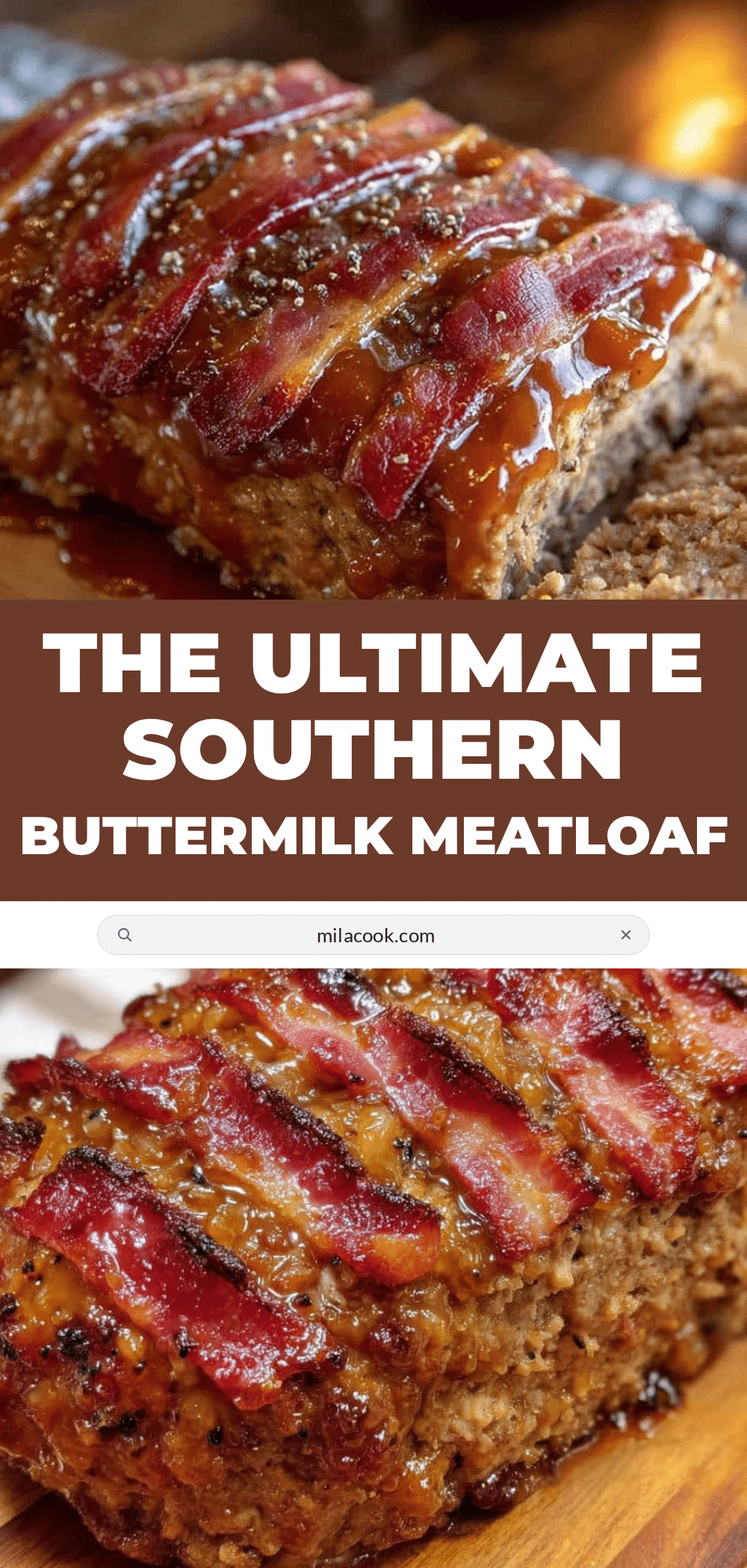
Classic Southern Buttermilk Meatloaf with Brown Sugar Glaze
This buttermilk meatloaf is tender, savory, and topped with a sticky brown sugar glaze that caramelizes perfectly. It’s a comforting Southern classic that’s easy to make and sure to become a family favorite.
- Prep Time: 15 minutes
- Cook Time: 60 minutes
- Total Time: 1 hour 15 minutes
- Yield: 8 servings 1x
- Category: Main Course
- Cuisine: Southern
Ingredients
- 2 pounds (900g) ground beef (80/20 blend)
- 1 cup (240ml) buttermilk
- 1 cup (120g) breadcrumbs (plain or seasoned)
- 1 medium yellow onion, finely diced (about 150g)
- 2 large eggs, room temperature
- 3 cloves garlic, minced
- 2 tablespoons (30ml) Worcestershire sauce
- 1½ teaspoons kosher salt
- 1 teaspoon black pepper, freshly ground
- 1 teaspoon dried thyme
- 1 teaspoon smoked paprika
- ½ cup (100g) brown sugar, packed (light or dark)
- ½ cup (120ml) ketchup
- 1 tablespoon (15ml) apple cider vinegar
- 1 tablespoon (15ml) Worcestershire sauce
- 1 teaspoon Dijon mustard
- 1 tablespoon butter (for sautéing onion and garlic)
Instructions
- Preheat oven to 350°F (175°C). Line a 9×5-inch loaf pan with parchment paper, leaving overhang on the long sides.
- Make the glaze: In a small saucepan over medium heat, combine brown sugar, ketchup, apple cider vinegar, 1 tablespoon Worcestershire sauce, and Dijon mustard. Whisk until sugar dissolves and mixture simmers, about 3-4 minutes. Simmer 1 minute, then remove from heat.
- Sauté onion and garlic: In a small skillet over medium heat, melt 1 tablespoon butter. Add diced onion and cook until soft and translucent, about 4-5 minutes. Add minced garlic and cook 30 seconds until fragrant. Remove from heat and let cool.
- In a large bowl, combine ground beef, buttermilk, breadcrumbs, sautéed onion and garlic, eggs, 2 tablespoons Worcestershire sauce, salt, pepper, thyme, and smoked paprika. Mix gently with your hands until just combined. Let rest 5 minutes.
- Transfer meat mixture to prepared loaf pan, pressing gently into an even shape. Pour half the glaze over the top and spread evenly.
- Place loaf pan on a baking sheet. Bake for 45 minutes. Remove from oven, spread remaining glaze on top, and bake another 15-20 minutes until internal temperature reaches 160°F (71°C).
- Let meatloaf rest in pan for 10 minutes. Use parchment overhang to lift out, transfer to cutting board, slice, and serve warm.
Notes
Do not skip the buttermilk—it tenderizes the meat. Let the meatloaf rest before slicing to keep it moist. Line the pan with parchment paper for easy cleanup. For extra glaze, make 1.5 times the glaze recipe.
Nutrition
- Serving Size: 1 slice (1/8 of meat
- Calories: 420
- Sugar: 18
- Sodium: 680
- Fat: 22
- Saturated Fat: 8
- Carbohydrates: 28
- Fiber: 1
- Protein: 28
Keywords: buttermilk meatloaf, brown sugar glaze, Southern meatloaf, comfort food, easy meatloaf recipe