Love this? Save it for later!
Share the inspiration with your friends
My brother swore he hated potato salad for twenty-three years. Twenty-three years of backyard barbecues, Fourth of July picnics, and Easter dinners where he’d load up his plate with everything except the one bowl nobody touched but my aunt. He’d make this little face when it got too close to him on the buffet line, like someone had set a bowl of cold oatmeal next to the ribs. Then last August, I caught him standing over the kitchen counter at my place, fork in hand, eating straight from the serving bowl. “This isn’t potato salad,” he said, mouth half-full. “This is something else entirely.”
That something else was loaded baked potato salad, and honestly, I get the confusion. Traditional potato salad has its place—I’m not here to fight anyone about that. But this version? It takes everything you love about a fully loaded baked potato—the crispy bacon, the sharp cheddar, the cool sour cream, the fresh pop of chives—and turns it into something you can bring to a potluck without worrying about the whole thing collapsing. It’s warm in a way that feels intentional, not accidental. It’s comfort food that doesn’t apologize for being exactly what it is.
I’ll be honest with you: the first time I made this, I used way too much mayo and the whole thing turned into soup by the time I got it to my neighbor’s cookout. You know that sinking feeling when you lift the lid and see your dish has betrayed you? Yeah, that was me. But I learned from that mess, and now I’ve got the ratios dialed in so tight that this salad holds up beautifully, even on a hot afternoon. Maybe you’ve had your own potato salad disasters—I think we all have at some point. This recipe is the one that finally fixed it for me.
Why You’ll Love This Recipe
Let me tell you why this loaded baked potato salad has become my go-to for every gathering, and why I think it’ll become yours too. I’ve tested this recipe more times than I care to admit—through rainy spring afternoons and sweltering summer evenings—and every single time, it delivers the same cozy, satisfying result.
- Quick & Easy: Comes together in about 45 minutes, most of which is just waiting for potatoes to boil. Perfect for those last-minute invites or when you suddenly remember you promised to bring a side dish to dinner.
- Simple Ingredients: You probably have everything in your kitchen right now. Potatoes, bacon, cheese, sour cream, mayo, chives—these are the kind of ingredients that don’t require a special trip to some fancy grocery store.
- Perfect for Any Occasion: This salad works for backyard barbecues, game day spreads, holiday dinners, or honestly just a Tuesday night when you want something that feels like a hug in a bowl. It’s versatile that way.
- Crowd-Pleaser: I’ve watched people who claim to hate potato salad go back for seconds. My brother is living proof that this recipe converts even the most stubborn skeptics.
- Unbelievably Delicious: The combination of creamy potatoes, salty bacon, sharp cheddar, and fresh chives creates something that’s way more than the sum of its parts. It’s the kind of dish that makes you close your eyes after the first bite.
What makes this version different from the dozens of other potato salad recipes out there? It’s the technique. Instead of boiling the potatoes until they’re falling apart, I cook them just until tender, then let them cool slightly before mixing. This keeps the texture right—creamy but with enough structure to hold up against the dressing. And the dressing itself? It’s a careful balance of sour cream and mayo, with a splash of apple cider vinegar to cut through the richness. No gluey, heavy mess here.
This recipe is comfort food reimagined—familiar enough to feel like something your grandma might have made, but with a freshness that makes it feel new. It’s the kind of dish that soothes a rough day without any effort at all.
What Ingredients You Will Need
This recipe uses simple, honest ingredients to deliver big flavor without any fuss. Most of these are pantry staples, which is exactly how I like to cook. Let me walk you through each one and share a few things I’ve learned along the way.
For the Salad Base:
- 3 pounds Yukon Gold potatoes (about 6-7 medium potatoes) — I prefer Yukon Golds because they have that natural buttery flavor and hold their shape better than russets. They’re waxy enough to stay intact during boiling but creamy enough to absorb the dressing beautifully. If you can only find russets, they’ll work, but expect a slightly fluffier texture that may break down more in the mixing.
- 1 pound thick-cut bacon — Please don’t use the thin stuff here. Thick-cut bacon gives you those meaty, satisfying chunks that make every bite feel loaded. I like Wright Brand or Nueske’s for the best smoky flavor, but honestly, whatever thick-cut your grocery store carries will work just fine.
- 1½ cups sharp cheddar cheese, shredded — Buy a block and shred it yourself. I know, I know, it’s extra work, but pre-shredded cheese has cellulose coating that keeps it from melting smoothly. For this salad, you want that cheese to integrate into the dressing, not sit on top in little waxy bits. Sharp cheddar gives you the most flavor punch.
- ½ cup fresh chives, chopped — Fresh is non-negotiable here. Dried chives just don’t have the same bright, oniony pop. I grow chives in a little pot on my kitchen windowsill specifically for this recipe. If you can’t find fresh chives, you can substitute the green parts of scallions, but use a slightly smaller amount since scallions are stronger.
For the Dressing:
- 1 cup sour cream (full-fat preferred) — This is what gives the salad that rich, tangy backbone. Low-fat sour cream will work, but it’ll be thinner and won’t coat the potatoes as nicely. Let it come to room temperature before mixing so it blends smoothly.
- ½ cup mayonnaise — I use Duke’s because it’s got a little extra tang from apple cider vinegar, but Hellmann’s or your favorite brand works too. Don’t use Miracle Whip unless that’s genuinely what you love—it’ll change the flavor profile significantly.
- 2 tablespoons apple cider vinegar — This is my secret ingredient. It cuts through all that richness and keeps the salad from feeling heavy. You won’t taste it directly, but you’ll notice if it’s missing.
- 1 tablespoon Dijon mustard — Adds a subtle warmth and helps emulsify the dressing. I use Grey Poupon, but any good Dijon will do.
- 1 teaspoon garlic powder — Not fresh garlic, which can become overpowering as the salad sits. Garlic powder gives you that savory depth without the bite.
- ½ teaspoon smoked paprika — Optional, but I love the little hint of smokiness it adds. It plays really well with the bacon.
- Salt and black pepper to taste — Go easy on the salt at first, since the bacon and cheese both bring plenty of saltiness. You can always add more at the end.
For Garnish:
- Extra chopped chives — For that fresh green finish that makes the dish look as good as it tastes.
- Extra crumbled bacon — Because you can never have too much bacon, and it looks pretty on top.
- Extra shredded cheddar — A little sprinkle on top before serving makes everyone feel special.
Equipment Needed
Nothing too fancy here—this is a recipe that works with basic kitchen tools. Here’s what you’ll need:
- Large stockpot (6-quart or larger) — For boiling the potatoes. You want enough room that the potatoes aren’t crowded.
- Colander — For draining the potatoes after boiling. Nothing special needed here.
- Large baking sheet — For cooking the bacon in the oven. I prefer this method over stovetop because it’s more hands-off and the bacon comes out perfectly flat and crispy.
- Large mixing bowl — For combining everything. Make sure it’s big enough that you can stir without flinging potato pieces across your kitchen.
- Chef’s knife and cutting board — For chopping chives and, if needed, cutting the bacon before cooking.
- Box grater — For shredding your cheese block. I use the large holes for this recipe.
- Measuring cups and spoons — For accuracy, especially with the dressing ingredients.
- Rubber spatula or wooden spoon — For gently folding everything together without smashing the potatoes.
If you don’t have a baking sheet, you can absolutely cook the bacon in a skillet on the stovetop. Just be prepared for more splatter and less even cooking. And if you’re really in a pinch, you can use pre-cooked bacon, but honestly, the texture just isn’t the same. Fresh-cooked bacon gives you those crispy, craggy bits that make this salad sing.
Preparation Method

Alright, let’s get cooking. I’ve broken this down into clear steps so you can follow along without any confusion. Take your time—rushing is what leads to mistakes, and I’ve made enough of those for both of us.
- Cook the bacon (15-20 minutes): Preheat your oven to 400°F (200°C). Line a large baking sheet with foil or parchment paper for easy cleanup. Lay the bacon strips in a single layer—don’t overlap them or they’ll steam instead of crisp. Bake for 15-20 minutes, depending on thickness, until the bacon is deep golden brown and crispy. Transfer to a paper towel-lined plate to drain and cool. Once cool enough to handle, crumble or chop into bite-sized pieces. Reserve about ¼ cup for garnish.
- Boil the potatoes (20-25 minutes): While the bacon cooks, scrub your potatoes clean—no need to peel them, the skins add texture and color. Cut them into 1-inch cubes. Place them in your large stockpot and cover with cold water by about an inch. Add a generous tablespoon of salt to the water. Bring to a boil over high heat, then reduce to a simmer and cook for 10-15 minutes, until the potatoes are fork-tender but not falling apart. You want them to hold their shape when you pierce them with a fork, but there should be no resistance in the center. Drain them in a colander and let them cool for about 10 minutes. Don’t rinse them—you want that residual starch to help the dressing cling.
- Make the dressing (5 minutes): While the potatoes cool, whisk together the sour cream, mayonnaise, apple cider vinegar, Dijon mustard, garlic powder, and smoked paprika in a small bowl. Season with a pinch of salt and several grinds of black pepper. Taste it—it should be tangy and rich, with a little warmth from the mustard. Adjust seasoning if needed. Set aside.
- Combine everything (5 minutes): In your large mixing bowl, combine the slightly warm potatoes, about three-quarters of the crumbled bacon, three-quarters of the shredded cheddar, and most of the chopped chives (save some for garnish). Pour the dressing over the top and gently fold everything together with your rubber spatula. Be gentle here—you want the dressing to coat everything evenly without mashing the potatoes into a paste. If the salad seems dry, add a little more sour cream or mayo. If it seems too wet, don’t worry—it’ll absorb as it sits.
- Chill (at least 1 hour, preferably 2-4): Cover the bowl with plastic wrap or transfer to a serving dish and refrigerate for at least an hour. This resting time is crucial—it lets the flavors meld and the potatoes absorb the dressing. The texture will improve dramatically. I know it’s tempting to dig in right away, but trust me on this one.
- Garnish and serve: Before serving, give the salad a gentle stir. Taste and adjust seasoning if needed—you might want a little more salt or pepper. Transfer to a serving bowl if you haven’t already. Top with the reserved bacon, shredded cheddar, and a generous sprinkle of fresh chives. Serve cold or at room temperature.
One thing I learned the hard way: if you’re taking this to a potluck, make sure to keep it chilled during transport. An hour in a hot car can turn your beautiful salad into a sad, soupy mess. I use an insulated cooler bag with an ice pack, and it works like a charm.
Cooking Tips & Techniques
After making this salad probably thirty times, I’ve picked up a few tricks that make a real difference. Let me share what I’ve learned so you don’t have to make the same mistakes I did.
Don’t overcook the potatoes. This is the number one mistake people make. Overcooked potatoes turn into mashed potatoes when you try to mix them, and that’s not what we’re going for here. You want them just tender enough that a fork slides in easily but they still hold their shape. Start checking at the 10-minute mark. If they’re done, drain them immediately—don’t let them sit in the hot water.
Let the potatoes cool slightly before adding the dressing. If you pour cold dressing over hot potatoes, the dressing will thin out too much and make the salad watery. If you wait until they’re completely cold, they won’t absorb the dressing as well. Aim for warm—about 10 minutes after draining. The potatoes should feel warm to the touch but not hot.
Season the potato water generously. This is your chance to season the potatoes from the inside out. The water should taste like the sea. I know that sounds like a lot of salt, but most of it gets poured down the drain anyway. What you’re left with is potatoes that are seasoned all the way through, not just on the surface.
Make the dressing ahead of time. The dressing actually gets better after sitting in the fridge for a few hours. The flavors meld and deepen. I often make it the night before and just give it a quick whisk before using it.
Use a light hand when mixing. I cannot stress this enough. Fold the ingredients together gently, using a rubber spatula. A wooden spoon can be too aggressive and break up the potatoes. Think of it like folding whipped cream into a batter—you want to incorporate without deflating.
I once made the mistake of using a hand mixer to speed things up. Don’t. Just don’t. I ended up with potato paste studded with bacon bits, and it was genuinely sad. Learn from my failure, friends.
Variations & Adaptations
This recipe is wonderfully flexible, and I’ve tried several variations over the years. Here are some of my favorites:
Vegetarian Version: Omit the bacon and add 1 cup of roasted corn kernels and ½ cup of finely chopped red bell pepper. The sweetness of the corn and the crunch of the pepper give you that same satisfying texture contrast. I’ve served this to a group of vegetarians and they didn’t miss the bacon at all—well, maybe a little.
Spicy Southwest Twist: Add 1 diced jalapeño (seeds removed if you want less heat), ½ cup of chopped cilantro instead of chives, and 1 teaspoon of cumin to the dressing. Top with a drizzle of hot sauce before serving. This version is incredible with grilled meats.
Loaded Breakfast Potato Salad: Add 4 hard-boiled eggs, chopped, and use breakfast sausage crumbles instead of bacon. Serve it alongside scrambled eggs for a brunch that’ll make everyone forget about hash browns. I made this for a Mother’s Day brunch and it disappeared in fifteen minutes.
Dairy-Free Adaptation: Use vegan sour cream and mayonnaise, and swap the cheddar for a good quality dairy-free shred. I’ve tried this with Follow Your Heart brand and it works surprisingly well. The texture is slightly different, but the flavor is still fantastic.
Lighter Version: Use Greek yogurt in place of the sour cream and reduce the mayo to ¼ cup. Add an extra tablespoon of apple cider vinegar for tang. This version is tangier and a bit lighter, but still creamy enough to satisfy that comfort food craving.
My personal favorite variation? I add a handful of crispy fried onions on top just before serving. It’s completely unnecessary, but that extra crunch takes the whole thing over the top. I discovered this by accident when I had leftover onion straws from another recipe, and now I can’t go back.
Serving & Storage Suggestions
This loaded baked potato salad is versatile enough to work in so many situations. Here’s how I like to serve and store it:
Serving Temperature: I prefer this salad cold or at room temperature. If you’re serving it straight from the fridge, let it sit out for about 15-20 minutes first to take the chill off. The flavors open up more when it’s not ice-cold. If you’re serving it at a summer barbecue, keep the bowl nestled in a larger bowl of ice to maintain a safe temperature.
Presentation: I like to serve this in a wide, shallow bowl so the garnishes stay visible on top. A white ceramic bowl really makes the colors pop—the golden potatoes, the deep red bacon, the bright green chives, the orange cheddar. It’s a beautiful dish even before you taste it.
What to Serve With It: This salad is a natural partner for grilled meats—burgers, hot dogs, steak, chicken, you name it. It’s also fantastic alongside BBQ ribs or pulled pork. For a lighter meal, serve it with a simple green salad dressed with vinaigrette to cut through the richness. And honestly? Sometimes I just eat a bowl of it for lunch with a side of pickles, and that’s a perfect meal.
Storage: Store leftovers in an airtight container in the refrigerator for up to 4 days. The flavors will continue to develop, so it might actually taste even better on day two. Just be aware that the potatoes will absorb more of the dressing as they sit, so you might want to add a splash of milk or an extra dollop of sour cream when you serve leftovers.
Freezing: I don’t recommend freezing this salad. The dairy-based dressing will separate when thawed, and the potatoes will become grainy and watery. If you have too much, share it with a neighbor or coworker—trust me, they’ll be thrilled.
Reheating: This salad is meant to be served cold, so reheating isn’t really necessary. But if you prefer it warm, you can microwave individual portions for about 30 seconds. Just know that the texture will be different—creamier, less distinct. Some people love it that way, so give it a try and see what you think.
Nutritional Information & Benefits
Let’s be real: this is comfort food, not health food. But that doesn’t mean it’s without its merits. Here’s a rough breakdown of what you’re getting in a serving (about 1 cup, based on 8 servings):
| Nutrient | Amount per Serving |
|---|---|
| Calories | 385 |
| Total Fat | 24g |
| Saturated Fat | 10g |
| Cholesterol | 55mg |
| Sodium | 680mg |
| Total Carbohydrates | 30g |
| Dietary Fiber | 3g |
| Sugars | 2g |
| Protein | 14g |
| Vitamin C | 20% DV |
| Potassium | 15% DV |
| Calcium | 15% DV |
Potatoes get a bad rap, but they’re actually a good source of vitamin C, potassium, and fiber—especially if you leave the skin on, which I recommend. The bacon and cheese add protein and calcium, along with plenty of flavor. The chives contribute a small amount of vitamins A and K.
If you’re watching your sodium, you can use low-sodium bacon and reduce the added salt. If you’re concerned about fat, the Greek yogurt substitution I mentioned earlier works well. But honestly? I think there’s room in a balanced diet for dishes like this. Food is about more than just nutrients—it’s about connection, comfort, and joy. This salad delivers on all three.
This recipe is not suitable for vegans or those with dairy allergies in its standard form, but the variations section offers alternatives. It contains gluten only if your bacon or other ingredients have gluten additives, so check labels if that’s a concern.
Conclusion
This loaded baked potato salad has become one of those recipes that I genuinely look forward to making. Not because it’s complicated or impressive, but because it’s reliable. It shows up, it delivers, and it makes people happy. Whether I’m bringing it to a potluck, serving it at a family dinner, or just making a batch for myself to eat throughout the week, it never disappoints.
I hope you’ll give it a try, and I hope you’ll make it your own. Maybe you’ll add extra bacon (I won’t judge), or maybe you’ll discover that you prefer it with a little more mustard tang. That’s the beauty of a recipe like this—it’s a starting point, not a rigid set of rules. The best dishes are the ones that adapt to your tastes and your kitchen.
If you make this salad, I’d love to hear about it. Drop a comment below and let me know how it turned out, what variations you tried, or whether you managed to convert any potato salad skeptics of your own. And if you have a friend who claims to hate potato salad? Make this for them. Just don’t tell them what it is until after they’ve had their first bite.
Happy cooking, friends. I hope this recipe brings you as much comfort as it’s brought me.
Frequently Asked Questions
Can I make this loaded baked potato salad ahead of time?
Absolutely! In fact, I recommend it. Making this salad a day ahead gives the flavors time to meld and deepen. Just hold back the garnishes until right before serving, and give it a gentle stir before you add them. The texture will be even better on day two.
Why are my potatoes falling apart in the salad?
This usually happens when the potatoes are overcooked. Make sure you’re checking them early—start testing at the 10-minute mark. You want them fork-tender but still firm enough to hold their shape. Also, let them cool slightly before mixing, and use a gentle folding motion rather than stirring vigorously.
Can I use red potatoes instead of Yukon Golds?
Yes, red potatoes work well in this recipe. They have a similar waxy texture and hold their shape nicely. The flavor is slightly different—less buttery—but the overall result is still delicious. Just keep an eye on the cooking time, as red potatoes may cook a little faster.
How do I keep the salad from getting watery?
First, don’t overcook the potatoes. Second, let them drain thoroughly in a colander—give them a few gentle shakes to release excess steam and moisture. Third, make sure the potatoes are only warm, not hot, when you add the dressing. And fourth, don’t skimp on the chilling time; the dressing needs time to thicken up in the fridge.
Can I add other mix-ins to this recipe?
Absolutely! This recipe is very forgiving. Some popular additions include diced red onion, chopped pickles, sliced olives, roasted red peppers, or even a sprinkle of ranch seasoning. Just be mindful of moisture content—wet ingredients like fresh tomatoes or cucumbers can make the salad watery. If you want to add them, do it right before serving.
Pin This Recipe!
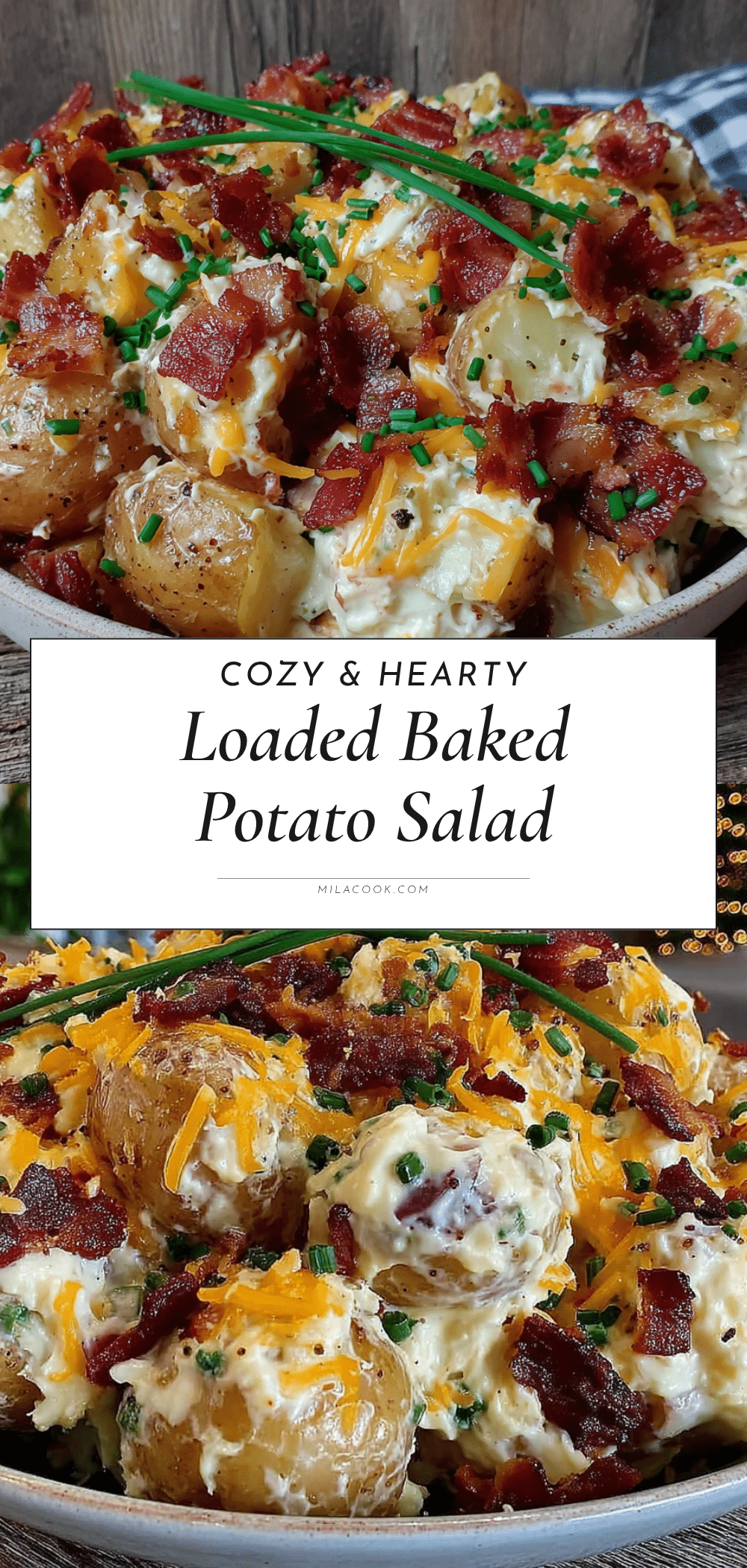
Easy Loaded Baked Potato Salad with Bacon

This loaded baked potato salad takes everything you love about a fully loaded baked potato—crispy bacon, sharp cheddar, cool sour cream, and fresh chives—and turns it into a perfect potluck side dish. It’s warm, comforting, and guaranteed to convert even the most stubborn potato salad skeptics.
- Prep Time: 15 minutes
- Cook Time: 30 minutes
- Total Time: 45 minutes
- Yield: 8 servings 1x
- Category: Side Dish
- Cuisine: American
Ingredients
- 3 pounds Yukon Gold potatoes (about 6–7 medium potatoes)
- 1 pound thick-cut bacon
- 1½ cups sharp cheddar cheese, shredded
- ½ cup fresh chives, chopped
- 1 cup sour cream (full-fat preferred)
- ½ cup mayonnaise
- 2 tablespoons apple cider vinegar
- 1 tablespoon Dijon mustard
- 1 teaspoon garlic powder
- ½ teaspoon smoked paprika (optional)
- Salt and black pepper to taste
- Extra chopped chives for garnish
- Extra crumbled bacon for garnish
- Extra shredded cheddar for garnish
Instructions
- Cook the bacon: Preheat oven to 400°F (200°C). Line a large baking sheet with foil or parchment paper. Lay bacon strips in a single layer and bake for 15-20 minutes until deep golden brown and crispy. Transfer to a paper towel-lined plate to drain and cool. Crumble or chop into bite-sized pieces. Reserve about ¼ cup for garnish.
- Boil the potatoes: Scrub potatoes clean (no need to peel). Cut into 1-inch cubes. Place in a large stockpot and cover with cold water by about an inch. Add a generous tablespoon of salt. Bring to a boil, then reduce to a simmer and cook for 10-15 minutes until fork-tender but not falling apart. Drain in a colander and let cool for about 10 minutes. Do not rinse.
- Make the dressing: In a small bowl, whisk together sour cream, mayonnaise, apple cider vinegar, Dijon mustard, garlic powder, and smoked paprika. Season with a pinch of salt and several grinds of black pepper. Taste and adjust seasoning. Set aside.
- Combine everything: In a large mixing bowl, combine slightly warm potatoes, about three-quarters of the crumbled bacon, three-quarters of the shredded cheddar, and most of the chopped chives (save some for garnish). Pour dressing over the top and gently fold together with a rubber spatula until evenly coated.
- Chill: Cover the bowl with plastic wrap or transfer to a serving dish and refrigerate for at least 1 hour, preferably 2-4 hours.
- Garnish and serve: Before serving, give the salad a gentle stir. Taste and adjust seasoning if needed. Transfer to a serving bowl. Top with reserved bacon, shredded cheddar, and a generous sprinkle of fresh chives. Serve cold or at room temperature.
Notes
Don’t overcook the potatoes; they should be fork-tender but still hold their shape. Let potatoes cool slightly before adding dressing to prevent thinning. Season the potato water generously. Make dressing ahead of time for better flavor. Use a light hand when mixing to avoid mashing potatoes. For potlucks, keep chilled during transport using an insulated cooler bag with an ice pack.
Nutrition
- Serving Size: 1 cup
- Calories: 385
- Sugar: 2
- Sodium: 680
- Fat: 24
- Saturated Fat: 10
- Carbohydrates: 30
- Fiber: 3
- Protein: 14
Keywords: loaded baked potato salad, potato salad with bacon, easy potato salad, potluck side dish, comfort food, summer barbecue