Love this? Save it for later!
Share the inspiration with your friends
I swore I couldn’t cook. Four years of college, and my culinary “achievements” were limited to burnt toast and instant ramen that I’d dress up with a squirt of sriracha. My roommate, bless her heart, once found me eating cold canned beans straight from the tin over the sink at 2 AM and didn’t say a word. She just handed me a fork. That was my life—surviving, not thriving, in the kitchen department. Then I moved into my first off-campus apartment with a real stove and a grocery budget of about twenty bucks a week. I figured I’d learn, eventually. Maybe after graduation.
The thing is, hunger has a way of teaching you fast. One Tuesday night, staring at a sad bag of frozen veggies and a pack of chicken thighs I’d grabbed on sale, I just started throwing things into a pan. I didn’t have a recipe. I had desperation and a bottle of soy sauce that had been sitting in the cupboard since move-in day. Honestly, I expected a disaster. But that first bite? It was good. Really good. The kind of good where you stop chewing for a second and just look at the pan, surprised. I remember laughing out loud, alone in my tiny kitchen, because I’d actually made something edible—no, something delicious—with almost no effort.
That night changed how I thought about cooking. It didn’t have to be complicated or expensive. It just had to be doable, especially when you’re running on three hours of sleep and a dream. This easy one-pan chicken stir-fry became my go-to. I made it for friends who’d crash on my couch. I made it on nights when I had zero energy. It was forgiving, flexible, and it never let me down. Maybe you’ve been there, standing in front of an open fridge, wondering what in the world to make with a random collection of ingredients. Well, this recipe is for you. It’s the one that stuck with me, even long after college ended.
Why You’ll Love This Recipe
This isn’t just another stir-fry recipe that promises the world and delivers a soggy mess. I’ve tested this one dozens of times, tweaking the heat and the timing until it felt just right. It’s the kind of recipe I wish I’d had in my back pocket during those chaotic college years—simple, cheap, and genuinely satisfying. Let me tell you what makes it stand out.
- Quick & Easy: From start to finish, this meal comes together in under 25 minutes. Perfect for those nights when you have a mountain of homework or just want to binge-watch your favorite show without spending an hour in the kitchen.
- Simple Ingredients: You won’t need to hunt down exotic spices or specialty items. Everything on this list is something you can grab at any grocery store, often for under ten dollars total.
- Perfect for Meal Prep: This stir-fry stores beautifully. Make a big batch on Sunday, and you’ve got lunches for half the week. It reheats like a dream, which is a lifesaver for busy students.
- Crowd-Pleaser: I’ve served this to picky eaters and foodie friends alike, and it always gets devoured. The savory sauce and tender veggies have universal appeal.
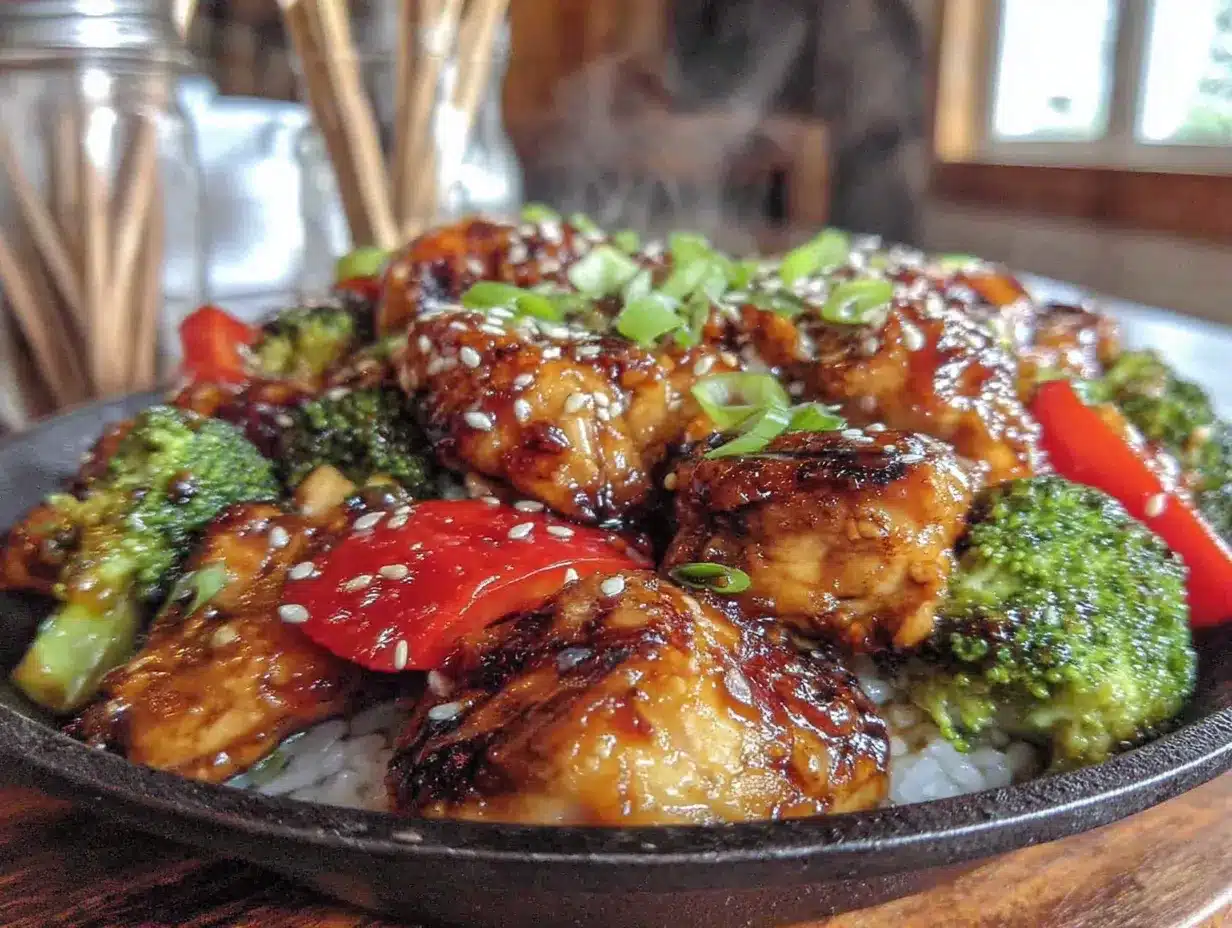
- Unbelievably Delicious: The secret is in the technique—getting that pan hot enough to sear the chicken without overcrowding it. The result is juicy meat and crisp-tender vegetables coated in a glossy, flavorful sauce that tastes way more complex than it is.
What really sets this recipe apart is how forgiving it is. You can swap out almost any vegetable for what you have on hand. Forgotten to buy broccoli? Use bell peppers instead. No chicken? Tofu or shrimp work perfectly. It’s a template for success, not a rigid set of rules. And honestly, that’s what college cooking should be—flexible, stress-free, and delicious. This is the kind of meal that makes you feel like you’ve got your life together, even if your laundry is three weeks behind.
Ingredients You Will Need
This recipe uses simple, wholesome ingredients that come together to create a stir-fry that’s bursting with flavor without breaking the bank. Most of these items are pantry staples or easy to find at any grocery store. Here’s what you’ll need.
For the Stir-Fry
- 1 lb boneless, skinless chicken thighs (or breasts), cut into bite-sized pieces. Thighs stay juicier, but breasts work great if you prefer leaner meat.
- 2 tablespoons vegetable oil, divided. Use a neutral oil with a high smoke point like canola or avocado oil.
- 1 medium onion, sliced into thin wedges. Yellow or red onion both work well here.
- 2 cloves garlic, minced. Fresh garlic makes a big difference, but jarred minced garlic works in a pinch.
- 1-inch piece fresh ginger, grated (or 1 teaspoon ground ginger). Fresh ginger adds a bright, zesty kick.
- 1 red bell pepper, sliced into strips. Adds sweetness and color.
- 2 cups broccoli florets, fresh or frozen. If using frozen, no need to thaw—just toss them in.
- 1 cup snap peas or green beans, trimmed. Adds a nice crunch.
- Optional: 1 small carrot, julienned or thinly sliced, for extra color and sweetness.
For the Sauce
- 1/4 cup low-sodium soy sauce (or tamari for gluten-free). Low-sodium is key so you can control the saltiness.
- 2 tablespoons honey or brown sugar. Honey adds a floral sweetness, while brown sugar gives a deeper molasses note.
- 1 tablespoon rice vinegar (or apple cider vinegar). A splash of acidity balances the richness.
- 1 teaspoon sesame oil (optional, but highly recommended). This adds a nutty, toasty flavor that makes the dish sing.
- 1 tablespoon cornstarch mixed with 2 tablespoons cold water (slurry). This thickens the sauce to a glossy perfection.
- Red pepper flakes or sriracha, to taste, for heat. I like adding about 1/2 teaspoon for a gentle warmth.
Ingredient Tips: I personally prefer using San-J tamari for a gluten-free option, but any good-quality soy sauce works. For the honey, look for local raw honey if you can—it adds a more complex sweetness. And if you’re watching your sugar intake, you can substitute the honey with a monk fruit sweetener. The sauce will still be delicious, just slightly less sticky.
One thing I learned the hard way: don’t skip the cornstarch slurry. I once tried to thicken the sauce by just letting it simmer longer, and it never got that beautiful, clingy consistency. The slurry is magic. Also, feel free to mix up the veggies based on what’s on sale or wilting in your fridge. Zucchini, mushrooms, or even frozen mixed vegetables all work great here.
Equipment Needed
You don’t need a fancy kitchen to pull off this stir-fry. In fact, you probably already have everything you need. Here’s the list.
- Large non-stick skillet or wok (12-inch is ideal). A wok is traditional, but a deep skillet works just as well. The key is having enough surface area to sear the ingredients without overcrowding.
- Sharp chef’s knife and cutting board. A dull knife makes prep frustrating and dangerous. A good, sharp knife is worth its weight in gold.
- Measuring spoons and cups. Accuracy matters for the sauce, especially the cornstarch slurry.
- Small bowl for mixing the sauce. I use a glass measuring cup for easy pouring.
- Spatula or wooden spoon. A flat-edged spatula is great for scraping up browned bits.
- Garlic press (optional). I love my garlic press for saving time, but mincing with a knife works perfectly.
Budget-Friendly Tips: If you don’t have a wok, don’t run out and buy one. A large non-stick skillet from a discount store will do the job just fine. I used a beat-up pan from a thrift store for years, and it worked great. Also, a microplane grater is handy for fresh ginger, but you can just chop it finely. Honestly, the most important tool is a hot pan and a little patience.
Preparation Method
Alright, let’s get cooking. This recipe moves fast, so I like to have everything prepped and measured before I turn on the heat. Trust me on this one—it makes the whole process so much smoother. Here’s how to do it.
- Prep the ingredients. Start by cutting the chicken into bite-sized pieces, about 1-inch cubes. Slice the onion, bell pepper, and any other veggies you’re using. Mince the garlic and grate the ginger. In a small bowl, whisk together the soy sauce, honey (or brown sugar), rice vinegar, sesame oil, and red pepper flakes. In another small bowl, mix the cornstarch with cold water to make the slurry. Set everything aside within arm’s reach of the stove.
- Heat the pan. Place your skillet or wok over high heat and add 1 tablespoon of vegetable oil. Let it heat until the oil shimmers and just starts to smoke—this is crucial for a good sear. If you’re not sure, flick a drop of water into the pan; it should sizzle and evaporate instantly.
- Sear the chicken. Add the chicken pieces to the hot pan in a single layer. Don’t overcrowd the pan—cook in batches if needed. Let the chicken cook undisturbed for 2-3 minutes until the bottom is golden brown. Then stir-fry for another 2-3 minutes until the chicken is cooked through and no longer pink inside. Use a slotted spoon to transfer the chicken to a clean plate. The chicken should be nicely browned on the outside and juicy inside.
- Cook the aromatics. Reduce the heat to medium-high and add the remaining 1 tablespoon of oil. Toss in the sliced onion and cook for 1-2 minutes, stirring frequently, until it starts to soften. Add the minced garlic and grated ginger, and stir for about 30 seconds until fragrant. Be careful not to burn the garlic—it can turn bitter quickly.
- Add the vegetables. Throw in the bell pepper, broccoli, and snap peas (or whatever veggies you’re using). Stir-fry for 3-4 minutes, keeping the heat high. The vegetables should be crisp-tender—bright in color and still offering a little resistance when you bite into them. If you’re using frozen broccoli, it might release some water; just let it cook off.
- Combine everything. Return the cooked chicken to the pan with the vegetables. Pour the sauce mixture over everything and toss to coat. Let it cook for about 1 minute, stirring constantly, so the sauce reduces slightly and coats the ingredients evenly.
- Thicken the sauce. Give the cornstarch slurry a quick stir (it settles fast), then pour it into the pan. Stir everything together for another 30-60 seconds. You’ll see the sauce transform from watery to glossy and thick, clinging to the chicken and veggies like a warm hug. If it gets too thick, add a splash of water.
- Finish and serve. Taste the stir-fry and adjust seasoning if needed—a pinch more salt, a drizzle of extra honey, or a dash of sriracha. Remove from heat. Serve immediately over steamed rice, noodles, or even quinoa. Garnish with sesame seeds or chopped green onions if you’re feeling fancy.
Pro Tip: The entire cooking process from step 2 to step 8 takes about 10-12 minutes. That’s why prep is so important. Once you start, there’s no time to chop an onion! Also, don’t be afraid of high heat. A screaming hot pan is your best friend for stir-fry. It creates that smoky, charred flavor (called wok hei in Chinese cooking) that makes restaurant stir-fry so addictive.
Cooking Tips & Techniques
Over the years, I’ve made this stir-fry more times than I can count, and I’ve learned a few things the hard way. Here are my best tips to help you nail it every single time.
Get your pan screaming hot. This is non-negotiable. A hot pan sears the chicken instead of steaming it, giving you that beautiful golden crust. If the pan isn’t hot enough, the chicken will release its juices and boil in its own liquid, resulting in tough, dry meat. I know it feels scary to cook on high heat, but trust the process. Your stove can handle it.
Don’t overcrowd the pan. This is probably the most common mistake I see. If you add too much chicken at once, the temperature drops, and you end up steaming everything. Cook the chicken in two batches if needed. It takes a few extra minutes, but the texture difference is night and day. I once tried to rush it and ended up with pale, rubbery chicken. Never again.
Prep everything before you start. Mise en place, as the fancy chefs say. Chop your veggies, mix your sauce, and have your cornstarch slurry ready. Stir-frying is fast-paced, and you don’t want to be scrambling for ingredients while something is burning. I learned this lesson when I had to mince garlic while my onions were turning black. Not my finest moment.
Cut vegetables uniformly. Try to cut your veggies into similar-sized pieces so they cook evenly. If your broccoli florets are huge and your bell peppers are tiny, you’ll end up with overcooked peppers and undercooked broccoli. Aim for bite-sized pieces, about 1-2 inches.
Use low-sodium soy sauce. Regular soy sauce can make the dish overwhelmingly salty, especially as the sauce reduces. Low-sodium gives you control. You can always add more salt at the end, but you can’t take it out. I once used regular soy sauce and the stir-fry was practically inedible. Learn from my mistake.
Let the sauce thicken properly. The cornstarch slurry needs a moment to work. Don’t add it and immediately take the pan off the heat. Let it bubble for 30-60 seconds while stirring, and you’ll see the magic happen. The sauce should coat the back of a spoon. If it’s still watery, let it cook a little longer.
Timing is everything. Have your rice or noodles ready before you start the stir-fry. The actual cooking is so fast that if you’re waiting for water to boil, your stir-fry will get cold. I like to start my rice first, then prep the stir-fry ingredients while it cooks. That way, everything finishes at the same time.
Variations & Adaptations
One of the best things about this stir-fry is how flexible it is. You can adapt it to whatever you have in your fridge, your dietary needs, or your mood. Here are some of my favorite variations.
Vegetarian or Vegan Version: Swap the chicken for extra-firm tofu or tempeh. Press the tofu for 15 minutes to remove excess moisture, then cube it and pan-fry until golden before adding the veggies. Use maple syrup instead of honey for the sauce, and you’ve got a completely plant-based meal. I’ve made this for vegan friends, and they always ask for the recipe.
Protein Swaps: Not a chicken fan? Use shrimp, beef strips, or even pork tenderloin. Shrimp cooks even faster—just 2-3 minutes per side. For beef, flank steak or sirloin work beautifully. Slice it thin against the grain for maximum tenderness. I once used leftover rotisserie chicken, and it was a fantastic shortcut.
Vegetable Variations: The beauty of this recipe is its adaptability. In the summer, I love adding zucchini and yellow squash. In the winter, I’ll use cabbage and mushrooms. Frozen stir-fry vegetable blends are a lifesaver when you’re short on time. Just toss them in frozen; they’ll cook in the same amount of time. I’ve even used leftover roasted vegetables in a pinch.
Spice It Up: If you like heat, add more red pepper flakes or a tablespoon of sriracha to the sauce. You can also toss in fresh sliced chili peppers like serrano or bird’s eye for an extra kick. My roommate used to add a spoonful of gochujang (Korean chili paste) for a sweet-spicy twist, and it was amazing.
Low-Carb / Keto Adaptation: Skip the honey and use a sugar substitute like monk fruit or erythritol. Serve the stir-fry over cauliflower rice or zucchini noodles instead of regular rice. I’ve tried this, and honestly, the sauce is so flavorful that you won’t miss the carbs. Just be sure to use tamari instead of soy sauce to keep it gluten-free if needed.
Nutty Twist: Add a handful of roasted cashews or peanuts at the end for crunch. I love the texture contrast. You can also use peanut butter in the sauce for a Thai-inspired version—just whisk in 1-2 tablespoons with the soy sauce. It’s decadent and delicious.
Serving & Storage Suggestions
This stir-fry is incredibly versatile when it comes to serving and storing. Here’s how to make the most of it.
Serving Temperature: Serve this stir-fry piping hot, straight from the pan. The sauce is at its glossiest and most flavorful right after cooking. I like to serve it over a bed of steamed jasmine rice or brown rice to soak up all that delicious sauce. For a low-carb option, try cauliflower rice or even lettuce cups. The contrast of warm stir-fry and cool, crisp lettuce is fantastic.
Presentation: For a pretty presentation, pile the stir-fry in the center of a serving platter and garnish with sesame seeds, chopped green onions, and a sprinkle of red pepper flakes. A wedge of lime on the side adds a pop of color and a bright, citrusy note that cuts through the richness. I always set out extra sriracha and soy sauce for people to customize their own bowls.
Complementary Dishes: This stir-fry is a complete meal on its own, but if you’re feeding a crowd, consider adding a simple cucumber salad or some steamed edamame on the side. For drinks, a cold beer or a glass of crisp white wine like Sauvignon Blanc pairs beautifully. I’ve also served it with homemade egg rolls or spring rolls for a fun, casual dinner party.
Storage Instructions: Leftovers can be stored in an airtight container in the refrigerator for up to 4 days. The flavors actually meld together overnight, making it even more delicious the next day. I often make a double batch specifically for lunch prep. Just be aware that the vegetables will soften slightly upon reheating, but the taste remains fantastic.
Reheating Tips: The best way to reheat stir-fry is in a hot skillet or wok over medium-high heat. Add a splash of water or soy sauce to revive the sauce and prevent sticking. Stir-fry for 2-3 minutes until heated through. You can also use a microwave, but the texture won’t be as good—the vegetables can turn mushy. I avoid the microwave for this reason. If you’re in a hurry, just blast it for 60-90 seconds, but don’t say I didn’t warn you.
Freezing: This stir-fry freezes surprisingly well. Let it cool completely, then transfer to a freezer-safe container. It will keep for up to 3 months. Thaw overnight in the refrigerator, then reheat in a skillet. The sauce might separate a little, but a quick stir brings it back together. I’ve frozen individual portions for emergency dinners, and it’s a lifesaver on busy nights.
Nutritional Information & Benefits
This stir-fry isn’t just delicious—it’s also packed with nutrients that’ll keep you feeling good. Here’s a rough breakdown per serving (based on 4 servings, without rice).
- Calories: Approximately 320-380 calories per serving
- Protein: 28-32 grams (from chicken and veggies)
- Fat: 14-18 grams (mostly from healthy oils and chicken thighs)
- Carbohydrates: 18-22 grams (natural sugars from veggies and a touch of honey)
- Fiber: 4-6 grams (broccoli and snap peas are excellent sources)
- Sugar: 10-12 grams (mostly from honey and natural veggie sugars)
- Sodium: 600-800 mg (using low-sodium soy sauce)
Health Highlights: This meal is a powerhouse of vitamins and minerals. Chicken provides lean protein for muscle repair and satiety. Broccoli is loaded with vitamin C, vitamin K, and fiber, which supports digestion and immunity. Bell peppers are rich in antioxidants, especially vitamin C. Ginger and garlic have anti-inflammatory properties and can help boost your immune system—perfect during cold and flu season.
Dietary Considerations: This recipe is naturally dairy-free and can be made gluten-free by using tamari instead of soy sauce. It’s also relatively low in calories for a satisfying meal. If you’re watching your sodium, you can use coconut aminos, which are lower in salt. I personally love that this dish feels indulgent but is actually quite balanced. It’s comfort food that doesn’t weigh you down.
A Note on Balance: I’m not a nutritionist, but I’ve learned to listen to my body. This stir-fry hits that sweet spot—it’s filling without being heavy, flavorful without being greasy. It’s the kind of meal that leaves you feeling energized, not sluggish. And honestly, that’s what college cooking should be: food that fuels you, both body and soul.
Conclusion
This easy one-pan chicken stir-fry is more than just a recipe—it’s a lifeline for busy students, tired parents, and anyone who wants a delicious meal without spending hours in the kitchen. It’s proof that you don’t need fancy ingredients or culinary training to create something truly satisfying. All you need is a hot pan, a few basic ingredients, and a little bit of courage to try.
I still make this stir-fry on nights when I’m short on time or energy. It reminds me of that tiny apartment kitchen, the smell of garlic and ginger filling the air, and the pure joy of realizing I could actually cook. It’s become my comfort food, my go-to, my reliable friend. And now, I hope it becomes yours too.
Don’t be afraid to make this recipe your own. Swap in your favorite veggies, adjust the spice level, or add a squeeze of lime at the end. Cooking should be fun, not stressful. So grab your pan, crank up the heat, and give it a try. I promise you won’t regret it. And when you do, come back and let me know how it turned out. Did you add something unexpected? Did you burn the garlic? (We’ve all been there.) Share your stories in the comments below—I’d love to hear them. Happy cooking!
Frequently Asked Questions
Can I use frozen vegetables for this stir-fry?
Absolutely! Frozen vegetables are a fantastic shortcut. Just add them directly to the pan without thawing. They might release a bit more water, so let it cook off before adding the sauce. Broccoli, stir-fry blends, and peas all work perfectly.
What’s the best rice to serve with this stir-fry?
Jasmine rice is my top pick for its fragrant, slightly sticky texture that soaks up the sauce beautifully. Brown rice is a great whole-grain option. For a quick fix, microwaveable rice packets are a lifesaver. You can also serve it over noodles or quinoa.
How do I prevent the chicken from becoming dry?
The key is not to overcook it. Cook the chicken just until it’s no longer pink inside—about 4-5 minutes total over high heat. Using chicken thighs instead of breasts also helps, as they have a higher fat content that keeps them moist. And remember, don’t overcrowd the pan!
Is this recipe gluten-free?
It can be! Simply swap the regular soy sauce for tamari or coconut aminos, which are gluten-free. All the other ingredients are naturally gluten-free. Double-check your cornstarch label, but most brands are gluten-free. It’s an easy adaptation that doesn’t sacrifice flavor.
Can I make this recipe in advance for meal prep?
Yes, this stir-fry is excellent for meal prep. Cook it as directed, let it cool completely, then divide into individual containers. It will keep in the fridge for up to 4 days. For best results, store the stir-fry separately from your rice to prevent sogginess. Reheat in a skillet for the best texture.
Pin This Recipe!
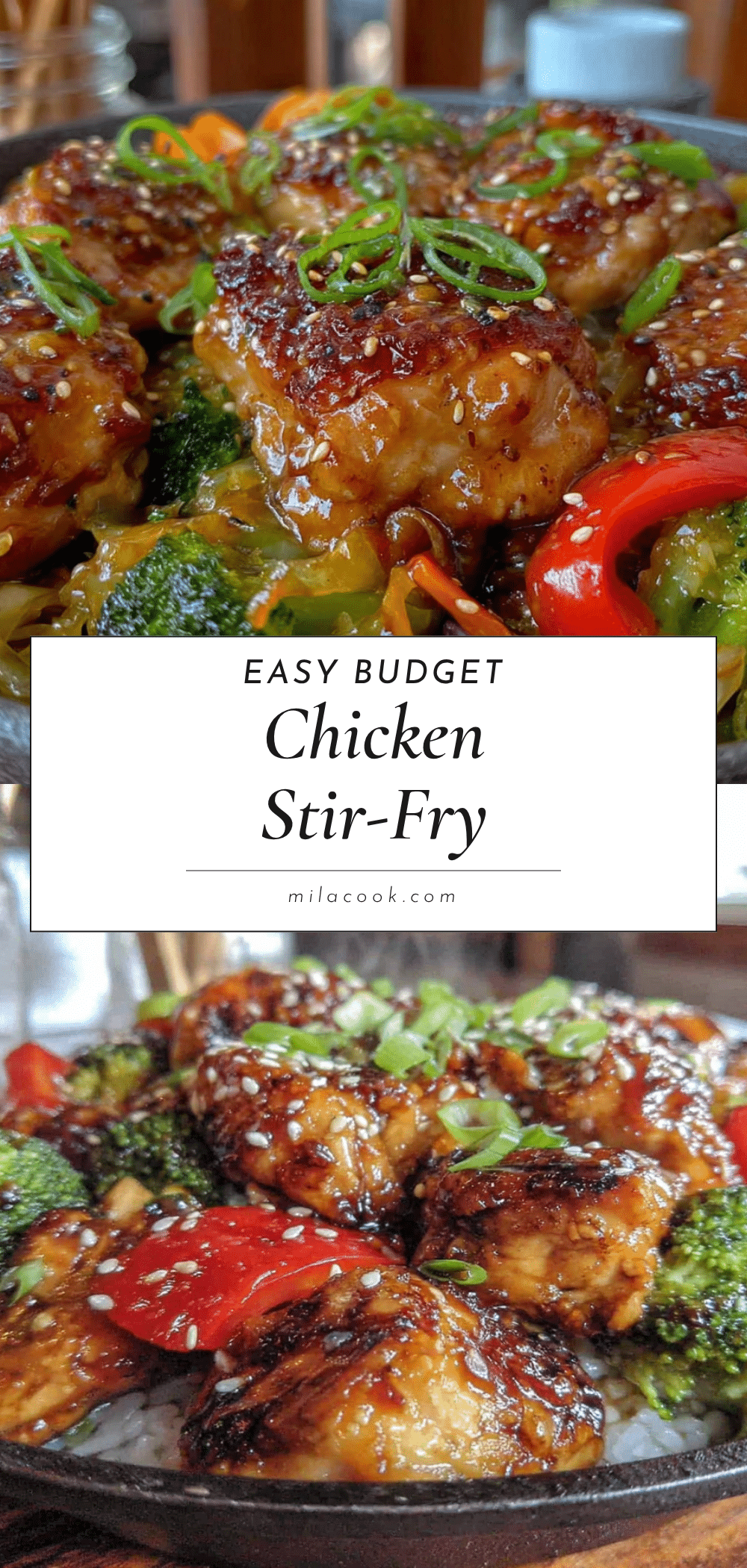
Easy One-Pan Chicken Stir-Fry: Best College Grocery Haul Recipe
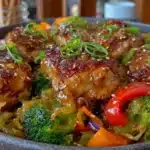
A quick, affordable, and forgiving one-pan chicken stir-fry perfect for busy students or anyone short on time. This recipe uses simple ingredients and comes together in under 25 minutes, delivering juicy chicken and crisp-tender vegetables in a glossy, flavorful sauce.
- Prep Time: 15 minutes
- Cook Time: 10 minutes
- Total Time: 25 minutes
- Yield: 4 servings 1x
- Category: Main Course
- Cuisine: Asian
Ingredients
- 1 lb boneless, skinless chicken thighs (or breasts), cut into bite-sized pieces
- 2 tablespoons vegetable oil, divided
- 1 medium onion, sliced into thin wedges
- 2 cloves garlic, minced
- 1-inch piece fresh ginger, grated (or 1 teaspoon ground ginger)
- 1 red bell pepper, sliced into strips
- 2 cups broccoli florets, fresh or frozen
- 1 cup snap peas or green beans, trimmed
- Optional: 1 small carrot, julienned or thinly sliced
- 1/4 cup low-sodium soy sauce (or tamari for gluten-free)
- 2 tablespoons honey or brown sugar
- 1 tablespoon rice vinegar (or apple cider vinegar)
- 1 teaspoon sesame oil (optional)
- 1 tablespoon cornstarch mixed with 2 tablespoons cold water (slurry)
- Red pepper flakes or sriracha, to taste
Instructions
- Prep the ingredients: Cut chicken into bite-sized pieces. Slice onion, bell pepper, and other veggies. Mince garlic and grate ginger. In a small bowl, whisk together soy sauce, honey (or brown sugar), rice vinegar, sesame oil, and red pepper flakes. In another small bowl, mix cornstarch with cold water to make the slurry. Set everything aside.
- Heat the pan: Place a large non-stick skillet or wok over high heat and add 1 tablespoon vegetable oil. Heat until the oil shimmers and just starts to smoke.
- Sear the chicken: Add chicken pieces in a single layer (cook in batches if needed). Cook undisturbed for 2-3 minutes until golden brown, then stir-fry for another 2-3 minutes until cooked through. Transfer to a clean plate.
- Cook the aromatics: Reduce heat to medium-high and add remaining 1 tablespoon oil. Add sliced onion and cook for 1-2 minutes until softened. Add minced garlic and grated ginger, stir for about 30 seconds until fragrant.
- Add the vegetables: Add bell pepper, broccoli, and snap peas (or other veggies). Stir-fry for 3-4 minutes over high heat until crisp-tender.
- Combine everything: Return cooked chicken to the pan. Pour sauce mixture over everything and toss to coat. Cook for about 1 minute, stirring constantly.
- Thicken the sauce: Stir the cornstarch slurry, then pour into the pan. Stir for 30-60 seconds until the sauce thickens and becomes glossy. If too thick, add a splash of water.
- Finish and serve: Taste and adjust seasoning if needed. Remove from heat. Serve immediately over steamed rice, noodles, or quinoa. Garnish with sesame seeds or chopped green onions if desired.
Notes
Prep all ingredients before starting—stir-frying is fast. Use high heat for a good sear. Don’t overcrowd the pan; cook chicken in batches if needed. For a vegetarian version, swap chicken for extra-firm tofu and use maple syrup instead of honey. Leftovers keep in the fridge for up to 4 days; reheat in a skillet for best texture.
Nutrition
- Serving Size: 1 serving (about 1.5
- Calories: 350
- Sugar: 11
- Sodium: 700
- Fat: 16
- Saturated Fat: 3
- Carbohydrates: 20
- Fiber: 5
- Protein: 30
Keywords: chicken stir-fry, one-pan meal, college recipe, quick dinner, easy stir-fry, budget-friendly, meal prep