Love this? Save it for later!
Share the inspiration with your friends
“I never thought I’d be the type to obsess over pumpkin bread,” my friend Mark confessed last fall. For years, he claimed to dislike anything remotely sweet paired with bread—especially pumpkin. Then one chilly October evening, I pulled this Flavorful Maple Glazed Pepita Pumpkin Sourdough Loaf out of the oven, mostly to treat myself after a long day. Next thing I knew, Mark was sneaking slices when he thought I wasn’t looking, smearing the sticky maple glaze with a grin that said, ‘Okay, you win this time.’
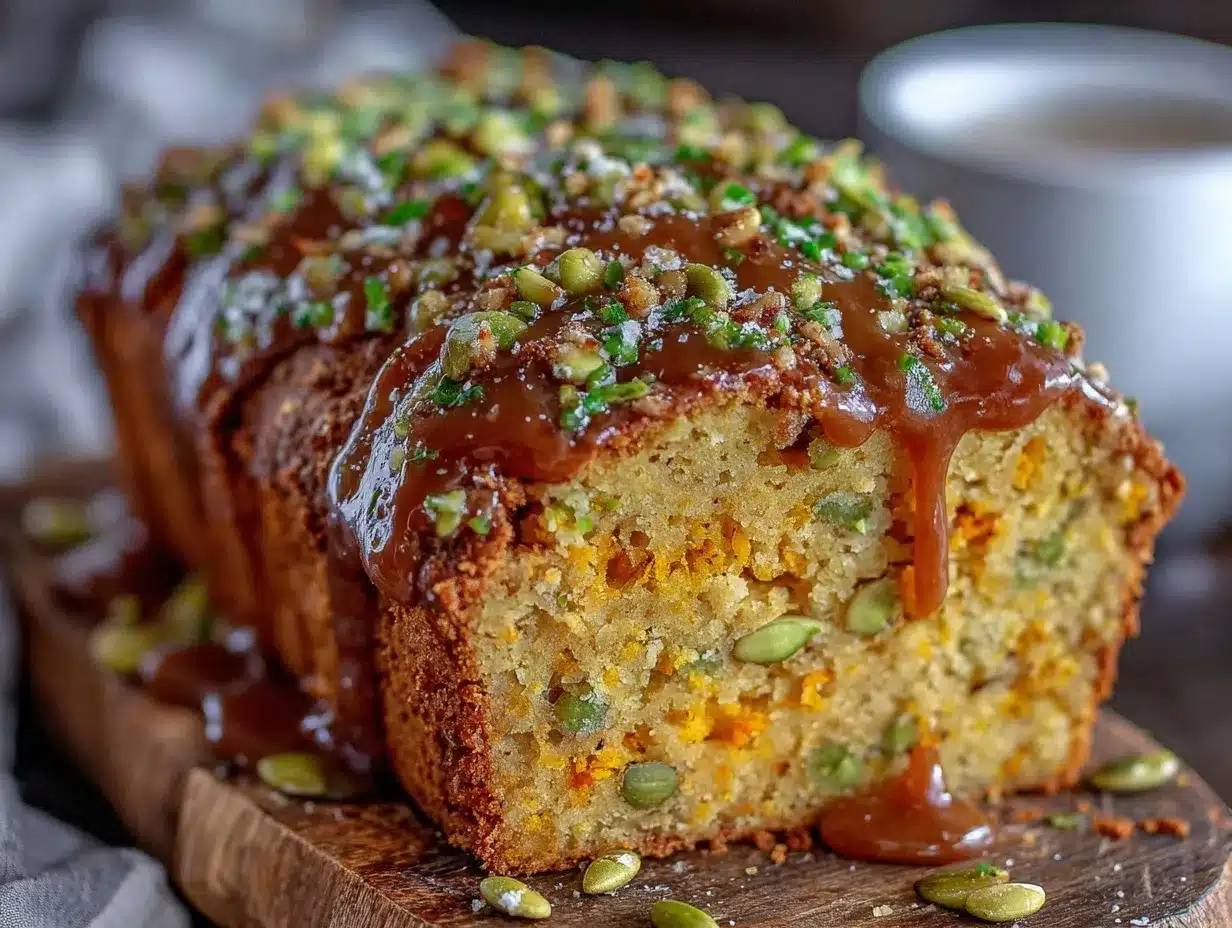
It’s funny how a loaf of bread can rewrite your culinary story. The tangy sourdough base combined with the warm earthiness of pumpkin and the crunch of toasted pepitas felt like fall wrapped in a cozy scarf. The maple glaze? That was the game-changer that made it impossible to resist.
Honestly, the best part was how this recipe came together during a weekend that was supposed to be all about last-minute errands but turned into a surprise kitchen therapy session. I forgot to set my timer, made a bit of a mess with flour dusting every surface, and got interrupted twice by a persistent neighborhood cat. Yet, somehow, that imperfect chaos birthed a loaf that’s now a staple when the air turns crisp. Maybe you’ve been there—caught off guard by a recipe that just clicks.
This pumpkin sourdough isn’t just bread; it’s the kind of thing that makes you pause, savor, and quietly admit, “Yeah, I’ll take another slice.” And if you’re ready to prove yourself wrong about pumpkin bread or sourdough, well, this one might just do it for you too.
Why You’ll Love This Recipe
After baking this Flavorful Maple Glazed Pepita Pumpkin Sourdough Loaf multiple times, I can honestly say it’s a keeper for a bunch of reasons:
- Quick & Easy: The active prep time is under 30 minutes, with most of the work done by the dough’s slow fermentation—perfect for busy fall weekends.
- Simple Ingredients: You probably have most of these in your pantry already—no need to hunt down obscure spices or fancy flours.
- Perfect for Fall Gatherings: Whether you’re hosting brunch or bringing something to a potluck, this loaf fits right in with cozy autumn vibes.
- Crowd-Pleaser: Kids love the sweet glaze, adults appreciate the sourdough tang, and everyone gets hooked on the pepita crunch.
- Unbelievably Delicious: The combination of earthy pumpkin and sticky maple glaze creates a texture and flavor profile that’s honestly hard to beat.
What sets this recipe apart? It’s the balance. The sourdough starter adds depth and chewiness, while the pumpkin keeps it moist and tender. Toasted pepitas bring a nutty crunch that contrasts with the sweet glaze, which is gently drizzled just before serving—not soaked or cloying.
This isn’t your run-of-the-mill pumpkin bread slathered with sugar. It’s a thoughtful, tested loaf that feels both rustic and refined. I’ve tested variations with different maple syrups and found that pure, grade A maple syrup really makes the glaze sing without overpowering the pumpkin’s subtle sweetness.
Let me tell you, this loaf is the kind that makes you close your eyes and savor every bite. It’s fall in bread form—perfect for impressing guests without stress or turning an ordinary breakfast into something memorable.
What Ingredients You Will Need
This recipe calls for straightforward, wholesome ingredients that come together to build big flavor and satisfying texture without fuss. Here’s the breakdown:
- For the Sourdough Pumpkin Loaf:
- Active sourdough starter (100% hydration), about 150g (5.3 oz) – I recommend feeding your starter 8-12 hours before baking for best rise
- All-purpose flour, 350g (2 ¾ cups) – King Arthur Flour works great here for consistent texture
- Whole wheat flour, 50g (⅓ cup) – adds nutty depth and pairs beautifully with pumpkin
- Pure pumpkin puree, 150g (½ cup) – use canned or fresh; avoid pumpkin pie filling with added sugar
- Warm water, 180ml (¾ cup) – around 75°F (24°C) to activate the yeast without killing it
- Maple syrup, 40ml (2 ½ tbsp) – adds natural sweetness to the dough
- Sea salt, 9g (1 ½ tsp) – balances sweetness and enhances flavor
- Instant yeast, 3g (1 tsp) – optional, for a bit of extra lift if your starter is young or sluggish
- For the Topping and Glaze:
- Pepitas (raw pumpkin seeds), 60g (½ cup) – lightly toasted until just golden for crunch
- Pure maple syrup, 30ml (2 tbsp) – for the glaze
- Unsalted butter, 15g (1 tbsp) – melted, to blend with the glaze
- Sea salt flakes, a pinch – sprinkled on top to contrast the sweet glaze
Substitution tips: If you want to keep it gluten-free, almond or oat flour could replace the whole wheat, but the sourdough structure might be less chewy. For a vegan option, swap butter for coconut oil in the glaze. Also, if you don’t have pepitas, toasted walnuts or pecans make a lovely alternative.
Equipment Needed
To make this Flavorful Maple Glazed Pepita Pumpkin Sourdough Loaf, you’ll need a few essentials:
- A large mixing bowl – glass or stainless steel works best for dough.
- Dough scraper or bench knife – invaluable for folding and shaping sticky dough.
- Kitchen scale – measuring ingredients by weight (grams or ounces) makes a huge difference in sourdough baking accuracy.
- Proofing basket (banneton) or a bowl lined with a floured kitchen towel – helps the loaf keep its shape during the final rise.
- Baking stone or heavy baking sheet – for even heat distribution and a crisp crust.
- Pastry brush – for applying the maple glaze evenly.
- Oven thermometer (optional) – to monitor your oven temperature if you don’t trust the dial.
If you don’t have a proofing basket, no worries—just use a bowl lined with a clean kitchen towel dusted generously with flour. For the baking surface, a cast iron skillet or Dutch oven can also work well to trap steam and create a crusty exterior. I’ve found that a simple kitchen scale and dough scraper are game-changers for consistency, especially when juggling hydration in pumpkin breads.
Preparation Method
- Activate Your Starter: About 8 to 12 hours before baking, feed your sourdough starter so it’s bubbly and active. You’ll need 150g (5.3 oz) ready to go. This usually means mixing equal parts flour and water with a bit of starter and letting it sit at room temperature.
- Mix Dry Ingredients: In a large bowl, whisk together 350g (2 ¾ cups) all-purpose flour, 50g (⅓ cup) whole wheat flour, and 9g (1 ½ tsp) sea salt. This step ensures even salt distribution—don’t skip!
- Combine Wet Ingredients: In a separate bowl, mix 150g (½ cup) pumpkin puree, 180ml (¾ cup) warm water, 40ml (2 ½ tbsp) maple syrup, and your active starter. Stir until smooth and uniform.
- Form the Dough: Gradually add the wet mixture to the dry ingredients, stirring with a spatula until a shaggy dough forms. It’ll be sticky but hold together.
- Autolyse (Rest): Cover the bowl with a damp towel or plastic wrap and let it rest for 30 minutes. This hydrates the flour and helps gluten development.
- Incorporate Yeast (Optional): If you’re using instant yeast for a boost, sprinkle it over the dough now and knead lightly to combine.
- Knead & Fold: Turn the dough out onto a floured surface and knead gently for 5-7 minutes, or until it feels elastic and smooth. Alternatively, use the stretch and fold method every 30 minutes over 2 hours—this builds strength without overworking.
- First Rise: Place dough in a lightly oiled bowl, cover, and let rise at room temperature (around 70°F/21°C) for 3-4 hours, or until doubled.
- Shape the Loaf: Gently deflate the dough and shape it into a tight round loaf. Place it seam-side up in your floured proofing basket or lined bowl.
- Second Rise: Cover and proof for 1-2 hours at room temperature, or refrigerate overnight for a slower ferment and deeper flavor.
- Preheat Oven: About 45 minutes before baking, preheat your oven to 450°F (230°C) with a baking stone or sheet inside.
- Toast Pepitas: While the oven heats, toast 60g (½ cup) pepitas in a dry skillet over medium heat until fragrant and lightly browned, about 3-4 minutes. Set aside.
- Score and Bake: Carefully invert the loaf onto parchment paper. Using a sharp blade, score a few slashes on top to help it expand. Slide onto the hot stone and bake for 25 minutes.
- Lower Temperature and Continue Baking: Reduce oven to 400°F (200°C) and bake for another 15-20 minutes, until the crust is deep golden brown and the loaf sounds hollow when tapped.
- Cool and Glaze: Let the loaf cool completely on a rack. For the glaze, mix 30ml (2 tbsp) maple syrup with 15g (1 tbsp) melted butter. Brush the glaze over the top and sprinkle with toasted pepitas and a pinch of sea salt flakes.
- Rest Before Slicing: Let the glaze set for 10 minutes before slicing. This helps the flavors meld and the texture stay perfect.
Pro tip: Don’t rush the cooling step! Slicing too soon can make the bread gummy. Also, I learned the hard way that scorings that are too shallow don’t open properly—be confident with your blade.
Cooking Tips & Techniques
Getting this Flavorful Maple Glazed Pepita Pumpkin Sourdough Loaf just right takes a little know-how:
- Watch Your Starter: Using a lively, bubbly starter is key. If it’s sluggish, add a pinch of instant yeast to help the rise without compromising flavor.
- Hydration is Everything: Pumpkin puree adds moisture, so be mindful—the dough should be tacky but not overly wet. If it’s too sticky, sprinkle a bit more flour during kneading, but cautiously.
- Use a Sharp Blade for Scoring: This helps the loaf expand beautifully during baking and prevents random cracks.
- Steam in the Oven: For a crusty exterior, place a pan with hot water on the oven floor or spritz the oven walls with water just after placing the loaf inside.
- Toasting Pepitas: Don’t walk away! Pepitas toast quickly and can burn, which will add bitter notes.
- Glaze Timing: Brush the glaze only after the loaf has cooled completely to avoid melting it into a sticky puddle.
- Patience with Proofing: Letting the dough rise slowly overnight in the fridge enhances flavor and texture—worth the wait.
Honestly, there were times I rushed proofing and ended up with a dense loaf. Letting the dough rest, even if it means adjusting your schedule, really pays off. Also, multitasking by toasting pepitas while the oven preheats saves precious minutes.
Variations & Adaptations
This pumpkin sourdough is quite versatile, and I’ve enjoyed tweaking it depending on mood and pantry:
- Spiced Version: Add 1 tsp cinnamon, ½ tsp ground nutmeg, and a pinch of cloves to the dry ingredients for a warm spice profile.
- Gluten-Free Adaptation: Replace wheat flours with a blend of gluten-free flour and xanthan gum. Expect a denser crumb, but the glaze and pepitas still shine.
- Nutty Upgrade: Swap pepitas for chopped toasted walnuts or pecans for a different crunch and flavor dimension.
- Sweet & Savory: Stir in 50g (⅓ cup) dried cranberries or raisins during mixing for bursts of tart sweetness.
- Cooking Method Adjustment: Bake in a Dutch oven with the lid on for the first 20 minutes to trap steam, then remove lid to finish baking for extra-crispy crust.
My favorite personal twist is adding a handful of grated sharp cheddar into the dough—it’s surprisingly delightful with the pumpkin and maple glaze, perfect for those who like a savory edge. You might want to experiment with your own combos!
Serving & Storage Suggestions
This loaf is best enjoyed fresh but holds up well for a few days:
- Serving: Slice thick and serve at room temperature with a swipe of butter or cream cheese. It pairs wonderfully with hot apple cider or chai tea for a cozy snack.
- Presentation: Arrange slices on a wooden board, sprinkle extra toasted pepitas over the glaze, and maybe add a few fresh herbs like rosemary for a rustic touch.
- Storage: Keep wrapped in a clean tea towel or paper bag at room temperature for up to 3 days to preserve crust texture. For longer storage, slice and freeze in airtight bags for up to 3 months.
- Reheating: Warm slices briefly in a toaster oven or oven at 325°F (160°C) for 5-7 minutes to bring back that fresh-baked crispness.
- Flavor Development: The glaze soaks in a bit overnight, mellowing sweetness and intensifying the pumpkin notes—worth trying the next day!
Nutritional Information & Benefits
Here’s a rough estimate per slice (1/12th of the loaf):
| Calories | 190 |
|---|---|
| Carbohydrates | 34g |
| Protein | 5g |
| Fat | 3g |
| Fiber | 3g |
The pumpkin adds vitamin A and antioxidants, while pepitas provide a healthy dose of magnesium, zinc, and plant-based protein. Using a sourdough starter improves digestibility and may support gut health thanks to natural fermentation. This loaf is naturally free from refined sugars (thanks to maple syrup) and can be made gluten-free with substitutions.
From a wellness perspective, I appreciate how this bread feels nourishing rather than indulgent—a treat you can feel good about sharing with friends or enjoying any time of day.
Conclusion
If you’re on the fence about pumpkin bread or sourdough, this Flavorful Maple Glazed Pepita Pumpkin Sourdough Loaf might just tip the scales. It’s a recipe that respects tradition but brings its own twist with the maple glaze and pepita crunch. I love how it turns simple ingredients into a loaf that feels special without fuss.
Feel free to make it your own—add spices, nuts, or even cheese. Experimenting is half the fun! And when you do, please share your variations or questions below. I’m always curious how this humble loaf shows up in kitchens beyond mine.
Now, go on—grab your sourdough starter, get that pumpkin ready, and treat yourself to a slice (or two). You deserve it.
Frequently Asked Questions
Can I use canned pumpkin puree for this recipe?
Absolutely! Just make sure it’s pure pumpkin puree, not pumpkin pie filling, which has added sugars and spices.
How long does the sourdough starter need to be active before baking?
Ideally, feed your starter 8-12 hours before baking so it’s bubbly and at peak activity for a good rise.
Can I make this bread without a sourdough starter?
You can substitute with commercial yeast, but the flavor and texture won’t be quite the same. Use 2 tsp instant yeast and adjust rising times accordingly.
What’s the best way to store leftover bread?
Wrap it in a tea towel or paper bag at room temperature for up to 3 days. For longer storage, slice and freeze in airtight bags.
Can I add other nuts or seeds instead of pepitas?
Yes! Toasted walnuts, pecans, or sunflower seeds work wonderfully and add their own unique crunch and flavor.
Pin This Recipe!
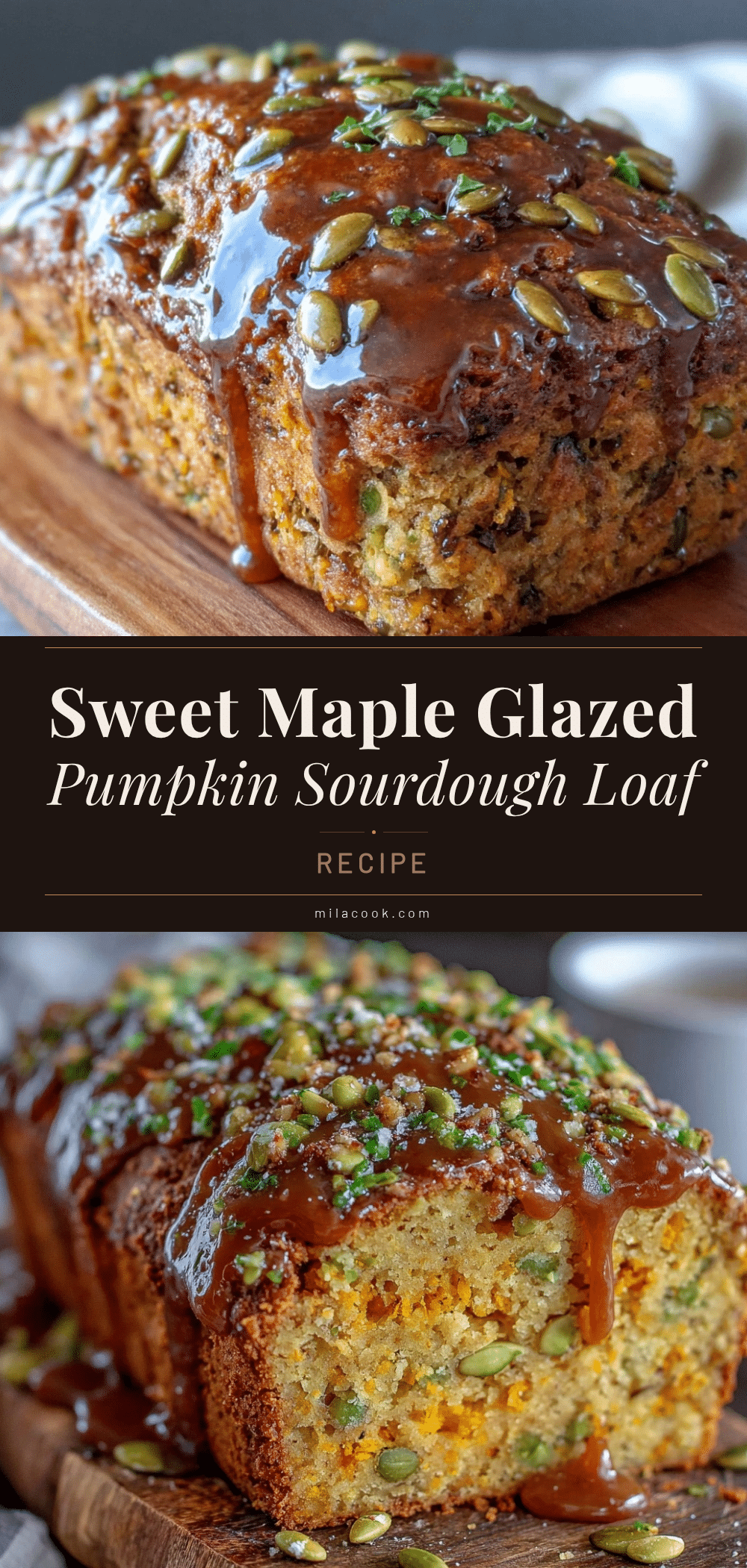
Flavorful Maple Glazed Pepita Pumpkin Sourdough Loaf
A cozy fall bread combining tangy sourdough, earthy pumpkin, crunchy toasted pepitas, and a sticky maple glaze for a deliciously unique loaf.
- Prep Time: 30 minutes (active prep)
- Cook Time: 40-45 minutes
- Total Time: 5-7 hours (including rises and resting; or overnight proofing option)
- Yield: 12 servings (slices) 1x
- Category: Bread
- Cuisine: American
Ingredients
- 150g (5.3 oz) active sourdough starter (100% hydration)
- 350g (2 ¾ cups) all-purpose flour
- 50g (⅓ cup) whole wheat flour
- 150g (½ cup) pure pumpkin puree
- 180ml (¾ cup) warm water (around 75°F / 24°C)
- 40ml (2 ½ tbsp) maple syrup
- 9g (1 ½ tsp) sea salt
- 3g (1 tsp) instant yeast (optional)
- 60g (½ cup) pepitas (raw pumpkin seeds), toasted
- 30ml (2 tbsp) pure maple syrup (for glaze)
- 15g (1 tbsp) unsalted butter, melted (for glaze)
- Pinch of sea salt flakes (for topping)
Instructions
- Activate your starter by feeding it 8 to 12 hours before baking until bubbly and active, measuring 150g (5.3 oz).
- In a large bowl, whisk together 350g (2 ¾ cups) all-purpose flour, 50g (⅓ cup) whole wheat flour, and 9g (1 ½ tsp) sea salt.
- In a separate bowl, mix 150g (½ cup) pumpkin puree, 180ml (¾ cup) warm water, 40ml (2 ½ tbsp) maple syrup, and the active starter until smooth.
- Gradually add the wet mixture to the dry ingredients, stirring until a shaggy, sticky dough forms.
- Cover the bowl with a damp towel or plastic wrap and let rest for 30 minutes (autolyse).
- If using, sprinkle 3g (1 tsp) instant yeast over the dough and knead lightly to combine.
- Turn dough onto a floured surface and knead gently for 5-7 minutes until elastic and smooth, or use stretch and fold method every 30 minutes over 2 hours.
- Place dough in a lightly oiled bowl, cover, and let rise at room temperature (around 70°F / 21°C) for 3-4 hours until doubled.
- Gently deflate dough and shape into a tight round loaf. Place seam-side up in a floured proofing basket or lined bowl.
- Cover and proof for 1-2 hours at room temperature, or refrigerate overnight for slower fermentation and deeper flavor.
- Preheat oven to 450°F (230°C) with a baking stone or sheet inside about 45 minutes before baking.
- Toast 60g (½ cup) pepitas in a dry skillet over medium heat for 3-4 minutes until fragrant and lightly browned; set aside.
- Invert loaf carefully onto parchment paper, score a few slashes on top with a sharp blade, and slide onto the hot baking stone.
- Bake for 25 minutes at 450°F (230°C).
- Reduce oven temperature to 400°F (200°C) and bake for an additional 15-20 minutes until crust is deep golden and loaf sounds hollow when tapped.
- Cool loaf completely on a rack.
- Mix 30ml (2 tbsp) maple syrup with 15g (1 tbsp) melted butter to make glaze.
- Brush glaze over the cooled loaf, sprinkle toasted pepitas and a pinch of sea salt flakes on top.
- Let glaze set for 10 minutes before slicing to allow flavors to meld and texture to stabilize.
Notes
Use a lively, bubbly sourdough starter for best rise; add instant yeast if starter is sluggish. Be careful not to over-hydrate dough; it should be tacky but not overly wet. Score loaf deeply for proper expansion. Use steam in oven for crusty exterior by placing a pan of hot water or spritzing oven walls. Toast pepitas carefully to avoid burning. Brush glaze only after loaf is completely cooled to prevent melting. Slow proofing overnight in fridge enhances flavor and texture. Let glaze set before slicing to avoid gummy texture.
Nutrition
- Serving Size: 1 slice (1/12th of l
- Calories: 190
- Fat: 3
- Carbohydrates: 34
- Fiber: 3
- Protein: 5
Keywords: pumpkin bread, sourdough bread, maple glaze, pepitas, fall bread, homemade bread, autumn recipe, easy sourdough, pumpkin sourdough